

-
About us
 Tianjin lefin Industrial
TIANJIN LEFIN STEEL GROUP containing Tianjin lefin Industrial Co.,Ltd. 、Tianjin lefin steel import & export Co.,Ltd and Tianjin Shengqifeng International Trading Co., Ltd. -
Products
Steel Pipe Processing
Our main products include 1/2inch to 16 inch ERW PIPE/GI PIPE which has been produced according to BS1387/ASTM A53/EN10219/EN10255/EN10217 Standard -
-
Service Capability
Guarantee Quality
Our steel pipes are suitable for oil, natural gas, shipbuilding, chemical industry, water conservancy, electrical, steel structure, construction and other related fields.

Our main products include 1/2inch to 16 inch ERW PIPE/GI PIPE which has been produced according to BS1387/ASTM A53/EN10219/EN10255/EN10217 Standard
Our main products include 1/2inch to 16 inch ERW PIPE/GI PIPE which has been produced according to BS1387/ASTM A53/EN10219/EN10255/EN10217 Standard
Has rich experience in steel pipe processing, can be customized according to customer requirements according to the drawing and sample processing, assist in the development of new products.
Product Description
BASIC INFORMATION:
EN10217 STEEL PIPE
Description: longitudinal submerged arc welded steel pipe
Standard: EN10217
Grade: P195GH, P235GH, P265GH
Length: Normally 6M/12M, also depends on the requirements
Advantages: large diameter steel pipes, thick walls, high-pressure resistance: low-temperature resistance.
Application: For long distance transportation pipelines for oil, gas, water, offshore projects, on land engineering and construction.
CHEMICAL COMPOSITOIN:
Chemical composition(cast analysis)% | ||||||
Steel Grade | C | Si | Mn | P | S | |
P195GH | ≤0.13 | 0.35 | ≤0.70 | 0.025 | 0.020 | |
P235GH | ≤0.16 | 0.35 | ≤1.20 | 0.025 | 0.020 | |
P265GH | ≤0.20 | 0.40 | ≤1.40 | 0.025 | 0.020 | |
1. Carbon (C) :
Carbon is the main element that affects the strength and hardness of steel.
2. Silicon (Si) :
Silicon is mainly used as a deoxidizer in steel, helping to improve the strength and hardness of steel. The limitation of silicon content in the standard helps to control the mechanical properties of the material.
3.Manganese (Mn) :
Manganese is an important element for improving the strength and hardness of steel, while also helping to eliminate the adverse effects of sulfur.
4. Phosphorus (P) and sulfur (S) :
Phosphorus and sulfur are harmful elements in steel, which reduce the plasticity and toughness of steel.
PHYSICAL REQUIREMENT:
Mechanical properties for wall thickness T≤16 | ||||||
Steel Grade | Tensile properties at room temperature | |||||
Upper yield strength MPa | Tensile strength Mpa | Elongation % | ||||
longitudinal | transverse | |||||
P195GH | 195 | 320-440 | 27 | 25 | ||
P235GH | 235 | 360-500 | 25 | 23 | ||
P265GH | 265 | 410-570 | 23 | 21 | ||
DEFINITION
 Steel grade definition:
P195GH: Electric welded non-alloy steel pipe for room temperature service with specified mechanical properties.
P235GH: Electric welded non-alloy steel pipe for high temperature service with higher yield strength and tensile strength.
P265GH: Also suitable for high temperature service, it is often used in more demanding applications such as pressure vessels and boilers.
Application field
P195GH: Suitable for general pressure piping and low temperature environments.
P235GH: Widely used in high temperature and high pressure boilers and pressure vessels.
P265GH: For more demanding pressure vessels and heat exchangers.
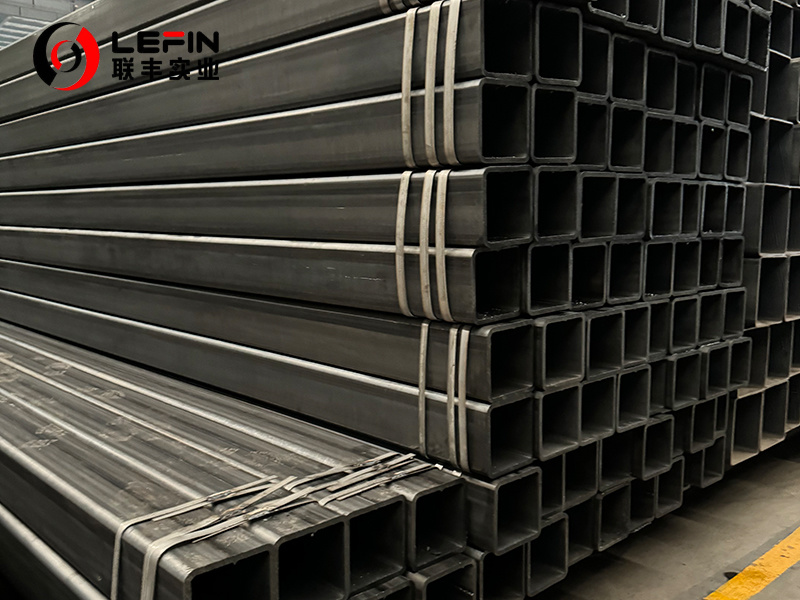
The application and selection of EN10217 steel pipes
1. Pressure use:
- EN10217 steel pipes are mainly used for pressure purposes, including non-alloy steel pipes and alloy steel pipes, which can be used in various pressure equipment and piping systems.
2. Technical delivery conditions:
- This standard specifies the technical delivery conditions of the steel pipe, including the chemical composition, mechanical properties, size, shape, weight and allowable deviations of the material.
3. Quality level:
- EN10217 steel tubes are divided into two quality classes, TR1 and TR2, of which TR2 quality class is designed to support the basic requirements of EU Directive 2014/68/EU on pressure equipment with specified room temperature characteristics.
4. Temperature performance:
- Part 2 (EN10217-2) deals with electrically welded non-alloy and alloy steel tubes with specified high temperature properties, which are suitable for pressure applications in high temperature environments.
5. Stainless steel pipe:
- Part 7 (EN10217-7) is dedicated to stainless steel pipes, including round welded pipes made of austenitic and austenitic ferritic stainless steels, for pressure and corrosion resistance purposes at room temperature, low temperature or high temperature.
6. Material characteristics:
- When selecting steel pipes, it is necessary to consider the room temperature and high temperature properties of the material, as well as whether it meets specific pressure and temperature requirements.
7. Design and manufacturer evaluation:
- The technical data specified in the material standard needs to be evaluated by the designer or manufacturer of the pressure equipment to verify that the basic safety requirements (ESRs) of the Pressure Equipment Directive are met.
Address: Hengtai Road,Daqiuzhuang Town,Jinghai County,Tianjin,China
Mob: +8615122229899(whatspp)
Phone: +86 22 58171905
Fax: +86 22 58171902
E-mail:info@lefinsteel.com
Get company updates
Tianjin Lefin Industrial Co.,Ltd. All rights reserved City sub-station SEO www.300.cn