

-
About us
 Tianjin lefin Industrial
TIANJIN LEFIN STEEL GROUP containing Tianjin lefin Industrial Co.,Ltd. 、Tianjin lefin steel import & export Co.,Ltd and Tianjin Shengqifeng International Trading Co., Ltd. -
Products
Steel Pipe Processing
Our main products include 1/2inch to 16 inch ERW PIPE/GI PIPE which has been produced according to BS1387/ASTM A53/EN10219/EN10255/EN10217 Standard -
-
Service Capability
Guarantee Quality
Our steel pipes are suitable for oil, natural gas, shipbuilding, chemical industry, water conservancy, electrical, steel structure, construction and other related fields.

Our main products include 1/2inch to 16 inch ERW PIPE/GI PIPE which has been produced according to BS1387/ASTM A53/EN10219/EN10255/EN10217 Standard
Our main products include 1/2inch to 16 inch ERW PIPE/GI PIPE which has been produced according to BS1387/ASTM A53/EN10219/EN10255/EN10217 Standard
Has rich experience in steel pipe processing, can be customized according to customer requirements according to the drawing and sample processing, assist in the development of new products.
Norway EN 10219 STEEL HOLLOW SECTION
Category:
Product Description
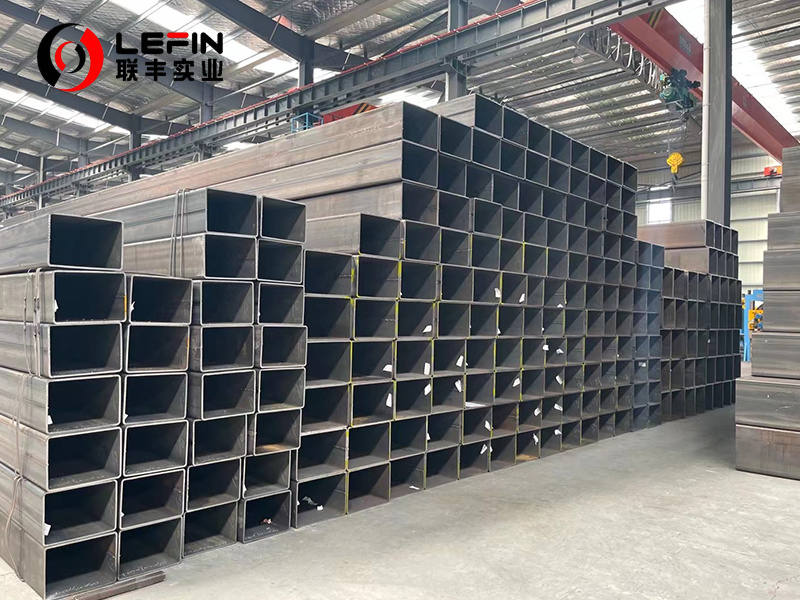
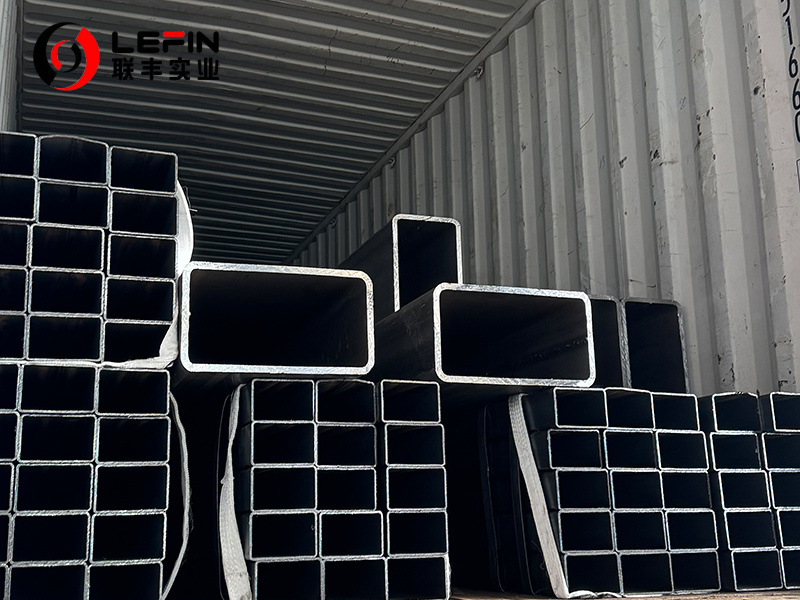
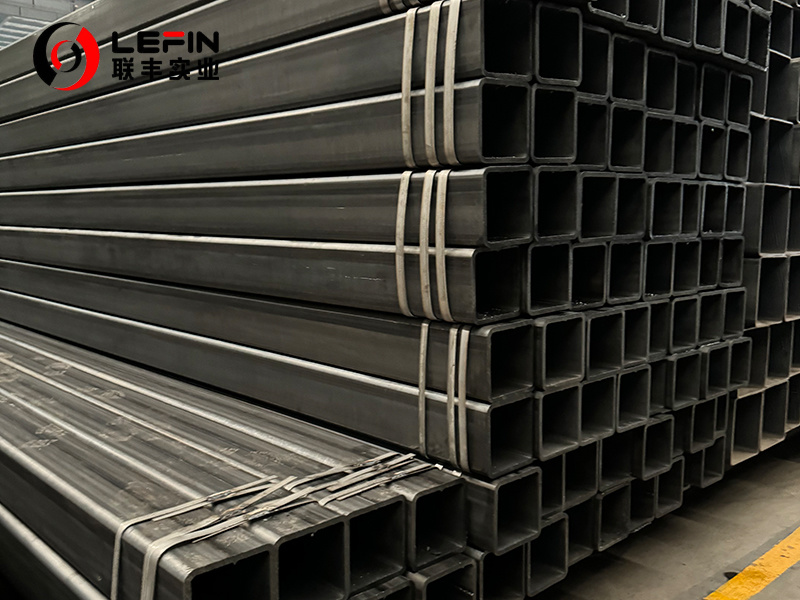
EN 10219 STEEL HOLLOW SECTION
EN 10219 is a European standard that specifies requirements for cold-formed welded structural hollow sections made from non-alloy and fine-grain steels without heat treatment. These sections are used in construction, civil engineering, and for the transportation of fluids in various industries.
Chemical Composition
| Structural hollow sections of non-alloy steels Chemical composition,max,% | ||||||
| C | Si | Mn | P | S | N | |
| S235JRH | 0.17 | - | 1.4 | 0.045 | 0.045 | 0.009 |
| S275J0H | 0.2 | - | 1.5 | 0.04 | 0.04 | 0.009 |
| S275J2H | 0.2 | - | 1.5 | 0.035 | 0.035 | - |
| S355J0H | 0.22 | 0.55 | 1.6 | 0.04 | 0.04 | 0.009 |
| S355J2H | 0.22 | 0.55 | 1.6 | 0.035 | 0.035 | - |
| Structural hollow sections of fine grain steels Chemical composition,max,%,feedstock condition N(Normalized/Normalized Rolled) | ||||||||||||||
| C | Si | Mn | P | S | Nb | V | Al (total min) | Ti | Cr | Ni | Mo | Cu | N | |
| S275NH | 0.2 | 0.4 | 0.5 - 1.4 | 0.035 | 0.03 | 0.05 | 0.05 | 0.02 | 0.03 | 0.3 | 0.3 | 0.1 | 0.35 | 0.015 |
| S275NLH | 0.2 | 0.4 | 0.5 - 1.4 | 0.03 | 0.025 | 0.05 | 0.05 | 0.02 | 0.03 | 0.3 | 0.3 | 0.1 | 0.35 | 0.015 |
| S355NH | 0.2 | 0.5 | 0.9 - 1.65 | 0.035 | 0.03 | 0.05 | 0.12 | 0.02 | 0.03 | 0.3 | 0.5 | 0.1 | 0.35 | 0.015 |
| S355NLH | 0.18 | 0.5 | 0.9 - 1.65 | 0.03 | 0.025 | 0.05 | 0.12 | 0.02 | 0.03 | 0.3 | 0.5 | 0.1 | 0.35 | 0.015 |
The chemical composition of these steel grades includes elements such as Carbon (C), Silicon (Si), Manganese (Mn), Phosphorus (P), Sulfur (S), and Nitrogen (N). Here's a summary of their significance:
● Carbon (C): Increases strength and hardness but can reduce ductility.
● Silicon (Si): Aids in deoxidation and can improve strength.
● Manganese (Mn): Enhances strength and hardness.
● Phosphorus (P) and Sulfur (S): Generally undesirable as they can reduce ductility and toughness, but their content is limited in these steel grades.
● Nitrogen (N): Can improve strength but is controlled to avoid embrittlement.
● Trace amounts of alloying elements such as Vanadium (V), Titanium (Ti), and Niobium (Nb) may also be present to refine the grain and improve steel performance.
The differences between J0H, J2H, JRH, NH, and NLH
● J0H: This designation indicates that the steel has been tested for impact toughness at 0°C and must meet a minimum impact energy requirement of 27 Joules. The "J0" specifies the temperature at which the impact test is conducted, and "H" denotes that it is a hollow section.
● J2H: Similar to J0H, but the "J2" indicates that the steel has been tested for impact toughness at -20°C and must meet a minimum impact energy requirement of 27 Joules. This makes J2H steel more suitable for use in colder environments where materials may become brittle.
● JRH: The "JR" indicates that the steel has specified impact properties at room temperature, with a minimum impact energy requirement of 27 Joules. This is typically used for steel grades that do not require testing at lower temperatures.
● NH: The "N" in this designation signifies that the steel is normalized or normalized rolling, which results in fine-grain steel. This process improves the steel's toughness, especially at lower temperatures. The "H" again indicates that it is a hollow section, and the steel must meet a minimum impact energy requirement of 40 Joules at -20°C.
● NLH: Similar to NH, but with the "L" indicating that the steel has been tested for impact toughness at -50°C and must meet a minimum impact energy requirement of 27 Joules. This makes NLH steel suitable for extremely cold environments.
The differences between these steel grades lie in the specific temperatures at which they are tested for impact toughness and their minimum impact energy requirements. J0H and J2H are designed for use at 0°C and -20°C respectively, while JRH is for room temperature applications. NH and NLH are fine-grain steels with enhanced toughness, tested at -20°C and -50°C respectively, making them suitable for use in colder climates.
Mechanical Properties
| Mechanical properties of non-alloy steel hollow sections | |||||
| Steel designation | Tensle strength, min,psi [MPa] | Yield strength, min,psi[MPa] | Elongation,min,% | ||
| Nominal thickness | Nominal thickness | Nominal thickness | |||
| ≤ 16 | > 16 ≤ 40 | <3 | ≥3≤40 | ≤ 40 | |
| S235JRH | 235 | 225 | 360-510 | 340-470 | 24 |
| S275J0H | 275 | 265 | 430-580 | 410-560 | 20 |
| S275J2H | 275 | 265 | 430-580 | 410-560 | 20 |
| S355J0H | 355 | 345 | 510-680 | 490-630 | 20 |
| S355J2H | 355 | 345 | 510-680 | 490-630 | 20 |
| Mechanical properties of fine grain steels hollow sections, feedstock condition N(Normalized/Normalized Rolled) | ||||
| Steel designation | Tensle strength, min,psi [MPa] | Yield strength, min,psi[MPa] | Elongation,min,% | |
| Nominal thickness | Nominal thickness | Nominal thickness | ||
| ≤ 16 | > 16 ≤ 40 | ≤40 | ≤ 40 | |
| S275NH | 275 | 265 | 370-540 | 24 |
| S275NLH | 275 | 265 | 370-540 | 24 |
| S355NH | 355 | 345 | 470-630 | 22 |
| S355NLH | 355 | 345 | 470-630 | 22 |
Yield Strength: Indicates the minimum stress that can be applied to the steel before it begins to deform plastically.
Tensile Strength: The maximum stress that the steel can withstand before breaking.
Elongation: Measures the ductility of the steel, or its ability to deform under stress before fracturing.
Impact Energy: A measure of the steel's toughness, especially at lower temperatures, which is critical for structures exposed to cold environments.
● Strength: The S355 grades have the highest yield and tensile strengths, making them suitable for heavy-load-bearing structures. The S275 grades offer a balance between strength and ductility, while the S235JRH is the least strong but most ductile among them.
● Ductility: The S235JRH has the highest elongation, indicating greater ductility compared to the other grades, which have a minimum elongation of 20%.
CLICK HERE➡The Difference Between EN10210 And EN10219
Comparison
S235JRH: The least strong but most ductile, suitable for general structural applications where high strength is not critical.
S275 Grades (J0H & J2H): Offer a balance between strength and ductility, with S275J2H being more suitable for low-temperature applications due to its improved impact toughness.
S355 Grades (J0H & J2H): High-strength steels for heavy-load-bearing structures, with S355J2H being more suitable for colder environments.
NH and NLH Grades: Fine-grain steels with enhanced toughness, tested at -20°C and -50°C respectively, making them suitable for use in cold climates.
Applications
EN 10219 steel grades are widely used in:
● Construction: Buildings, bridges, and towers, especially in the form of hollow sections like CHS, SHS, and RHS.
● Machinery: Machinery manufacturing where high strength and durability are required.
● Infrastructure: Oil and gas pipelines, water and electricity facilities, and environmental protection structures.
These steel grades offer a range of properties that make them suitable for a variety of applications, with the choice often depending on the specific requirements for strength, toughness, and temperature resistance.

Address: Hengtai Road,Daqiuzhuang Town,Jinghai County,Tianjin,China
Mob: +8615122229899(whatspp)
Phone: +86 22 58171905
Fax: +86 22 58171902
E-mail:info@lefinsteel.com
Get company updates
Tianjin Lefin Industrial Co.,Ltd. All rights reserved City sub-station SEO www.300.cn