

-
About us
 Tianjin lefin Industrial
TIANJIN LEFIN STEEL GROUP containing Tianjin lefin Industrial Co.,Ltd. 、Tianjin lefin steel import & export Co.,Ltd and Tianjin Shengqifeng International Trading Co., Ltd. -
Products
Steel Pipe Processing
Our main products include 1/2inch to 16 inch ERW PIPE/GI PIPE which has been produced according to BS1387/ASTM A53/EN10219/EN10255/EN10217 Standard -
-
Service Capability
Guarantee Quality
Our steel pipes are suitable for oil, natural gas, shipbuilding, chemical industry, water conservancy, electrical, steel structure, construction and other related fields.

Our main products include 1/2inch to 16 inch ERW PIPE/GI PIPE which has been produced according to BS1387/ASTM A53/EN10219/EN10255/EN10217 Standard
Our main products include 1/2inch to 16 inch ERW PIPE/GI PIPE which has been produced according to BS1387/ASTM A53/EN10219/EN10255/EN10217 Standard
Has rich experience in steel pipe processing, can be customized according to customer requirements according to the drawing and sample processing, assist in the development of new products.
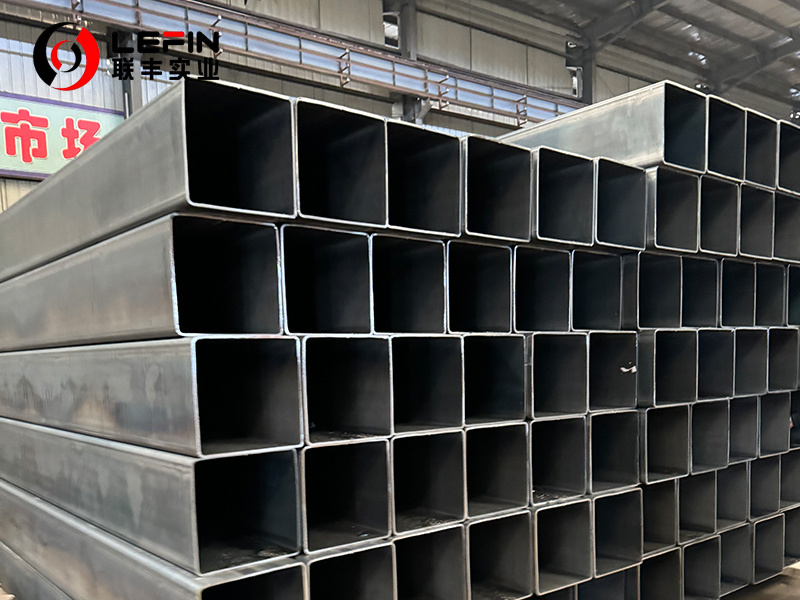
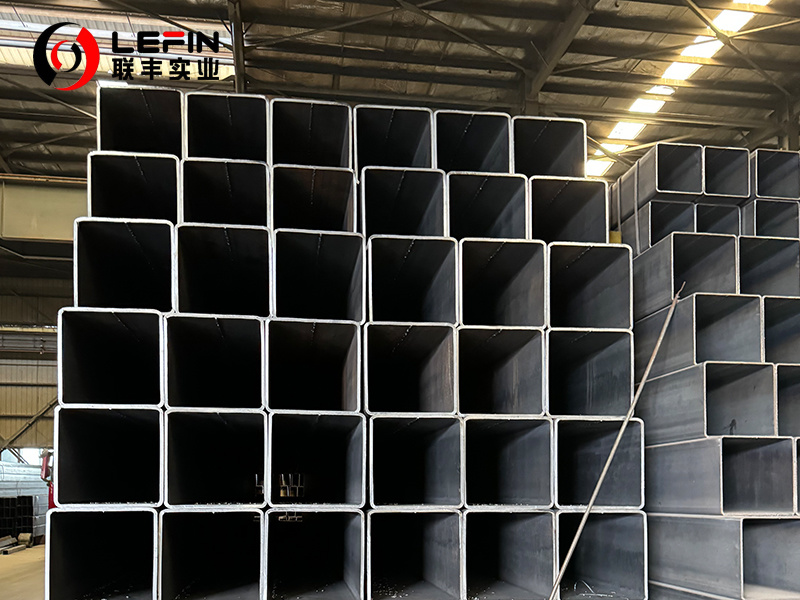
Mexico AS 1163 C450,C450L0 HOLLOW SECTION
Category:
Product Description
AS 1163 C450 and C450L0 are steel grades specified in the Australian/New Zealand Standard AS/NZS 1163, which covers cold-formed, electric resistance-welded steel hollow sections used for structural purposes.
CLICK HERE➡What Is AS1163 Standard
Standards
AS/NZS 1163 is the standard that specifies the requirements for cold-formed, electric resistance-welded steel hollow sections used in structural applications. This standard ensures that the steel hollow sections meet minimum requirements for strength, ductility, elongation, weldability, and fracture toughness.
Steel Grades
C450: This grade indicates a cold-formed structural steel hollow section with a nominal minimum yield strength of 450 MPa. The prefix "C" signifies that the section is cold-formed, and the number represents the yield strength in MPa.
C450L0: This grade is similar to C450 but with an additional requirement for impact test performance at 0°C. The suffix "L0" specifies that the steel must meet the impact test requirements, making C450L0 suitable for applications where low-temperature properties are critical.
Chemical Composition
| Element | C | Si | Mn | P | S | Cr | Mo | Al | Ti | Micro-alloying elements | CE |
| Max % | 0.2 | 0.25 | 1.7 | 0.03 | 0.03 | 0.3 | 0.35 | 0.1 | 0.04 | 0.15 | 0.43 |
Significance Of Chemical Elements
Carbon (C): Carbon is the primary hardening element in steel, providing strength and hardness. It also affects the steel's formability, weldability, and case hardening ability.
Silicon (Si): Silicon is an alloying element that can improve the strength of steel. It also has a deoxidizing effect and can improve the steel's resistance to scaling at high temperatures.
Manganese (Mn): Manganese is added to steel to improve its strength and hardenability. It also helps to remove oxygen from the steel during the manufacturing process.
Phosphorus (P): Phosphorus is generally considered an impurity in steel, as it can reduce the ductility and toughness of the material. However, it is sometimes added in small amounts to improve strength and hardness.
Sulfur (S): Similar to phosphorus, sulfur is often an impurity that can reduce the material's ductility and toughness. It is sometimes added in small amounts to improve machinability.
Chromium (Cr): Chromium is a hardening element that increases the strength, hardness, and corrosion resistance of steel. It also improves the steel's resistance to high-temperature oxidation.
Molybdenum (Mo): Molybdenum is an alloying element that enhances the steel's strength, toughness, and resistance to creep at high temperatures.
Aluminum (Al): Aluminum is often added to steel to improve its resistance to scaling and to fix nitrogen in the steel, which can improve its strength.
Titanium (Ti): Titanium is used to control the grain size of steel and to reduce the formation of inclusions, which can improve the steel's toughness and weldability.
Micro-alloying elements: These are elements added in small amounts to refine the microstructure of the steel, improving its mechanical properties and resistance to certain types of degradation.
Carbon Equivalent (CE): This is a calculated value that estimates the effect of the various alloying elements on the steel's hardenability. It is used to predict the steel's response to heat treatment.
These chemical elements play a crucial role in determining the mechanical properties and performance characteristics of AS 1163 C450 and C450L0 steel grades, making them suitable for various structural applications where strength and durability are required.
Mechanical Properties
AS 1163 C450:
Minimum Yield Strength (ReH): 450 MPa
Minimum Tensile Strength (Rm): 500 MPa
Minimum Elongation (A%): 12% for circular hollow sections with d0/t ≤ 15, 14% for d0/t > 15 and ≤ 30, and 16% for d0/t > 30.
AS 1163 C450L0:
Minimum Yield Strength (ReH): 450 MPa
Minimum Tensile Strength (Rm): 500 MPa
Minimum Elongation (A%): 12% for circular hollow sections with d0/t ≤ 15, 14% for d0/t > 15 and ≤ 30, and 16% for d0/t > 30
Impact Energy (KV/Ku at 0°C): 20 J for the lowest value, 27 J for the average value
The Main Differences Between AS 1163 C450 And C450L0
The primary distinction between AS 1163 C450 and C450L0 is the impact testing requirement at 0°C for C450L0, which provides additional assurance of the steel's toughness and resistance to impact at low temperatures. This makes C450L0 more suitable for applications in colder climates or where there is a higher risk of impact damage. The choice between C450 and C450L0 should be guided by the specific demands and environmental conditions of the engineering project in question .
Applications
C450 and C450L0 hollow sections are used in various structural applications due to their high strength-to-weight ratio, good torsional strength, and impact resistance. Typical applications include:
Construction: Used in commercial and residential buildings for structural integrity and durability.
Bridges: Provides necessary strength and flexibility for bridge construction.
Industrial Structures: Used in harsh environments for stability and safety.
Infrastructure Projects: Employed in public works such as roads, tunnels, and other robust structural components.
Mining Applications: Offers reliable support structures in challenging mining environments.
Pipes: Used in pipeline construction for the transportation of fluids and gases.


Address: Hengtai Road,Daqiuzhuang Town,Jinghai County,Tianjin,China
Mob: +8615122229899(whatspp)
Phone: +86 22 58171905
Fax: +86 22 58171902
E-mail:info@lefinsteel.com
Get company updates
Tianjin Lefin Industrial Co.,Ltd. All rights reserved City sub-station SEO www.300.cn