

-
About us
 Tianjin lefin Industrial
TIANJIN LEFIN STEEL GROUP containing Tianjin lefin Industrial Co.,Ltd. 、Tianjin lefin steel import & export Co.,Ltd and Tianjin Shengqifeng International Trading Co., Ltd. -
Products
Steel Pipe Processing
Our main products include 1/2inch to 16 inch ERW PIPE/GI PIPE which has been produced according to BS1387/ASTM A53/EN10219/EN10255/EN10217 Standard -
-
Service Capability
Guarantee Quality
Our steel pipes are suitable for oil, natural gas, shipbuilding, chemical industry, water conservancy, electrical, steel structure, construction and other related fields.

Our main products include 1/2inch to 16 inch ERW PIPE/GI PIPE which has been produced according to BS1387/ASTM A53/EN10219/EN10255/EN10217 Standard
Our main products include 1/2inch to 16 inch ERW PIPE/GI PIPE which has been produced according to BS1387/ASTM A53/EN10219/EN10255/EN10217 Standard
Has rich experience in steel pipe processing, can be customized according to customer requirements according to the drawing and sample processing, assist in the development of new products.
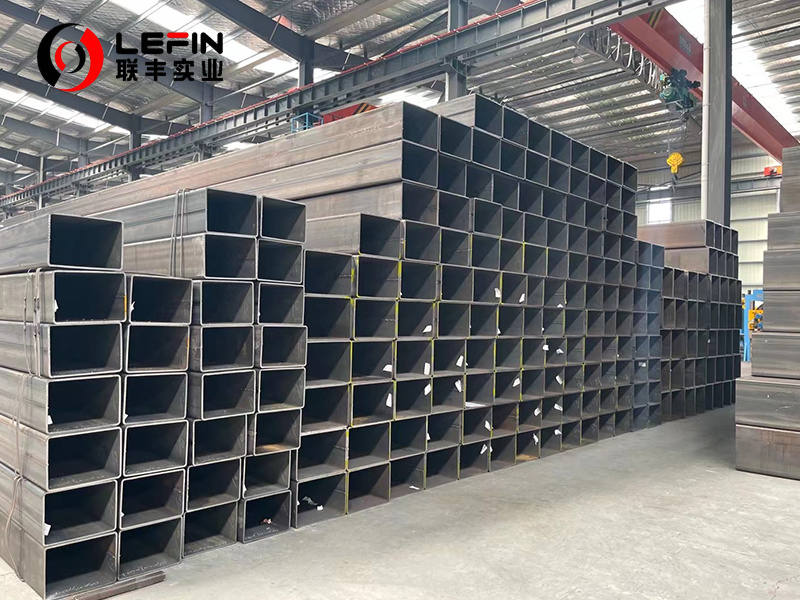
Mexico JIS G3444 STK540 HOLLOW SECTION
Category:
Product Description
JIS G3444 STK540 is a carbon steel material specified for general structural applications, including civil engineering and architectural structures such as steel towers, footing piles, foundation piles, and landslide suppression piles .
CLICK HERE➡What Is JIS G3444 STANDARD
Chemical Composition
Chemical Composition1,max(%) | |||||
| Carbon (C) | Silicon (Si) | Manganese (Mn) | Phosphorus (P) | Sulfur (S) |
| STK540 | 0.23 | 0.55 | 1.5 | 0.04 | 0.04 |
| 1,if necessary,alloying elements other than specified in this table may be added | |||||
● Carbon (C) : Carbon is the primary hardening element in steel, providing strength and hardness. It also affects the steel's ductility and weldability .
● Silicon (Si) : Silicon is often added to steel to improve its strength without making it too brittle. It also has a deoxidizing effect and can improve the steel's resistance to scaling at high temperatures .
● Manganese (Mn) : Manganese is an important alloying element that increases the strength and hardness of steel. It also has a role in deoxidation during steelmaking and can improve the steel's resistance to wear and shock .
● Phosphorus (P) and Sulfur (S) : Phosphorus and sulfur are generally considered an impurity in steel as it can reduce the steel's ductility and toughness. However, in small amounts, it can contribute to the strength of the steel .
The controlled amounts of these elements are crucial for achieving the desired mechanical properties in STK540 steel, such as tensile strength, yield point, and elongation . The specific chemical composition ensures that the steel is suitable for its intended structural applications, balancing strength, ductility, and weldability.
Mechanical properties
Mechanical properties | ||||||
Symbol | Tensile | Yield point | Tensile | Flattening | Bendability | |
Distance | Bend | Inside | ||||
Applied outside diameter | ||||||
All outside | All outside | All outside | All outside | 50 mm max. | ||
| STK540 | 540 min. | 390 min. | 540 min. | 8D | 90° | 6D |
| NOTE 1 Dof this table is the outside diameter of the tubes. NOTE 2 1 N/mm²=1 MPa NOTE a) Standard of bend angle shall be the start pointof bending. | ||||||
● Tensile Strength : The minimum tensile strength of STK540 steel is 540 N/mm². Tensile strength is the maximum stress that a material can withstand while being stretched or pulled before breaking. It is a critical property for ensuring that the steel can bear the loads it will be subjected to in service without failure.
● Yield Point of Proof Stress : The minimum yield point of proof stress for STK540 is 390 N/mm². This is the stress at which the material begins to deform plastically without an increase in stress. It indicates the onset of permanent deformation and is important for applications where the steel must maintain its shape under load.
● Tensile Strength in Weld Zone : The minimum tensile strength in the weld zone is also 540 N/mm². This property is essential for welded structures to ensure that the welded area has similar strength to the base material, preventing failure at the weld points.
● Bendability : Bendability refers to the ability of the steel to be bent without cracking or fracturing. For STK540, the bend angle is 90°, and the inside radius is 6 times the outside diameter (6D). This property is significant for applications where the steel tubes need to be bent or formed into specific shapes without losing their structural integrity.
These mechanical properties are essential for the safe and reliable use of STK540 steel in construction and engineering applications. They ensure that the steel can withstand the stresses and strains it will encounter, maintaining its performance and durability over time.
Differences Between JIS G3444 STK540 And Other Grades
● Tensile Strength : STK540 has a minimum tensile strength of 540 N/mm², which is higher compared to STK290 (290 N/mm²), STK400 (400 N/mm²), STK490 (490 N/mm²), and STK500 (500 N/mm²) .
● Yield Point or Proof Stress : STK540 has a minimum yield point or proof stress of 390 N/mm², which is also higher than the other grades .
● Chemical Composition : The chemical composition varies among the grades, with STK540 having a maximum carbon content of 0.23%, which contributes to its higher strength .
Surface Treatments
Surface treatments are crucial for improving the longevity and performance of STK540 steel in various applications, including civil engineering and architectural structures. Proper treatment helps to prevent corrosion, enhances mechanical properties, and ensures that the steel can withstand environmental stresses over time.
● Galvanization: This process involves coating the steel with a layer of zinc to provide corrosion resistance. Galvanized surfaces are particularly beneficial for outdoor applications where exposure to moisture and environmental elements is a concern.
● Oiling: A protective oil coating is applied to prevent rust formation during storage and transportation. This treatment is essential for maintaining the integrity of the steel before it is put into service.
● Painting: Applying paint to the surface can provide additional protection against corrosion and enhance the aesthetic appeal of the steel structures. Paint can also serve as a barrier against environmental factors.
● Bare Finish: In some cases, STK540 steel may be supplied with a bare finish, meaning it has no additional coatings. This is typically used when further processing or treatment will be applied by the end user.
Applications
● Civil Engineering and Architecture: STK540 is used in the construction of steel towers, footing piles, foundation piles, and landslide suppression piles due to its high strength and durability .
● Bridge Engineering: It is suitable for building bridge components such as beams, piers, and abutments because of its good strength and stiffness .
● Building Construction: STK540 is applied in frame systems, roof structures, and facades .
● Industrial Applications: General JIS G3444 steel pipes, including STK540, are used to build support structures, conveying systems, and equipment frames .
Advantages
● Light Weight: STK540 is lighter in weight compared to other steels, making it an economical cross-section steel .
● Corrosion Resistance: It exhibits resistance to corrosion, acid, alkali, salt, and atmospheric corrosion, as well as high-temperature resistance .
● Mechanical Properties: STK540 has strong tensile strength, good creep resistance, corrosion resistance, and shock resistance .
● Processing Ease: It possesses good mechanical properties and is easy to process .
● Elasticity and Reusability: STK540 is highly elastic and can be reused in machinery and equipment; it is also antistatic .
In summary, JIS G3444 STK540 is chosen for its high strength and durability, making it suitable for more demanding structural applications compared to the other grades in the JIS G3444 standard. Its advantages in terms of corrosion resistance, mechanical properties, and processing ease make it a preferred choice in various engineering and construction projects.



Address: Hengtai Road,Daqiuzhuang Town,Jinghai County,Tianjin,China
Mob: +8615122229899(whatspp)
Phone: +86 22 58171905
Fax: +86 22 58171902
E-mail:info@lefinsteel.com
Get company updates
Tianjin Lefin Industrial Co.,Ltd. All rights reserved City sub-station SEO www.300.cn