

-
About us
 Tianjin lefin Industrial
TIANJIN LEFIN STEEL GROUP containing Tianjin lefin Industrial Co.,Ltd. 、Tianjin lefin steel import & export Co.,Ltd and Tianjin Shengqifeng International Trading Co., Ltd. -
Products
Steel Pipe Processing
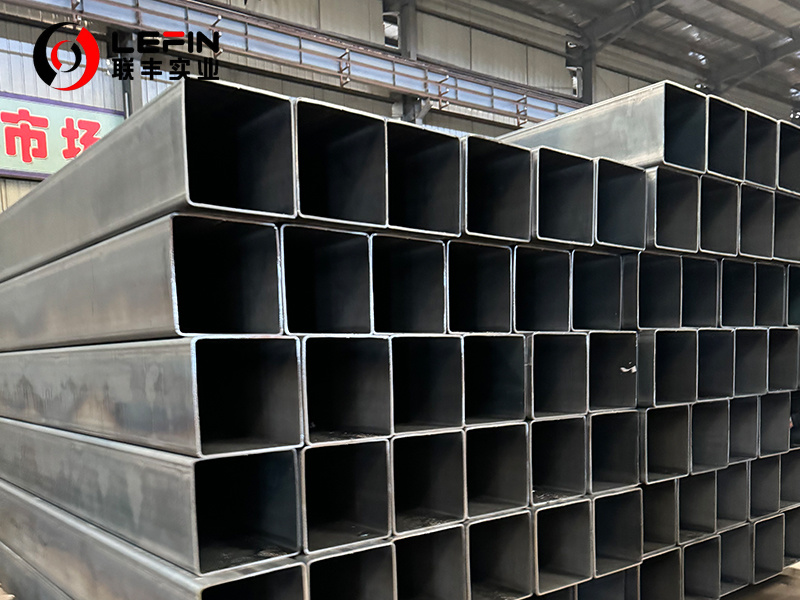
Our main products include 1/2inch to 16 inch ERW PIPE/GI PIPE which has been produced according to BS1387/ASTM A53/EN10219/EN10255/EN10217 Standard -
-
Service Capability
Guarantee Quality
Our steel pipes are suitable for oil, natural gas, shipbuilding, chemical industry, water conservancy, electrical, steel structure, construction and other related fields.

Our main products include 1/2inch to 16 inch ERW PIPE/GI PIPE which has been produced according to BS1387/ASTM A53/EN10219/EN10255/EN10217 Standard
Our main products include 1/2inch to 16 inch ERW PIPE/GI PIPE which has been produced according to BS1387/ASTM A53/EN10219/EN10255/EN10217 Standard
Has rich experience in steel pipe processing, can be customized according to customer requirements according to the drawing and sample processing, assist in the development of new products.
Argentina HEAT TREATMENT TUBES
Product Description
Heat-treated pipes are metal pipes that have undergone specific heat treatment processes, aiming to optimize their mechanical properties, corrosion resistance and service life. The following is a detailed analysis of its key aspects:
1. Definition and Purpose
Heat-treated pipes are metal pipes that undergo processes such as heating, holding and cooling after forming, and their properties are adjusted by changing the microstructure of the material.
The main purposes include:
• Enhance strength and toughness: For instance, increase hardness and impact resistance through quenching and tempering.
• Improve processing performance: Such as annealing to reduce hardness for subsequent processing.
• Enhance corrosion resistance: such as solution treatment of stainless steel pipes.
• Eliminate residual stress: Reduce internal stress caused by cold working or welding.


2. Manufacturing process
1. Raw material preparation
Materials such as carbon steel, alloy steel and stainless steel are selected and formed through hot rolling, cold drawing or welding.
2. Heat treatment process
• Heating: Precisely control the temperature (for example, normalizing temperature 30-50℃ above Ac3).
• Insulation: Ensure uniform heating of the material, and the heating time depends on the thickness of the pipe.
• Cooling: The methods include air cooling (normalizing), furnace cooling (annealing), or water/oil quenching (quenching).
3. Subsequent processing
Straightening, cutting, and surface treatment (such as galvanizing, sandblasting) to enhance precision and corrosion resistance.
4. Quality Inspection
Ultrasonic flaw detection, hardness testing, metallographic analysis, etc. ensure that the performance meets the standards.
4. Common material types
• Carbon steel: Economical and practical, suitable for general structural tubes (such as ASTM A106).
Alloy steel: With elements such as Cr and Mo added, it is used in high-temperature and high-pressure environments (such as boiler tubes).
• Stainless steel: It has strong corrosion resistance (such as 304, 316L) and is used in the food and chemical industries.
• Nickel-based alloys: High-end applications in extreme environments (high temperatures/corrosion).
5. Core advantages
• Customizable performance: Different requirements can be met by adjusting the process.
• Extended service life: For instance, the high-temperature resistance of the pipe materials in the automotive exhaust system is enhanced after heat treatment.
• Economy: Reduce material waste and optimize production costs.
6. Application fields
• Energy industry: Oil drilling tubes, boiler tubes, heat exchangers for nuclear power plants.
• Automobile manufacturing: drive shafts, exhaust systems, hydraulic pipelines.
• Mechanical engineering: Hydraulic cylinders, bearing sleeves, precision instrument components.
• Chemical Engineering and Construction: Conveying pipelines and structural supports in corrosive environments.
7. Standards and Norms
• International standards: ASTM A519 (seamless carbon steel tubes), API 5CT (oil casing), EN 10216 (pressure steel tubes).
• Quality control: It needs to comply with ISO 9001 and industry-specific testing standards.
8. Select considerations
• Working environment: Temperature, pressure, corrosive medium.
• Mechanical requirements: strength, toughness, fatigue life.
Cost-effectiveness: Balancing performance requirements with budget constraints.

9. Challenges and Precautions
• Process control: Temperature deviations may lead to uneven performance.
Residual stress management: It needs to be eliminated through tempering or stress annealing.
• Equipment requirements: High-temperature furnaces and precise temperature control systems require relatively high investment.
Address: Hengtai Road,Daqiuzhuang Town,Jinghai County,Tianjin,China
Mob: +8615122229899(whatspp)
Phone: +86 22 58171905
Fax: +86 22 58171902
E-mail:info@lefinsteel.com
Get company updates
Tianjin Lefin Industrial Co.,Ltd. All rights reserved City sub-station SEO www.300.cn