

-
About us
 Tianjin lefin Industrial
TIANJIN LEFIN STEEL GROUP containing Tianjin lefin Industrial Co.,Ltd. 、Tianjin lefin steel import & export Co.,Ltd and Tianjin Shengqifeng International Trading Co., Ltd. -
Products
Steel Pipe Processing
Our main products include 1/2inch to 16 inch ERW PIPE/GI PIPE which has been produced according to BS1387/ASTM A53/EN10219/EN10255/EN10217 Standard -
-
Service Capability
Guarantee Quality
Our steel pipes are suitable for oil, natural gas, shipbuilding, chemical industry, water conservancy, electrical, steel structure, construction and other related fields.
What Factors Affect The Quality Of Large-diameter Spiral Steel Pipes?
Release time:
2026-06-05
A Comprehensive Analysis of Factors Affecting the Quality of Large-Diameter Spiral Steel Pipes
Large-diameter spiral steel pipes (typically referring to those with a diameter of 500mm or more) are widely used in fields such as oil and gas transportation, water supply and drainage, municipal engineering, and foundation reinforcement. Their quality directly affects the safety and service life of the projects.
The quality of these pipes is influenced by five core dimensions: raw materials, productionprocesses, equipment accuracy, quality control, and environment and storage transportation. Each link is closely connected, and any failure in any one link will lead to product defects.
I. Raw Materials: The Foundation of Quality
The performance of more than 90% of the spiral steel pipes is determined by the raw materials, with the core being the quality of the hot-rolled steel strip (sheet).
1. Chemical Composition
- Carbon (C): Excess carbon will increase hardness and strength, but reduce ductility and weldability; too low a content will result in insufficient strength. Common steel grades for oil and gas transportation include Q235B, Q355B, L245, L360, etc. The carbon equivalent (CEV) must be strictly controlled below 0.45% to ensure welding performance.
- Sulfur (S), Phosphorus (P): Harmful impurities. Sulfur causes hot brittleness, and phosphorus causes cold brittleness. High-quality steel pipes require S ≤ 0.030%, P ≤ 0.035%, while high-grade pipeline steel requires S ≤ 0.010%, P ≤ 0.020%.
- Alloy Elements: Manganese (Mn), Silicon (Si), Niobium (Nb), Vanadium (V), etc. are used to refine grains, increase strength and toughness. The content must comply with the standards of corresponding steel grades.
2. Mechanical Properties
- Yield strength, tensile strength, elongation are the core indicators, which must meet the requirements of standards such as GB/T 9711 and API 5L.
- Impact toughness: Low-temperature impact energy (such as -20°C, -40°C) is crucial for steel pipes used in cold regions. Ineligible products may cause low-temperature brittle fracture.
3. Surface and Dimension Accuracy of Steel Strip
- Surface Defects: Defects such as cracks, scars, folds, scratches, and delamination on the steel strip will directly pass on to the steel pipe, becoming weak points of the weld or base material.
- Thickness Tolerance: Uneven thickness of the steel strip will lead to excessive wall thickness deviation of the steel pipe, affecting its pressure-bearing capacity; Width deviation of the steel strip will affect the lap length of the forming seam.
- Plate Shape: Sickle bends and wave bends of the steel strip will make the steel pipe forming difficult, resulting in misalignment, excessive ellipticity, and other problems.

II. Production Process: The Core Control Link of Quality
Spiral steel pipes are produced using the spiral submerged arc welding (SAWH) process. Every step from the unwinding of the steel strip to the final delivery of the finished product affects the final quality.
1. Steel Strip Pre-treatment Process
- Straightening: Incomplete steel strip straightening can lead to unstable forming and pipe body bending.
- Edge Milling: The milling quality of the steel strip edges directly affects the welding quality. The roughness, verticality, and bevel angle of the edges after milling must meet the requirements; otherwise, it will cause incomplete welding, slag inclusion, and other defects.
2. Forming Process
- Forming Angle: The forming angle determines the helical rise angle of the steel pipe. It needs to be precisely calculated based on the width of the steel strip and the diameter of the steel pipe. Deviation exceeding this range will cause the diameter of the steel pipe to exceed the standard.
- Forming Speed: Excessive speed will lead to unstable forming, resulting in large ellipticity of the pipe body and excessive misalignment; too slow speed will affect production efficiency.
- Forming Roller Pressure: Uneven pressure will cause uneven wall thickness of the pipe body and surface indentation, and even cracks.
- Misalignment: The misalignment at the steel strip joint is a key indicator. According to GB/T 9711, the misalignment should not exceed 12.5% of the wall thickness and should not exceed 3mm at most. Excessive misalignment will cause stress concentration in the weld seam and reduce the pressure-bearing capacity.
3. Welding Process (The Most Critical Link)
- Welding Method: Usually, internal and external double-sided submerged arc welding is adopted. The internal welding ensures the penetration of the weld root, and the external welding ensures the formation and strength of the weld surface.
- Welding Parameters: Parameters such as current, voltage, welding speed, wire diameter, welding agent brand, and drying temperature need to be strictly matched. Excessive current can lead to burn-through, while too small current will result in incomplete welding; too high voltage can cause pores, and too low voltage will result in poor weld formation.
- Welding Wire and Welding Agent: The chemical composition of the welding wire needs to match the base material, and the welding agent needs to be dried according to the specified temperature (usually 300-350℃, with a holding time of 1-2 hours). Otherwise, pores and slag inclusion will occur in the weld seam.
- Welding Excess Height: Excess welding height will lead to stress concentration, while too low welding height will result in insufficient strength. Generally, the excess height should be 0.5-2.5mm.
4. Non-destructive Testing Process

- Ultrasonic Testing (UT): Used to detect internal defects such as incomplete welding, slag inclusion, and cracks in the weld seam. The detection sensitivity must meet the standard requirements.
- Radiographic Testing (RT): Used to detect volume-type defects such as pores and slag inclusion in the weld seam. Usually, re-inspection is conducted on suspicious areas found by ultrasonic testing.
- Magnetic Particle Testing (MT): Used to detect cracks and other defects on the surface and near the surface of the weld seam.
- Magnetic Flux Leakage Testing (MFL): Used to detect defects in the steel pipe base material, such as delamination and cracks.
- The professional level and responsibility of the inspectors directly affect the accuracy of the test results. Omission or misjudgment will lead to unqualified products entering the market.
5. Hydraulic Test Process
- The hydraulic test is a key process for testing the pressure-bearing capacity and sealing performance of the steel pipe. The test pressure is determined based on the steel grade, wall thickness, and diameter of the steel pipe. The holding time is usually no less than 10 seconds.
- During the test, it is necessary to check whether the steel pipe has leakage, sweating, deformation, etc. Unqualified steel pipes need to be reworked or scrapped.
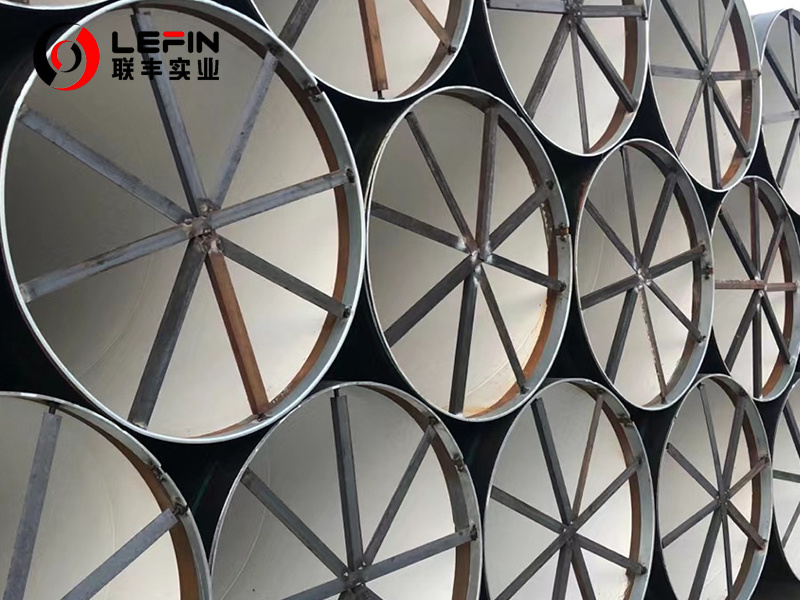
6. Anti-corrosion and Thermal Insulation Process
- The quality of the anti-corrosion layer directly affects the service life of the steel pipe. Common anti-corrosion methods include 3PE anti-corrosion, epoxy coal tar asphalt anti-corrosion, and cement mortar inner lining anti-corrosion, etc.
- Surface treatment (de-scaling) before anti-corrosion is crucial. The descaling grade must reach Sa2.5, and the surface roughness must meet the requirements. Otherwise, the adhesion of the anti-corrosion layer will be poor and it will fall off.
- The thickness, adhesion, and electrospark detection of the anti-corrosion layer must meet the standard requirements.

III. Equipment Precision: The Hardware Guarantee of Quality
The precision and condition of production equipment directly affect the stability of product quality.
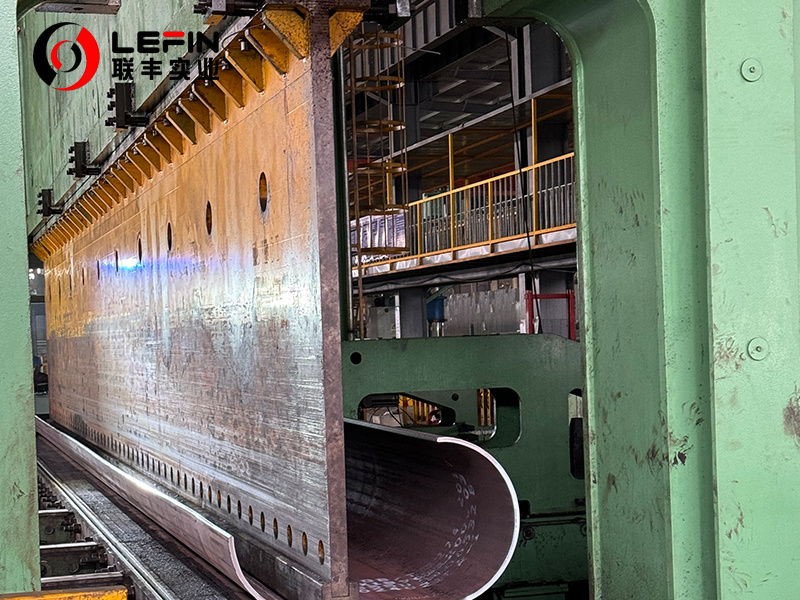
- Forming Equipment: The rigidity of the forming machine's frame, the precision of the forming rollers, and the degree of wear will affect the forming quality of steel pipes. Severe wear of the forming rollers will cause indentation and excessive ellipticity on the pipe surface.
- Welding Equipment: The stability of the welding power supply, the precision of the wire feeding mechanism, and the adjustment precision of the welding gun will affect the stability of welding parameters, thereby affecting the weld quality.
- Inspection Equipment: The sensitivity of non-destructive testing equipment and its calibration status will affect the detection rate of defects. Pressure gauges and safety valves of the water pressure test equipment need to be regularly calibrated to ensure the accuracy of the test pressure.
- Straightening Equipment: The precision of the flat head beveling machine and the straightening machine will affect the end face quality and straightness of steel pipes. Inconsistent end faces and deviations in bevel angles will affect on-site welding construction.

IV. Quality Control System: Institutional Guarantee for Quality Consistency
A well-established quality control system is the key to ensuring the consistency of product quality.
- Factory Inspection of Raw Materials: Conduct chemical composition, mechanical properties, surface quality, dimensional accuracy, etc. tests on each batch of steel strips. Unqualified raw materials must not be put into production.
- Process Quality Control: Conduct on-site inspections and spot checks for each process in the production line, promptly identify and correct process deviations to avoid batch non-conformities.
- Finished Product Inspection: Conduct inspections such as appearance, size, hydrostatic test, and non-destructive testing on each steel pipe. Only those that pass the inspection can be released from the factory and a quality certificate will be issued.
- Quality Traceability System: Establish a complete quality traceability system. Each steel pipe has a unique number, allowing for traceability to the raw material batch, production team, production date, inspection records, etc. information.
V. Environment and Storage: The Final Line of Defense for Quality
- Production Environment: The temperature, humidity, and dust in the welding workshop can affect the welding quality. Excessive humidity can cause pores in the weld seam, and excessive dust can affect the performance of the welding flux.
- Storage Conditions: Steel pipes should be stored in a dry and ventilated warehouse to avoid rain, moisture, and rust. Different specifications and grades of steel pipes should be stored separately to prevent mixing.
- Transportation Process: During transportation, effective protective measures should be taken to avoid the pipes from being hit, squeezed, or scratched, which could cause deformation of the pipe body and damage to the anti-corrosion layer.


Tags:
Relevant Project
Address: Hengtai Road,Daqiuzhuang Town,Jinghai County,Tianjin,China
Mob: +8615122229899(whatspp)
Phone: +86 22 58171905
Fax: +86 22 58171902
E-mail:info@lefinsteel.com
Get company updates
Tianjin Lefin Industrial Co.,Ltd. All rights reserved City sub-station SEO www.300.cn