

-
About us
 Tianjin lefin Industrial
TIANJIN LEFIN STEEL GROUP containing Tianjin lefin Industrial Co.,Ltd. 、Tianjin lefin steel import & export Co.,Ltd and Tianjin Shengqifeng International Trading Co., Ltd. -
Products
Steel Pipe Processing
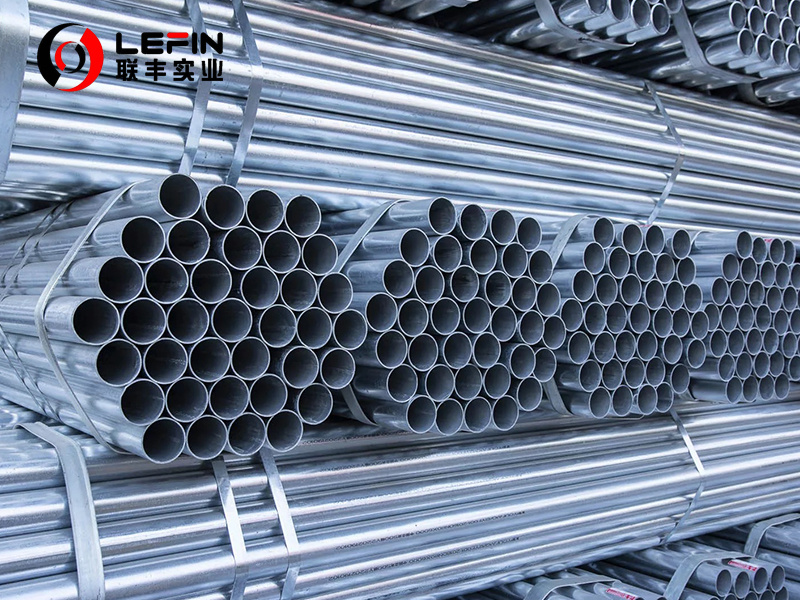
Our main products include 1/2inch to 16 inch ERW PIPE/GI PIPE which has been produced according to BS1387/ASTM A53/EN10219/EN10255/EN10217 Standard -
-
Service Capability
Guarantee Quality
Our steel pipes are suitable for oil, natural gas, shipbuilding, chemical industry, water conservancy, electrical, steel structure, construction and other related fields.
Residual Stress Of Steel Pipes
Release time:
2025-11-26
During the manufacturing and processing of steel pipes, due to the uneven deformation and temperature changes inside, a kind of stress that can self-balance even without external force is formed inside them. This is residual stress.
🔍 Residual stress in steel pipes: causes, effects and elimination strategies
🔬 Definition and causes of residual stress
Residual stress refers to the stress that remains within a metal and is in self-equilibrium after the external force is eliminated. Its emergence mainly stems from the inhomogeneity of various physical phenomena during the manufacturing process.
• Uneven cooling:
During the hot rolling process, when the steel pipe cools from a high-temperature state, if the cooling rates of different parts of the cross-section are not consistent, it will lead to asynchronous contraction, thereby forming self-balancing residual stress inside. Generally, the larger the cross-sectional size of the section steel, the greater the residual stress.
• Uneven plastic deformation:
During cold working processes such as cold rolling and cold drawing, metallic materials undergo extrusion by the rolls and plastic deformation. If the deformation degrees of the inner and outer layers of the steel pipe are not consistent, it will lead to a non-uniform stress distribution.
• Welding process:
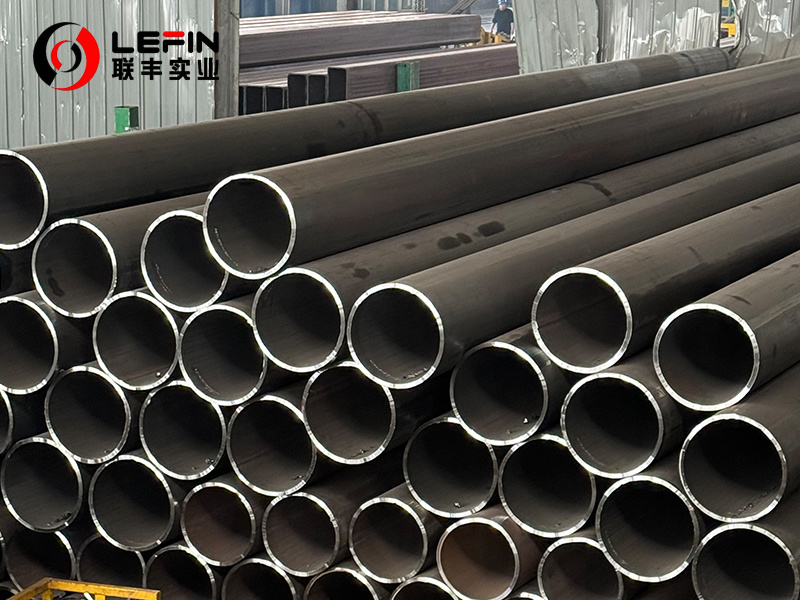
In the manufacturing of straight seam welded pipes or spiral welded pipes, the metal in the weld area undergoes intense local heating and cooling. During this process, the local strain induced by weld seam contraction is often several times that of the yield point strain, thereby generating huge welding residual stress.
⚠️ The main influence of residual stress
The existence of residual stress is like sowing the "seeds of hidden dangers" inside the steel pipe, posing multiple threats to its performance and service life.
1. Cause deformation and dimensional instability:
Residual stress can disrupt the mechanical balance inside the steel pipe, leading to deformation such as bending or twisting during subsequent processing, storage or use. When the residual stress exceeds 15% of the material's yield strength, the straightness error of the finished steel pipe may increase sharply by more than 30%, seriously affecting the dimensional accuracy of the product.
2. Reduce fatigue life and load-bearing capacity:
Residual stress, especially tensile stress, can significantly reduce the fatigue resistance of steel pipes. Under cyclic loading, areas with residual tensile stress are more prone to initiate fatigue cracks and accelerate their propagation, thereby leading to premature failure of components and shortening their service life.
3. Increased risk of cracking:
For welded steel pipes, the residual stress existing in the weld seam area often presents a three-directional stress state, which greatly increases the risk of cracking. If the steel itself has delamination (inclusions are pressed into thin sheets), residual stress may also cause interlayer tearing when the weld seam shrinks.
4. Intensify intergranular corrosion:
Residual stress can enhance the chemical reactivity of metals. Under the action of residual tensile stress, steel pipes (especially stainless steel pipes) are particularly prone to intergranular corrosion cracking, that is, they are corroded at the crystal boundaries, thereby seriously affecting their corrosion resistance.
5. Impact on mechanical properties and construction safety:
Taking spiral welded pipes as an example, the Angle between the crack direction of the spiral line distribution and the pipe axis (usually 30-70°) and the shear failure Angle is similar, which means that its bending, tensile, compressive and torsional performance may be inferior to that of straight seam submerged arc welded pipes. In addition, during the construction process, the intersection line welds at the nodes may cut the spiral seams, generating significant welding stress and weakening the safety performance of the components.
💡 The main methods for eliminating residual stress
The core idea of overcoming residual stress is to provide it with an "outlet for release", usually through physical or thermodynamic methods. The following table compares three mainstream elimination methods:
| Elimination Method | Core Principles | Applicable Scene | Elimination Effect | Key Key Advantages |
| Heat Treating | By heating, atoms gain energy to rearrange themselves, and stress is released during the slow cooling process | High-precision and high-stress pipe materials; Relieve stress after welding. | It can eliminate 60% to 90% of the stress, with the most thorough effect. | It has the most thorough effect and is the mainstream solution in industry. |
| Mechanical Method | By applying external forces such as vibration or pressure, local plastic deformation is caused, thereby offsetting or reducing residual stress | Large pipe materials, on-site construction, and scenarios where heating is inconvenient. | Usually, 30% to 60% of the stress is eliminated. | Flexible and efficient, no heating required, and low cost. |
| Natural Aging | By taking advantage of the long-term temperature changes and slight vibrations in the natural environment, stress is released slowly and naturally | Low-carbon steel pipes with not strict requirements for construction period and not high stress levels. | It takes an extremely long time (3 to 12 months), eliminating only 20% to 30% | The cost is extremely low, requiring no equipment or energy |
🔍Specific applications of mechanical methods:
• Key points of the heat treatment process:
Common stress relief annealing involves heating the steel pipe to a certain temperature (usually below the phase transformation temperature or recrystallization temperature, such as 500-650℃), holding it for a period of time, and then cooling it slowly. For high-carbon steel or alloy steel, low-temperature tempering (150-250℃) can also be adopted to eliminate some stress without significantly reducing hardness.
• Specific applications of mechanical methods:
Vibration stress relief: Fix the exciter on the steel pipe and apply vibration of a specific frequency to make it resonate, thereby homogenizing or eliminating stress. This method has low energy consumption and short time consumption, but its elimination effect is not as good as that of heat treatment.
Pressure straightening: By applying pressure to the bent or stress-concentrated parts of the steel pipe through a hydraulic press, reverse plastic deformation is produced to balance the stress.
• Process combination application:
In actual industrial production, these methods are often combined and used according to specific circumstances. For instance, for steel pipes with extremely high requirements, after heat treatment and stress relief annealing, vibration aging treatment may be supplemented to further stabilize the dimensions and stress state. By optimizing the rolling process parameters, improving the mold design and introducing intelligent control technology, the generation of residual stress can be reduced from the source.
Tags:
Relevant Project
Address: Hengtai Road,Daqiuzhuang Town,Jinghai County,Tianjin,China
Mob: +8615122229899(whatspp)
Phone: +86 22 58171905
Fax: +86 22 58171902
E-mail:info@lefinsteel.com
Get company updates
Tianjin Lefin Industrial Co.,Ltd. All rights reserved City sub-station SEO www.300.cn