

-
About us
 Tianjin lefin Industrial
TIANJIN LEFIN STEEL GROUP containing Tianjin lefin Industrial Co.,Ltd. 、Tianjin lefin steel import & export Co.,Ltd and Tianjin Shengqifeng International Trading Co., Ltd. -
Products
Steel Pipe Processing
Our main products include 1/2inch to 16 inch ERW PIPE/GI PIPE which has been produced according to BS1387/ASTM A53/EN10219/EN10255/EN10217 Standard -
-
Service Capability
Guarantee Quality
Our steel pipes are suitable for oil, natural gas, shipbuilding, chemical industry, water conservancy, electrical, steel structure, construction and other related fields.
- Details
-
Brief Description
JIS G3101 SS400 is a widely used carbon structural steel grade in Japan. It is known for its excellent mechanical properties and versatility, making it suitable for various structural applications. The "SS" in SS400 stands for "structural steel," while "400" indicates that its tensile strength is at least 400 MPa.
Basic Information
SS400 STEEL PIPE
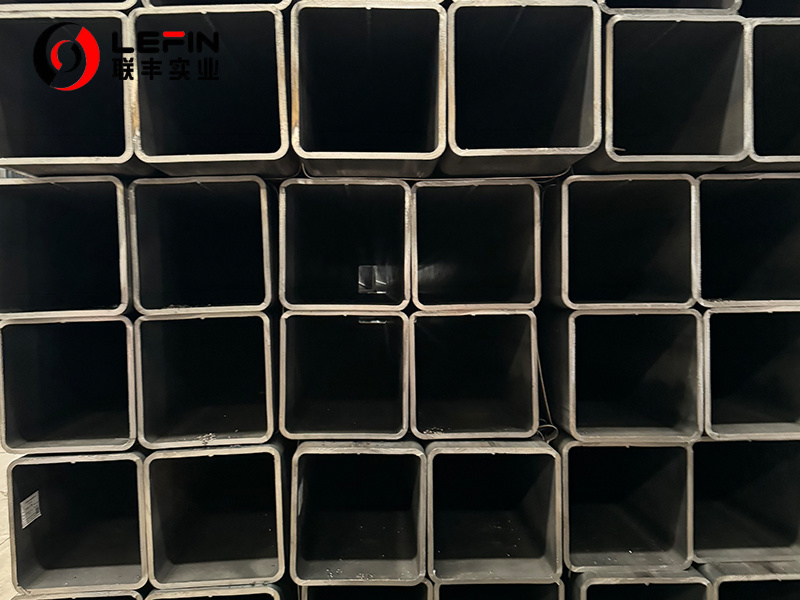
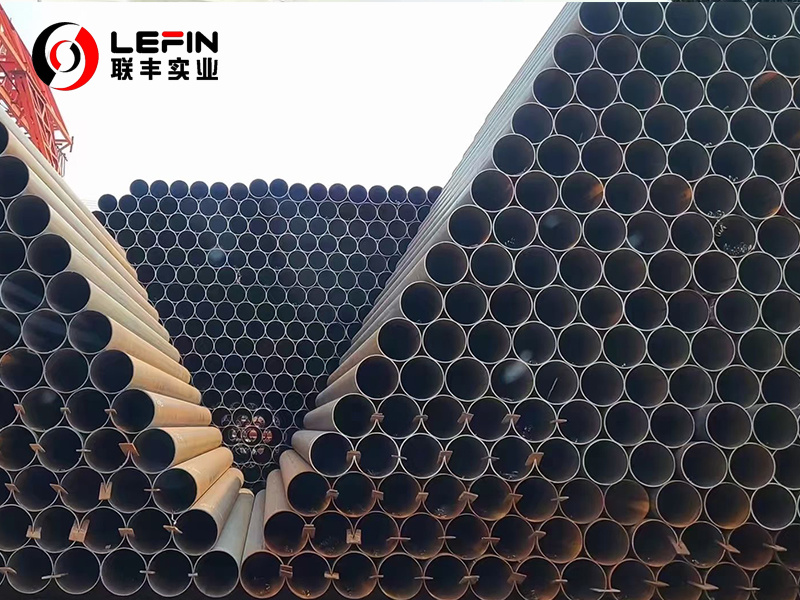
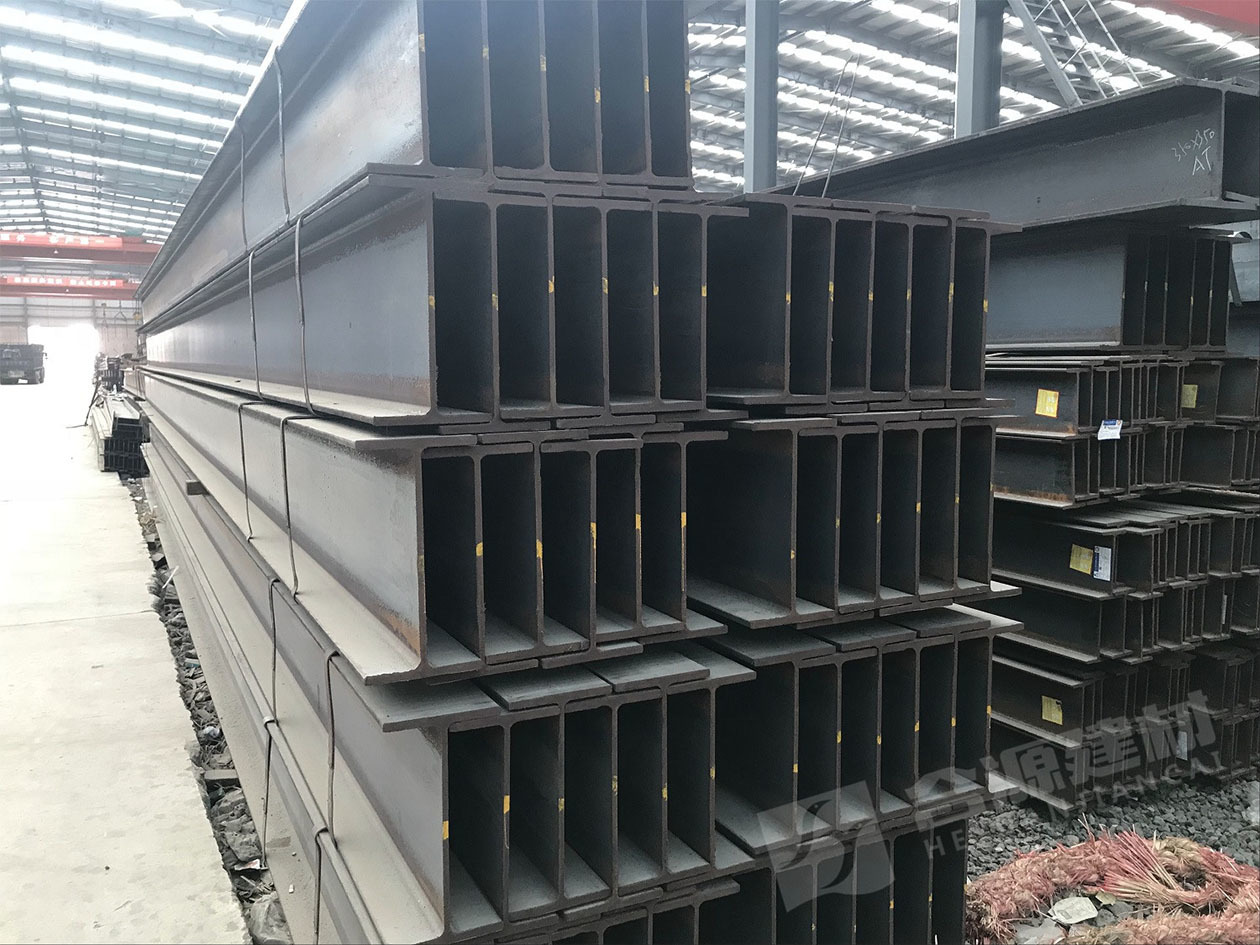
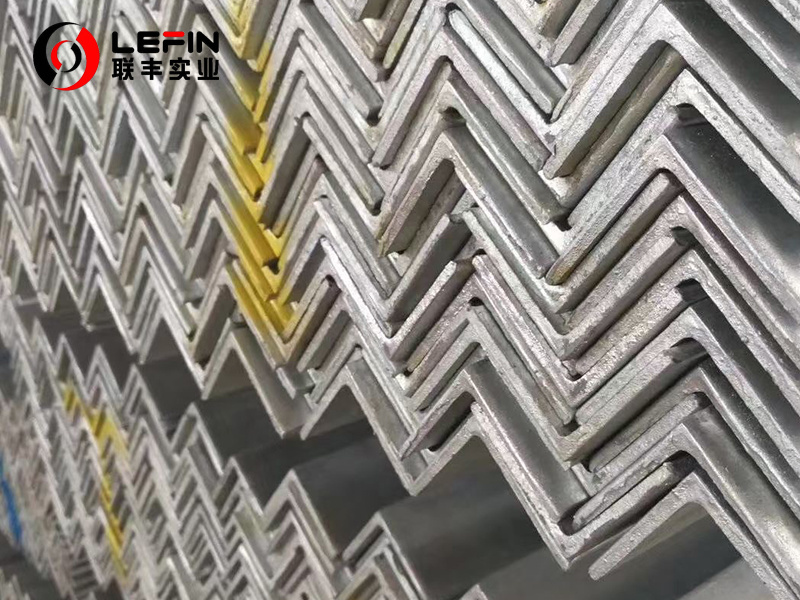
Type: Plate/sheet, Strip in coil, Section, Flat and Bar, Circular Hollow Section(CHS) , Rectangular Hollow Section(RHS), Square Hollow Section(SHS)
Standard: JIS G3101
Outside Diameter:
1/2 INCH - 24 INCH(CHS)
20MM × 20MM - 1200MM × 1200MM(SHS)
20MM × 30MM - 1000MM × 1500MM(RHS)
Wall Thickness:
1.3MM - 22MM(CHS)
1.3MM - 50MM(SHS,RHS)
Length: Commonly used 5.8M, 6M, 12M, but we can also produces depends on client's requirement.
Common Process:
ERW: 20MM - 660MM (OD) Wall Thickness: 1.3MM - 50MM
SSAW: 219MM - 4084MM (OD) Wall Thickness: 7.75MM - 25.4MM
Coating: Black paint, Varnish, Anti-rust oil.
Applications: Construction, Mechanical Engineering, Shipbuilding, Automotive Industry.
Products DescriptionComposition, max, %
SS400
Carbon (C)
-
Manganese (Mn)
-
Phosphorus (P)
0.05
Sulfur (S)
0.05
Elements in the table with no limit values or elements not given in the table may be added as necessary.
Mechanical Properties
Mechanical properties
Symbol
of
grade
Yield point or proof
strength N/mm²Tensile
strength
N/mm²Elongation
Bendability
Thickness a)
mmThickness a)
mmTest
piece%
Bending
angleInner
radius
Test
piecec)≤16 >16
≤40>40
≤100>100 SS400
>245
>235
>215
>205
400 to
510≤5 in thickness of
plates/sheets,strips in
coil,flats and sectionsNo.5
≥21
180°
1.5x
thicknessNo.1
>5≤16 in thickness of
plates/sheets,strips in
coil,flats and sectionsNo.1A
≥17
>16≤50 in thickness of
plates/sheets,strips in
coil,flats and sectionsNo.1A
≥21
>40 in thickness of
plates/sheets,flats and
sectionsNo.4
≥23b)
≤25 in diameter or
distance across flats of
barsNo.2
≥20
180°
1.5x
diameter
or
distance
across
flatsNo.2
>25 indiameter or
distance across flats of
barsNo.14A
≥22
NOTE 1N/mm²=1MPa
Note a) Thickness shall be:thickness at the location of test piece for section;diameter for round bars;anddistance across flats for square and hexagonal bars.
Note b) For the elongation of No.4 test piece of steel plate/sheet of thickness over 90 mm,subtract 1 from thevalues of this table for each increment of 25mm or its fraction in thickness.The number subtracted shall not
exceed 3
Note c) For the bend test of steel products of thickness 5mm or under,No.3 test piece may be used.Production Process
● Primary Smelting: Iron ore is smelted to produce molten steel.
● Refining: The molten steel is refined using processes like LF (Ladle Furnace) and VD (Vacuum Degassing) to achieve the desired chemical composition.
● Continuous Casting: The refined steel is cast into slabs or billets through continuous casting or ingot casting.
● Hot Rolling: The cast slabs are heated and then rolled into the desired shapes and sizes, such as plates, beams, and bars.
● Heat Treatment: The rolled products may undergo heat treatment to enhance their mechanical properties.
● Inspection and Testing: The final products are inspected and tested for mechanical properties, surface quality, and dimensions.
● Cutting and Finishing: Depending on the application, the steel products may be cut into specific sizes using methods like plasma cutting or flame cutting.Advantages And Applications
Advantages
● Good Mechanical Properties: It has a tensile strength of 400-510 MPa and a minimum yield strength of 205-245 MPa, depending on the thickness.
● Excellent Weldability: The low carbon content makes it easy to weld, which is crucial for structural applications.
● Cost-Effective: SS400 is relatively inexpensive, making it suitable for large-scale applications.
● Versatility: It can be easily formed, bent, and machined, allowing for a wide range of applications.Applications
● Construction: For building frames, bridges, high-voltage transmission towers, and other structural components.
● Mechanical Engineering: Used in manufacturing parts that require bending, forming, or welding.
● Automotive and Shipbuilding: Suitable for manufacturing vehicle frames, ship structures, and other components.
● General Engineering: Used for making steel bars, beams, and other structural elements.
In summary, SS400 is a versatile and cost-effective material that meets the demands of general structural applications while offering good mechanical properties and ease of fabrication.
SS400 STEEL PIPE
Subcategory
Keyword
- Details
-
Brief Description
JIS G3101 SS400 is a widely used carbon structural steel grade in Japan. It is known for its excellent mechanical properties and versatility, making it suitable for various structural applications. The "SS" in SS400 stands for "structural steel," while "400" indicates that its tensile strength is at least 400 MPa.
Basic Information
SS400 STEEL PIPE
Type: Plate/sheet, Strip in coil, Section, Flat and Bar, Circular Hollow Section(CHS) , Rectangular Hollow Section(RHS), Square Hollow Section(SHS)
Standard: JIS G3101
Outside Diameter:
1/2 INCH - 24 INCH(CHS)
20MM × 20MM - 1200MM × 1200MM(SHS)
20MM × 30MM - 1000MM × 1500MM(RHS)
Wall Thickness:
1.3MM - 22MM(CHS)
1.3MM - 50MM(SHS,RHS)
Length: Commonly used 5.8M, 6M, 12M, but we can also produces depends on client's requirement.
Common Process:
ERW: 20MM - 660MM (OD) Wall Thickness: 1.3MM - 50MM
SSAW: 219MM - 4084MM (OD) Wall Thickness: 7.75MM - 25.4MM
Coating: Black paint, Varnish, Anti-rust oil.
Applications: Construction, Mechanical Engineering, Shipbuilding, Automotive Industry.
Products DescriptionComposition, max, %
SS400
Carbon (C)
-
Manganese (Mn)
-
Phosphorus (P)
0.05
Sulfur (S)
0.05
Elements in the table with no limit values or elements not given in the table may be added as necessary.
Mechanical Properties
Mechanical properties
Symbol
of
grade
Yield point or proof
strength N/mm²Tensile
strength
N/mm²Elongation
Bendability
Thickness a)
mmThickness a)
mmTest
piece%
Bending
angleInner
radius
Test
piecec)≤16 >16
≤40>40
≤100>100 SS400
>245
>235
>215
>205
400 to
510≤5 in thickness of
plates/sheets,strips in
coil,flats and sectionsNo.5
≥21
180°
1.5x
thicknessNo.1
>5≤16 in thickness of
plates/sheets,strips in
coil,flats and sectionsNo.1A
≥17
>16≤50 in thickness of
plates/sheets,strips in
coil,flats and sectionsNo.1A
≥21
>40 in thickness of
plates/sheets,flats and
sectionsNo.4
≥23b)
≤25 in diameter or
distance across flats of
barsNo.2
≥20
180°
1.5x
diameter
or
distance
across
flatsNo.2
>25 indiameter or
distance across flats of
barsNo.14A
≥22
NOTE 1N/mm²=1MPa
Note a) Thickness shall be:thickness at the location of test piece for section;diameter for round bars;anddistance across flats for square and hexagonal bars.
Note b) For the elongation of No.4 test piece of steel plate/sheet of thickness over 90 mm,subtract 1 from thevalues of this table for each increment of 25mm or its fraction in thickness.The number subtracted shall not
exceed 3
Note c) For the bend test of steel products of thickness 5mm or under,No.3 test piece may be used.Production Process
● Primary Smelting: Iron ore is smelted to produce molten steel.
● Refining: The molten steel is refined using processes like LF (Ladle Furnace) and VD (Vacuum Degassing) to achieve the desired chemical composition.
● Continuous Casting: The refined steel is cast into slabs or billets through continuous casting or ingot casting.
● Hot Rolling: The cast slabs are heated and then rolled into the desired shapes and sizes, such as plates, beams, and bars.
● Heat Treatment: The rolled products may undergo heat treatment to enhance their mechanical properties.
● Inspection and Testing: The final products are inspected and tested for mechanical properties, surface quality, and dimensions.
● Cutting and Finishing: Depending on the application, the steel products may be cut into specific sizes using methods like plasma cutting or flame cutting.Advantages And Applications
Advantages
● Good Mechanical Properties: It has a tensile strength of 400-510 MPa and a minimum yield strength of 205-245 MPa, depending on the thickness.
● Excellent Weldability: The low carbon content makes it easy to weld, which is crucial for structural applications.
● Cost-Effective: SS400 is relatively inexpensive, making it suitable for large-scale applications.
● Versatility: It can be easily formed, bent, and machined, allowing for a wide range of applications.Applications
● Construction: For building frames, bridges, high-voltage transmission towers, and other structural components.
● Mechanical Engineering: Used in manufacturing parts that require bending, forming, or welding.
● Automotive and Shipbuilding: Suitable for manufacturing vehicle frames, ship structures, and other components.
● General Engineering: Used for making steel bars, beams, and other structural elements.
In summary, SS400 is a versatile and cost-effective material that meets the demands of general structural applications while offering good mechanical properties and ease of fabrication.
Related products
Product Consulting
Address: Hengtai Road,Daqiuzhuang Town,Jinghai County,Tianjin,China
Mob: +8615122229899(whatspp)
Phone: +86 22 58171905
Fax: +86 22 58171902
E-mail:info@lefinsteel.com
Get company updates
Tianjin Lefin Industrial Co.,Ltd. All rights reserved City sub-station SEO www.300.cn