

-
About us
 Tianjin lefin Industrial
TIANJIN LEFIN STEEL GROUP containing Tianjin lefin Industrial Co.,Ltd. 、Tianjin lefin steel import & export Co.,Ltd and Tianjin Shengqifeng International Trading Co., Ltd. -
Products
Steel Pipe Processing
Our main products include 1/2inch to 16 inch ERW PIPE/GI PIPE which has been produced according to BS1387/ASTM A53/EN10219/EN10255/EN10217 Standard -
-
Service Capability
Guarantee Quality
Our steel pipes are suitable for oil, natural gas, shipbuilding, chemical industry, water conservancy, electrical, steel structure, construction and other related fields.
- Details
-
AS1163 C350 and C350L0 steel grades are specified by the Australian/New Zealand Standard for Cold-formed structural steel hollow sections. These materials are chosen for their ability to provide high load-bearing capacity and structural integrity in various construction applications.
Chemical Composition
Chemical Composition1,max(%)
Carbon (C) Silicon (Si) Manganese (Mn) Phosphorus (P) Sulfur (S) Chromium(Cr) Molybdenum(Mo) Aluminium2(Al) Titanium (Ti) Micro-alloying
elementsC350,
C350L00.2 0.45 1.6 0.03 0.03 0.3 0.1 0.1 0.04 0.15 (3) In summary, ASTM A252 piling pipe is an important component of construction projects that require a strong foundation. ASTM A252 GR.3 is the most commonly used standard for pile pipes. These pipes are designed to withstand heavy loads and stresses and can be coated with a protective coating to extend their service life.
1 The following elements may be present to the limits stated: copper 0.25%,nickel 0.25%.
2 Limlts specified are for soluble or total aluminium.
3 Applies to niobium,vanadium and titanium only.However,vanadium greater than 0.10% is not permitted.● Carbon (C), which contributes to the steel's strength and hardness.
● Silicon (Si), that improves the steel's strength and resistance to atmospheric corrosion.
● Manganese (Mn), which enhances the steel's strength, toughness, and hardenability.
● Phosphorus (P), a trace element that can affect the steel's ductility and toughness if present in higher amounts.
● Sulfur (S), another trace element that can negatively impact weldability if present in excess.
● Chromium (Cr), which can improve the steel's corrosion resistance.
● Molybdenum (Mo), an alloying element that enhances the steel's strength at high temperatures and its resistance to creep.
● Aluminum (Al), used to improve the steel's resistance to scaling at high temperatures.
● Titanium (Ti), used to control the grain size and improve the steel's strength.
● Micro-alloying elements, which can include elements like niobium or vanadium that further refine the steel's properties.CLICK HERE➡What Is AS1163 STANDARD
Mechanical Properties
Grade
Minimum
Yield
Strength
MPaMinimum
Tensile
Strength
MPaMinimum Elongation ,%
Circular hollow
sections
d0/tRectangular hollow
sections
b/t,d/t≤15 >15≤30 >30 ≤15 >15≤30 >30 C350,C350L0 350 430 16 18 20 12 14 16
d0 nominal outside diameter of a circular hollow section.
b nominal length of side of a square hollow section;nominallength ofthe shorter side of a rectangular hollow section.
d nominal length of the longer side of a rectangular hollow section.
t nominal thickness● Yield Strength: The minimum yield strength for AS1163 C350L0 is 350 MPa, which is indicated by the "350" in its grade name . This measure of strength is crucial as it indicates the point at which the steel begins to deform plastically under load.
● Tensile Strength: The tensile strength, or ultimate tensile strength, for AS1163 C350L0 is 430 MPa, indicating the maximum stress the material can withstand before breaking .
● Elongation (A): The elongation percentage, which measures the percentage of deformation before fracture . This indicates the material's ductility and ability to absorb energy before failure.Applications
● Structural Engineering: They are used for constructing columns, beams, and support structures in buildings and bridges, offering superior load-bearing capabilities.
● Piping Systems: Ideal for industrial and infrastructure projects due to their hollow cylindrical shape, used for transporting fluids and gases.
● Infrastructure Development: Employed in bridge construction and retaining walls, providing strength and resistance to environmental factors.
● Architectural Applications: Incorporated into façade systems and canopies for structural support and aesthetic appeal.
● Industrial and Manufacturing: Used in machinery frames and material handling systems for their robustness and adaptability.

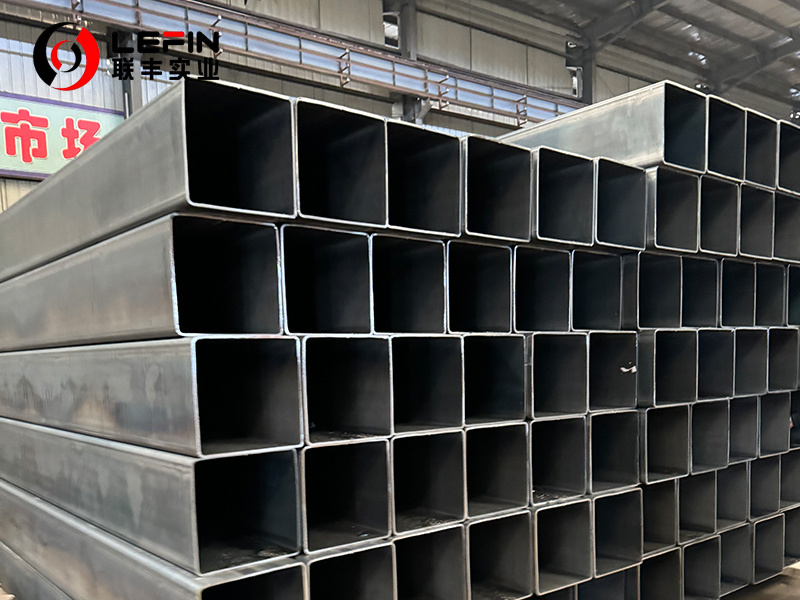
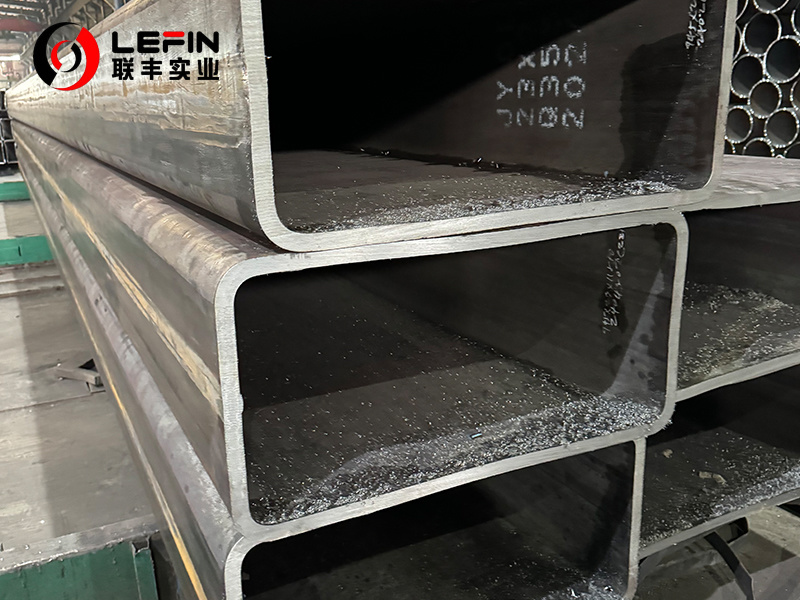
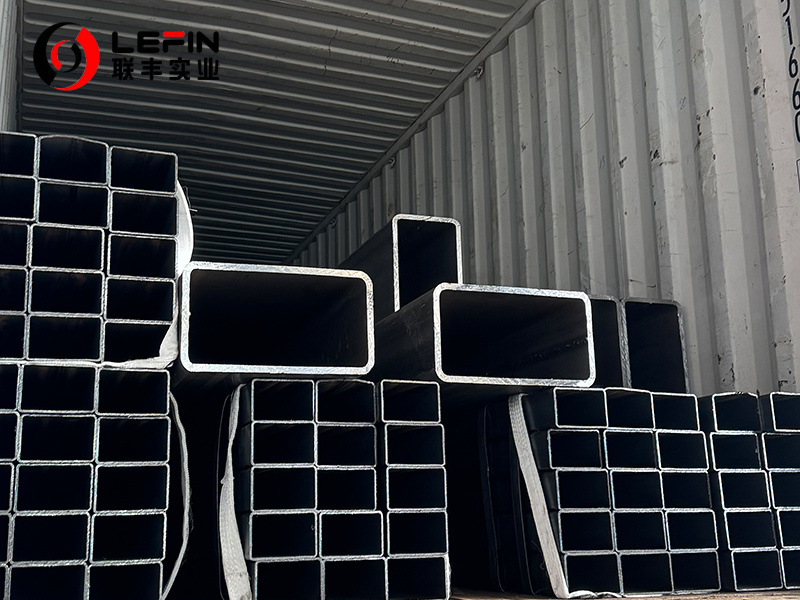
AS1163 C350,C350L0 HOLLOW SECTION
Subcategory
Keyword
- Details
-
AS1163 C350 and C350L0 steel grades are specified by the Australian/New Zealand Standard for Cold-formed structural steel hollow sections. These materials are chosen for their ability to provide high load-bearing capacity and structural integrity in various construction applications.
Chemical Composition
Chemical Composition1,max(%)
Carbon (C) Silicon (Si) Manganese (Mn) Phosphorus (P) Sulfur (S) Chromium(Cr) Molybdenum(Mo) Aluminium2(Al) Titanium (Ti) Micro-alloying
elementsC350,
C350L00.2 0.45 1.6 0.03 0.03 0.3 0.1 0.1 0.04 0.15 (3) In summary, ASTM A252 piling pipe is an important component of construction projects that require a strong foundation. ASTM A252 GR.3 is the most commonly used standard for pile pipes. These pipes are designed to withstand heavy loads and stresses and can be coated with a protective coating to extend their service life.
1 The following elements may be present to the limits stated: copper 0.25%,nickel 0.25%.
2 Limlts specified are for soluble or total aluminium.
3 Applies to niobium,vanadium and titanium only.However,vanadium greater than 0.10% is not permitted.● Carbon (C), which contributes to the steel's strength and hardness.
● Silicon (Si), that improves the steel's strength and resistance to atmospheric corrosion.
● Manganese (Mn), which enhances the steel's strength, toughness, and hardenability.
● Phosphorus (P), a trace element that can affect the steel's ductility and toughness if present in higher amounts.
● Sulfur (S), another trace element that can negatively impact weldability if present in excess.
● Chromium (Cr), which can improve the steel's corrosion resistance.
● Molybdenum (Mo), an alloying element that enhances the steel's strength at high temperatures and its resistance to creep.
● Aluminum (Al), used to improve the steel's resistance to scaling at high temperatures.
● Titanium (Ti), used to control the grain size and improve the steel's strength.
● Micro-alloying elements, which can include elements like niobium or vanadium that further refine the steel's properties.CLICK HERE➡What Is AS1163 STANDARD
Mechanical Properties
Grade
Minimum
Yield
Strength
MPaMinimum
Tensile
Strength
MPaMinimum Elongation ,%
Circular hollow
sections
d0/tRectangular hollow
sections
b/t,d/t≤15 >15≤30 >30 ≤15 >15≤30 >30 C350,C350L0 350 430 16 18 20 12 14 16
d0 nominal outside diameter of a circular hollow section.
b nominal length of side of a square hollow section;nominallength ofthe shorter side of a rectangular hollow section.
d nominal length of the longer side of a rectangular hollow section.
t nominal thickness● Yield Strength: The minimum yield strength for AS1163 C350L0 is 350 MPa, which is indicated by the "350" in its grade name . This measure of strength is crucial as it indicates the point at which the steel begins to deform plastically under load.
● Tensile Strength: The tensile strength, or ultimate tensile strength, for AS1163 C350L0 is 430 MPa, indicating the maximum stress the material can withstand before breaking .
● Elongation (A): The elongation percentage, which measures the percentage of deformation before fracture . This indicates the material's ductility and ability to absorb energy before failure.Applications
● Structural Engineering: They are used for constructing columns, beams, and support structures in buildings and bridges, offering superior load-bearing capabilities.
● Piping Systems: Ideal for industrial and infrastructure projects due to their hollow cylindrical shape, used for transporting fluids and gases.
● Infrastructure Development: Employed in bridge construction and retaining walls, providing strength and resistance to environmental factors.
● Architectural Applications: Incorporated into façade systems and canopies for structural support and aesthetic appeal.
● Industrial and Manufacturing: Used in machinery frames and material handling systems for their robustness and adaptability.
Related products
Product Consulting
Address: Hengtai Road,Daqiuzhuang Town,Jinghai County,Tianjin,China
Mob: +8615122229899(whatspp)
Phone: +86 22 58171905
Fax: +86 22 58171902
E-mail:info@lefinsteel.com
Get company updates
Tianjin Lefin Industrial Co.,Ltd. All rights reserved City sub-station SEO www.300.cn