

-
About us
 Tianjin lefin Industrial
TIANJIN LEFIN STEEL GROUP containing Tianjin lefin Industrial Co.,Ltd. 、Tianjin lefin steel import & export Co.,Ltd and Tianjin Shengqifeng International Trading Co., Ltd. -
Products
Steel Pipe Processing
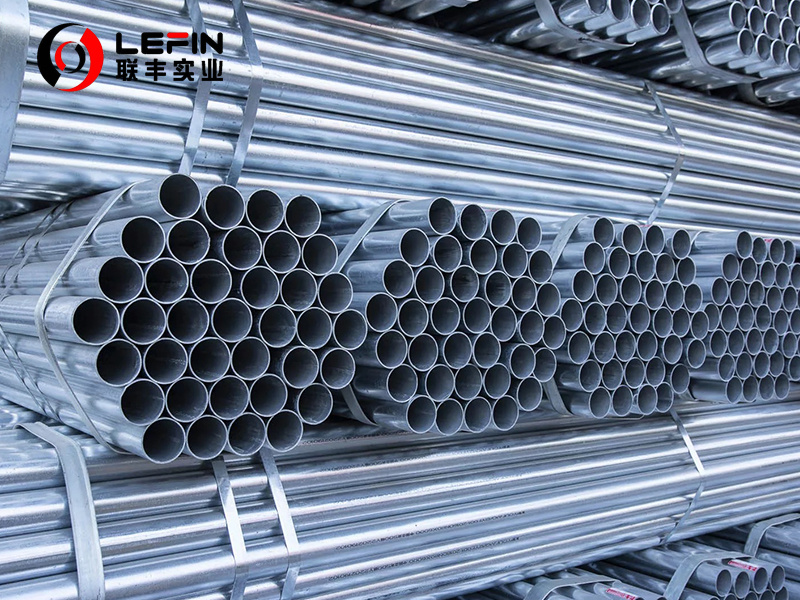
Our main products include 1/2inch to 16 inch ERW PIPE/GI PIPE which has been produced according to BS1387/ASTM A53/EN10219/EN10255/EN10217 Standard -
-
Service Capability
Guarantee Quality
Our steel pipes are suitable for oil, natural gas, shipbuilding, chemical industry, water conservancy, electrical, steel structure, construction and other related fields.
- Details
-
Galvanized Steel Pipe Comprehensive Analysis: Classification, Process, Zinc Layer Control and Application
I. Main Classification of Galvanized Steel Pipes
Galvanized steel pipes are anti-corrosion steel pipes with a zinc coating on the surface. The core classification methods are as follows:
1. Classified by the core galvanizing process (most commonly used):- Hot-dip galvanized steel pipes (hot-dip galvanized pipes): The mainstream in the industry, accounting for over 90%, the pipes are made first and then galvanized, with the zinc layer metallurgically bonded to the steel pipe
- Electro-galvanized steel pipes (cold-dip galvanized pipes): Zinc layer is deposited through electrolysis, and they have gradually been restricted for use in critical fields such as water supply, drainage, and gas
- Pre-galvanized steel pipes (galvanized strip pipes): The steel strips are directly welded into pipes, galvanizing is done first and then the pipes are made, with the lowest cost
- Hot-dip seamless steel pipes: Hot-dip galvanized products with seamless steel pipes as the base material, used in high-pressure and highly corrosive scenarios
- Alloyed galvanized steel pipes (GA pipes): After hot-dip galvanizing, they undergo alloying treatment at 500-550℃ to form a zinc-iron alloy layer, with better weldability
2. Classification by steel pipe substrate- Welded galvanized steel pipe: Based on high-frequency welded pipe as the substrate, it has low cost and is used for low-pressure fluid transportation
- Seamless galvanized steel pipe: Based on seamless steel pipe as the substrate, it has high strength and is used for high-pressure and precise fluid transportation
3. Classification by Application
- Galvanized steel pipes for low-pressure fluid transportation (GB/T 3091): Water supply and drainage, gas, heating pipelines
- Galvanized steel pipes for protecting electrical wires and cables (GB/T 20041): Building conduit pipes
- Galvanized steel pipes for structures (GB/T 13793): Scaffolding, guardrails, steel structure supports

II. Types of Raw Materials for Galvanized Steel Pipes
1. Core Material: Black Pipe
- Welded Black Pipe: The raw material is hot-rolled steel strip (Q235B, Q355B, etc.), which is formed by high-frequency welding. It is the most commonly used base material for galvanized pipes.
- Seamless Black Pipe:The raw material is round steel billet (20, 45, etc.), which is produced by hot rolling or cold drawing, and is used in high-pressure scenarios.
2. Special raw materials for pre-galvanized pipes: Galvanized steel strip- Made by continuous hot-dip galvanizing production line from hot/ cold-rolled steel strips, with thickness ranging from 0.3mm to 3.0mm
- Cut into strips directly and welded into pipes, without the need for subsequent overall galvanizing, resulting in high production efficiency
3. Auxiliary raw materials for galvanizing process- Hot galvanizing: Zinc ingot (99.995% purity), plating agent (ammonium chloride + zinc chloride), passivating agent
- Cold galvanizing: Zinc salt electrolyte (sulfuric acid zinc, zinc chloride), anode zinc plate, additive
III. Definition and Core Applications of Galvanized Strip Steel Definition
Galvanized steel strip is a rolled product where the steel strip is continuously passed through a molten zinc liquid tank to form a uniform zinc coating on its surface. It is divided into hot-dip galvanized steel strip (GI) and electro-galvanized steel strip (EG), among which hot-dip galvanized steel strip accounts for over 95%.
Core Applications
- Manufacturing pre-galvanized steel pipes: The primary application, accounting for over 30% of the consumption of galvanized strip steel. The production cost of galvanized strip pipes is 20%-30% lower than that of hot-dip galvanized pipes.
- Architectural decoration: Light steel keels, color-coated base plates, roof tiles, wall enclosure panels
- Electrical industry: Cable trays, distribution box shells, wire conduits
- Automotive industry: Body parts, chassis protective plates
- Household appliance industry: Refrigerator and washing machine shells, air conditioner external brackets
IV. Effects of Different Processes on Zinc Layer Thickness
The zinc layer thickness varies significantly among different processes and is a crucial factor determining the performance of galvanized pipes:
- Hot-dip galvanizing: The zinc layer is the thickest and has good uniformity. According to the national standard GB/T 3091-2015, for steel pipes with a wall thickness of ≤ 6mm, the average zinc layer thickness should be ≥ 55μm, and the local minimum value should be ≥ 45μm.
- Cold-dip galvanizing: The zinc layer is the thinnest and tends to have uneven thickness. The national standard stipulates that the average zinc layer thickness should be ≥ 12μm.
- Pre-galvanizing: The zinc layer thickness depends on the raw material galvanized steel strip, but during the welding process, the zinc layer at the weld seam will be burned off by high temperature, resulting in almost no zinc layer at the weld seam, which is the most prone to rusting area.
The fundamental reason:
Hot-dip galvanizing involves a metallurgical reaction between molten zinc and the steel pipe, resulting in the natural growth of the zinc layer to a certain thickness; Cold-dip galvanizing is an electrochemical deposition process, and the thickness of the zinc layer is limited by current and time; Pre-galvanizing involves galvanizing first and then manufacturing the pipe, and the welding process will damage the zinc layer.
V. Other Key Factors Affecting Zinc Layer Thickness
1. Influencing Factors of Hot Dipping Galvanizing Process
- Zinc dipping time: The longer the time, the thicker the zinc layer. However, an excessively long time may result in an overly thick zinc layer and rough surface.
- Zinc bath temperature: The higher the temperature, the faster the zinc-iron reaction, and the thicker the zinc layer. However, above 480℃, the brittleness of the zinc layer will increase.
- Steel pipe material: The silicon content has the greatest impact. When the silicon content is between 0.03% and 0.12%, the "Stendelin effect" occurs, causing the zinc layer to abnormally thicken (up to 300μm or more), resulting in rough surface and decreased adhesion.
- Surface roughness: The rougher the steel pipe surface, the thicker the zinc layer and the better the adhesion.
- Components of the coating agent: The ratio of ammonium chloride to zinc chloride in the coating agent affects the uniformity and thickness of the zinc layer.
2. Influencing Factors of Cold Galvanizing Process- Current Density: The higher the current density, the faster the zinc layer deposition rate and the thicker the thickness
- Electroplating Time: The longer the time, the thicker the zinc layer
- Electrolyte Concentration: The higher the concentration, the more zinc ions there are, and the faster the deposition rate
- Electrolyte Temperature: The higher the temperature, the faster the ion movement and the faster the deposition rate
VI. The "Wonderful Applications" of Galvanized Steel Pipes: Multi-Scenario Utilization
1. Construction and Municipal Engineering
- Water Supply and Drainage Pipes: Water supply pipes and rainwater pipes for residences and office buildings
- Gas Pipes: Low-pressure pipes for urban gas transmission
- Scaffolding: Internal and external scaffolding for construction projects, with high strength and reusable nature
- Guardrails and Fencing: Road guardrails, community fences, balcony guardrails
- Advertising Sign Supports: Supporting structures for outdoor advertising signs and directional signs
2. Agriculture and Livestock Farming- Frame for greenhouses: The framework for vegetable greenhouses and flower greenhouses, resistant to corrosion and with a long service life
- Fencing for livestock: Fencing for chicken and pig farms, preventing animals from escaping
- Irrigation pipes:Water supply pipes for farmland irrigation, not prone to rusting and not polluting water quality
- Livestock equipment: Supports for feed troughs and water dispensers
3. Industry and Manufacturing- Wire conduit: Protective pipes for electrical cables in factories and workshops
- Steel structure supports: Steel support columns and beams for factories and warehouses
- Conveyance pipes: Low-pressure fluid conveyance pipes for the chemical and petroleum industries
- Equipment supports:Supports for machine tools and mechanical equipment
4. Civil and Home Appliance Sectors- Clothes Drying Rack: Outdoor clothes drying rack, sturdy and durable, resistant to rust
- Furniture: Iron frames for beds and tables/chairs
- Bicycle Frame: Bicycles and electric vehicles
- Storage Rack: Kitchen and bathroom storage racks


Galvanized Steel Pipe (GI)
Subcategory
Keyword
- Details
-
Galvanized Steel Pipe Comprehensive Analysis: Classification, Process, Zinc Layer Control and Application
I. Main Classification of Galvanized Steel Pipes
Galvanized steel pipes are anti-corrosion steel pipes with a zinc coating on the surface. The core classification methods are as follows:
1. Classified by the core galvanizing process (most commonly used):- Hot-dip galvanized steel pipes (hot-dip galvanized pipes): The mainstream in the industry, accounting for over 90%, the pipes are made first and then galvanized, with the zinc layer metallurgically bonded to the steel pipe
- Electro-galvanized steel pipes (cold-dip galvanized pipes): Zinc layer is deposited through electrolysis, and they have gradually been restricted for use in critical fields such as water supply, drainage, and gas
- Pre-galvanized steel pipes (galvanized strip pipes): The steel strips are directly welded into pipes, galvanizing is done first and then the pipes are made, with the lowest cost
- Hot-dip seamless steel pipes: Hot-dip galvanized products with seamless steel pipes as the base material, used in high-pressure and highly corrosive scenarios
- Alloyed galvanized steel pipes (GA pipes): After hot-dip galvanizing, they undergo alloying treatment at 500-550℃ to form a zinc-iron alloy layer, with better weldability
2. Classification by steel pipe substrate- Welded galvanized steel pipe: Based on high-frequency welded pipe as the substrate, it has low cost and is used for low-pressure fluid transportation
- Seamless galvanized steel pipe: Based on seamless steel pipe as the substrate, it has high strength and is used for high-pressure and precise fluid transportation
3. Classification by Application
- Galvanized steel pipes for low-pressure fluid transportation (GB/T 3091): Water supply and drainage, gas, heating pipelines
- Galvanized steel pipes for protecting electrical wires and cables (GB/T 20041): Building conduit pipes
- Galvanized steel pipes for structures (GB/T 13793): Scaffolding, guardrails, steel structure supports
II. Types of Raw Materials for Galvanized Steel Pipes
1. Core Material: Black Pipe
- Welded Black Pipe: The raw material is hot-rolled steel strip (Q235B, Q355B, etc.), which is formed by high-frequency welding. It is the most commonly used base material for galvanized pipes.
- Seamless Black Pipe:The raw material is round steel billet (20, 45, etc.), which is produced by hot rolling or cold drawing, and is used in high-pressure scenarios.
2. Special raw materials for pre-galvanized pipes: Galvanized steel strip- Made by continuous hot-dip galvanizing production line from hot/ cold-rolled steel strips, with thickness ranging from 0.3mm to 3.0mm
- Cut into strips directly and welded into pipes, without the need for subsequent overall galvanizing, resulting in high production efficiency
3. Auxiliary raw materials for galvanizing process- Hot galvanizing: Zinc ingot (99.995% purity), plating agent (ammonium chloride + zinc chloride), passivating agent
- Cold galvanizing: Zinc salt electrolyte (sulfuric acid zinc, zinc chloride), anode zinc plate, additive
III. Definition and Core Applications of Galvanized Strip Steel Definition
Galvanized steel strip is a rolled product where the steel strip is continuously passed through a molten zinc liquid tank to form a uniform zinc coating on its surface. It is divided into hot-dip galvanized steel strip (GI) and electro-galvanized steel strip (EG), among which hot-dip galvanized steel strip accounts for over 95%.
Core Applications
- Manufacturing pre-galvanized steel pipes: The primary application, accounting for over 30% of the consumption of galvanized strip steel. The production cost of galvanized strip pipes is 20%-30% lower than that of hot-dip galvanized pipes.
- Architectural decoration: Light steel keels, color-coated base plates, roof tiles, wall enclosure panels
- Electrical industry: Cable trays, distribution box shells, wire conduits
- Automotive industry: Body parts, chassis protective plates
- Household appliance industry: Refrigerator and washing machine shells, air conditioner external brackets
IV. Effects of Different Processes on Zinc Layer Thickness
The zinc layer thickness varies significantly among different processes and is a crucial factor determining the performance of galvanized pipes:
- Hot-dip galvanizing: The zinc layer is the thickest and has good uniformity. According to the national standard GB/T 3091-2015, for steel pipes with a wall thickness of ≤ 6mm, the average zinc layer thickness should be ≥ 55μm, and the local minimum value should be ≥ 45μm.
- Cold-dip galvanizing: The zinc layer is the thinnest and tends to have uneven thickness. The national standard stipulates that the average zinc layer thickness should be ≥ 12μm.
- Pre-galvanizing: The zinc layer thickness depends on the raw material galvanized steel strip, but during the welding process, the zinc layer at the weld seam will be burned off by high temperature, resulting in almost no zinc layer at the weld seam, which is the most prone to rusting area.
The fundamental reason:
Hot-dip galvanizing involves a metallurgical reaction between molten zinc and the steel pipe, resulting in the natural growth of the zinc layer to a certain thickness; Cold-dip galvanizing is an electrochemical deposition process, and the thickness of the zinc layer is limited by current and time; Pre-galvanizing involves galvanizing first and then manufacturing the pipe, and the welding process will damage the zinc layer.
V. Other Key Factors Affecting Zinc Layer Thickness
1. Influencing Factors of Hot Dipping Galvanizing Process
- Zinc dipping time: The longer the time, the thicker the zinc layer. However, an excessively long time may result in an overly thick zinc layer and rough surface.
- Zinc bath temperature: The higher the temperature, the faster the zinc-iron reaction, and the thicker the zinc layer. However, above 480℃, the brittleness of the zinc layer will increase.
- Steel pipe material: The silicon content has the greatest impact. When the silicon content is between 0.03% and 0.12%, the "Stendelin effect" occurs, causing the zinc layer to abnormally thicken (up to 300μm or more), resulting in rough surface and decreased adhesion.
- Surface roughness: The rougher the steel pipe surface, the thicker the zinc layer and the better the adhesion.
- Components of the coating agent: The ratio of ammonium chloride to zinc chloride in the coating agent affects the uniformity and thickness of the zinc layer.
2. Influencing Factors of Cold Galvanizing Process- Current Density: The higher the current density, the faster the zinc layer deposition rate and the thicker the thickness
- Electroplating Time: The longer the time, the thicker the zinc layer
- Electrolyte Concentration: The higher the concentration, the more zinc ions there are, and the faster the deposition rate
- Electrolyte Temperature: The higher the temperature, the faster the ion movement and the faster the deposition rate
VI. The "Wonderful Applications" of Galvanized Steel Pipes: Multi-Scenario Utilization
1. Construction and Municipal Engineering
- Water Supply and Drainage Pipes: Water supply pipes and rainwater pipes for residences and office buildings
- Gas Pipes: Low-pressure pipes for urban gas transmission
- Scaffolding: Internal and external scaffolding for construction projects, with high strength and reusable nature
- Guardrails and Fencing: Road guardrails, community fences, balcony guardrails
- Advertising Sign Supports: Supporting structures for outdoor advertising signs and directional signs
2. Agriculture and Livestock Farming- Frame for greenhouses: The framework for vegetable greenhouses and flower greenhouses, resistant to corrosion and with a long service life
- Fencing for livestock: Fencing for chicken and pig farms, preventing animals from escaping
- Irrigation pipes:Water supply pipes for farmland irrigation, not prone to rusting and not polluting water quality
- Livestock equipment: Supports for feed troughs and water dispensers
3. Industry and Manufacturing- Wire conduit: Protective pipes for electrical cables in factories and workshops
- Steel structure supports: Steel support columns and beams for factories and warehouses
- Conveyance pipes: Low-pressure fluid conveyance pipes for the chemical and petroleum industries
- Equipment supports:Supports for machine tools and mechanical equipment
4. Civil and Home Appliance Sectors- Clothes Drying Rack: Outdoor clothes drying rack, sturdy and durable, resistant to rust
- Furniture: Iron frames for beds and tables/chairs
- Bicycle Frame: Bicycles and electric vehicles
- Storage Rack: Kitchen and bathroom storage racks
Related products
Product Consulting
Address: Hengtai Road,Daqiuzhuang Town,Jinghai County,Tianjin,China
Mob: +8615122229899(whatspp)
Phone: +86 22 58171905
Fax: +86 22 58171902
E-mail:info@lefinsteel.com
Get company updates
Tianjin Lefin Industrial Co.,Ltd. All rights reserved City sub-station SEO www.300.cn