

-
About us
 Tianjin lefin Industrial
TIANJIN LEFIN STEEL GROUP containing Tianjin lefin Industrial Co.,Ltd. 、Tianjin lefin steel import & export Co.,Ltd and Tianjin Shengqifeng International Trading Co., Ltd. -
Products
Steel Pipe Processing
Our main products include 1/2inch to 16 inch ERW PIPE/GI PIPE which has been produced according to BS1387/ASTM A53/EN10219/EN10255/EN10217 Standard -
-
Service Capability
Guarantee Quality
Our steel pipes are suitable for oil, natural gas, shipbuilding, chemical industry, water conservancy, electrical, steel structure, construction and other related fields.
- Details
-
1. Core Requirements for ASTM A36 Pipes
ASTM A36 is a carbon structural steel standard formulated by the American Society for Testing and Materials (ASTM). The current valid version is ASTM A36/A36M-19 (some materials mention that there might be updates in 2024, but these have not been widely confirmed by the authorities). Its requirements for pipes cover multiple dimensions such as chemical composition, mechanical properties, dimensional tolerances, and process quality, as follows:
1.Chemical composition requirements
The chemical composition of ASTM A36 pipes is centered on low carbon and low impurities, ensuring good weldability and plasticity. The restrictions on the main elements are as follows (based on melting analysis):- Carbon (C): ≤ 0.25% (thickness ≤ 20mm); can be relaxed to 0.31% as the thickness increases (thickness > 20mm). Carbon is the main source of strength, but excessive amounts will reduce weldability.
- Manganese (Mn): 0.80 - 1.20%. Manganese can enhance strength and hardness, while also improving weldability (preventing welding cracks).
- Phosphorus (P):≤ 0.04%; Sulfur (S): ≤ 0.05%. Both are harmful impurities. They are strictly controlled to reduce hot brittleness (due to sulfur) and cold brittleness (due to phosphorus), ensuring the welding quality.
- Silicon (Si):≤ 0.40%. As a deoxidizer, it enhances the purity and mechanical properties of the steel.
- Copper (Cu): ≤ 0.20% (this content is required only when specified for weather resistance). Copper can slightly enhance corrosion resistance, but it is not a mandatory requirement.
2. Mechanical performance requirements
Mechanical properties are the core acceptance criteria for ASTM A36 pipes, directly related to the load-bearing safety and reliability of structural components. The requirements vary with thickness (taking a thickness of ≤ 20mm as an example):
- Yield strength: ≥ 250 MPa (36 ksi, the source of the "36" grade). For thicknesses greater than 20mm, for every 25mm increase in thickness, the yield strength can be reduced by 10 MPa (minimum ≥ 205 MPa).
- Tensile strength: 400 - 550 MPa (58 - 80 ksi). It has a certain strength reserve, meeting the requirements of conventional structures.
- Elongation: ≥ 20% (with a gauge length of 200mm); when the thickness is greater than 50mm, the elongation can be relaxed to ≥ 18%. Elongation indicates plasticity and ensures that the pipe can undergo plastic deformation under force without suddenly breaking.
- Bending test: The bending center diameter is 1.5 times the sample thickness. The sample is bent by 180° without any cracks (the bending center diameter can be increased when the thickness is greater than 20mm). This test verifies the formability and crack resistance of the pipe.
3. Dimensions and Manufacturing Requirements- Dimension tolerance: Must comply with the ASTM A6/A6M standard (for the dimensions of steel plates/steel sections). For example, the thickness tolerance of steel plates is ±0.05mm, the length/width tolerance is ±5mm; for steel sections (such as angle steel, I-beam), the leg length tolerance is ±3mm, and the flange thickness tolerance is ±10%.
- Process Quality: The surface of the pipes should be free from cracks, rust, pitting, etc.; the markings must clearly state "ASTM A36, furnace number, batch number, specification", and be consistent with the quality report. The weld seams of the welded pipes should be uniform and free of pores, and meet the requirements of non-destructive testing (such as ultrasonic, radiographic testing).
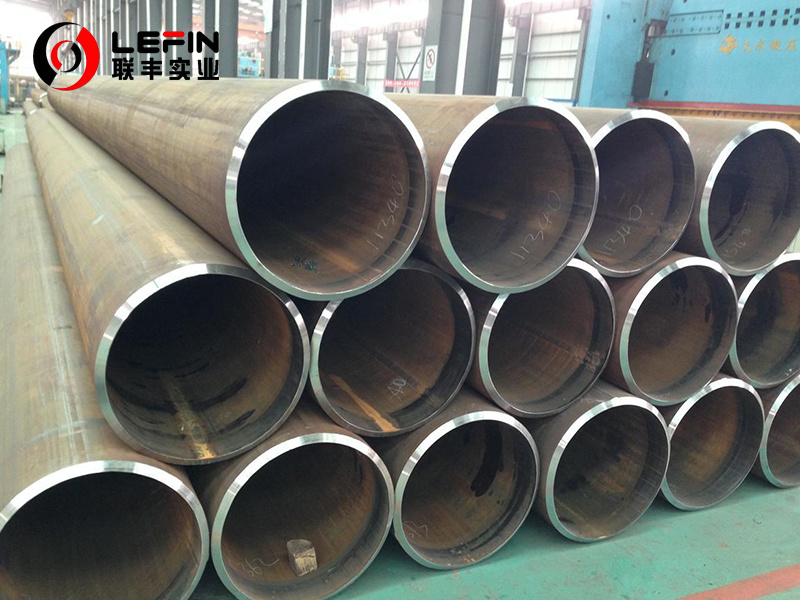
II. Key Features of ASTM A36 Pipes
The reason why ASTM A36 pipes have become a globally recognized structural steel is due to their characteristics of "moderate strength, excellent comprehensive performance, and low cost", as follows:
1. The strength is moderate and can meet the needs of most structures.
The yield strength of 250 MPa is sufficient to meet the load-bearing requirements of conventional structures such as buildings, bridges, and machinery. There is no need to use higher-strength alloy steel (such as A572 Grade 50), thereby reducing costs.
2. Excellent weldability, suitable for welding structures
The low carbon content (≤0.25%) makes it unnecessary to preheat or use special welding materials during welding (unless it is extremely thick or in a low-temperature environment). Various welding methods such as arc welding and gas shielded welding can be adopted. It is one of the most commonly used steels in welding structures.
3. Good formability, easy to process
The excellent plasticity (elongation rate ≥ 20%) makes it easy to undergo mechanical processing such as cutting, bending, punching, and riveting, and it is suitable for manufacturing various shaped structural components (such as equipment frames, bases).
4. Low cost and high value for money
The composition is simple (mainly consisting of carbon and manganese), the production process is mature, and the price is much lower than that of stainless steel or high-strength alloy steel, making it suitable for large-scale applications.
5. Limitations- Not suitable for low-temperature or impact load environments: The impact toughness of A36 is relatively low. It is prone to brittle fracture under low temperatures (-20℃ or below) or dynamic loads (such as earthquakes, impacts), and a more ductile steel (such as A516 Gr.70) should be selected.
- Corrosion resistance is average: No alloying elements (such as chromium, nickel) are added. Corrosion resistance needs to be enhanced through processes like galvanization or painting (for use in outdoor environments).

III. Common Applications of ASTM A36 Pipes
The versatility of ASTM A36 pipes enables them to be widely used in fields such as construction, bridges, mechanical manufacturing, and vehicle manufacturing. Here are some specific examples of applications:
1. Building structure- Buildings and factories: These are used for structural components such as steel frames, beams and columns, platforms, staircases, and roof supports, and are the core materials of steel structure buildings (such as the steel framework of high-rise office buildings).
- Public facilities: Such as the roof structures of airport terminals and sports stadiums, taking advantage of their high rigidity and weldability.
2. Bridge Construction Project
• Secondary structural components: such as guardrails of bridges, supporting beams, and connection parts of bridge piers, rather than the main load-bearing structures (the main load-bearing structures must be made of higher-strength A572 Grade 50 material).
3. Mechanical Manufacturing
• Equipment frame and base: For example, the base of an injection molding machine or a compressor, taking advantage of its excellent vibration resistance and weldability.
• Protective devices: Such as machine guards and safety barriers, taking advantage of their formability and cost-effectiveness.
4. Vehicle Manufacturing
• Truck chassis and crane boom: Used for manufacturing the chassis frame of trucks and the boom structure of cranes, taking advantage of their high strength-to-weight ratio.
5. General Components
• Bolts, nuts, gaskets: In the form of bar stock, A36 is used to manufacture various fasteners, taking advantage of its excellent machinability and cost-effectiveness.IV. Summary
ASTM A36 pipes are a globally applicable carbon structural steel. The core requirements are "stable chemical composition, meeting mechanical performance standards, and meeting dimensional accuracy requirements".
The key features are "moderate strength, good weldability, and low cost". Common applications include construction, bridges, mechanical manufacturing, and other fields. It is the preferred material for conventional structural components.
However, it should be noted that it is not suitable for low-temperature, impact loads, or high-corrosion environments. In such scenarios, higher-performance steels (such as A572 and 304 stainless steel) need to be selected.


ASTM A36 Pipes
Subcategory
Keyword
- Details
-
1. Core Requirements for ASTM A36 Pipes
ASTM A36 is a carbon structural steel standard formulated by the American Society for Testing and Materials (ASTM). The current valid version is ASTM A36/A36M-19 (some materials mention that there might be updates in 2024, but these have not been widely confirmed by the authorities). Its requirements for pipes cover multiple dimensions such as chemical composition, mechanical properties, dimensional tolerances, and process quality, as follows:
1.Chemical composition requirements
The chemical composition of ASTM A36 pipes is centered on low carbon and low impurities, ensuring good weldability and plasticity. The restrictions on the main elements are as follows (based on melting analysis):- Carbon (C): ≤ 0.25% (thickness ≤ 20mm); can be relaxed to 0.31% as the thickness increases (thickness > 20mm). Carbon is the main source of strength, but excessive amounts will reduce weldability.
- Manganese (Mn): 0.80 - 1.20%. Manganese can enhance strength and hardness, while also improving weldability (preventing welding cracks).
- Phosphorus (P):≤ 0.04%; Sulfur (S): ≤ 0.05%. Both are harmful impurities. They are strictly controlled to reduce hot brittleness (due to sulfur) and cold brittleness (due to phosphorus), ensuring the welding quality.
- Silicon (Si):≤ 0.40%. As a deoxidizer, it enhances the purity and mechanical properties of the steel.
- Copper (Cu): ≤ 0.20% (this content is required only when specified for weather resistance). Copper can slightly enhance corrosion resistance, but it is not a mandatory requirement.
2. Mechanical performance requirements
Mechanical properties are the core acceptance criteria for ASTM A36 pipes, directly related to the load-bearing safety and reliability of structural components. The requirements vary with thickness (taking a thickness of ≤ 20mm as an example):
- Yield strength: ≥ 250 MPa (36 ksi, the source of the "36" grade). For thicknesses greater than 20mm, for every 25mm increase in thickness, the yield strength can be reduced by 10 MPa (minimum ≥ 205 MPa).
- Tensile strength: 400 - 550 MPa (58 - 80 ksi). It has a certain strength reserve, meeting the requirements of conventional structures.
- Elongation: ≥ 20% (with a gauge length of 200mm); when the thickness is greater than 50mm, the elongation can be relaxed to ≥ 18%. Elongation indicates plasticity and ensures that the pipe can undergo plastic deformation under force without suddenly breaking.
- Bending test: The bending center diameter is 1.5 times the sample thickness. The sample is bent by 180° without any cracks (the bending center diameter can be increased when the thickness is greater than 20mm). This test verifies the formability and crack resistance of the pipe.
3. Dimensions and Manufacturing Requirements- Dimension tolerance: Must comply with the ASTM A6/A6M standard (for the dimensions of steel plates/steel sections). For example, the thickness tolerance of steel plates is ±0.05mm, the length/width tolerance is ±5mm; for steel sections (such as angle steel, I-beam), the leg length tolerance is ±3mm, and the flange thickness tolerance is ±10%.
- Process Quality: The surface of the pipes should be free from cracks, rust, pitting, etc.; the markings must clearly state "ASTM A36, furnace number, batch number, specification", and be consistent with the quality report. The weld seams of the welded pipes should be uniform and free of pores, and meet the requirements of non-destructive testing (such as ultrasonic, radiographic testing).
II. Key Features of ASTM A36 Pipes
The reason why ASTM A36 pipes have become a globally recognized structural steel is due to their characteristics of "moderate strength, excellent comprehensive performance, and low cost", as follows:
1. The strength is moderate and can meet the needs of most structures.
The yield strength of 250 MPa is sufficient to meet the load-bearing requirements of conventional structures such as buildings, bridges, and machinery. There is no need to use higher-strength alloy steel (such as A572 Grade 50), thereby reducing costs.
2. Excellent weldability, suitable for welding structures
The low carbon content (≤0.25%) makes it unnecessary to preheat or use special welding materials during welding (unless it is extremely thick or in a low-temperature environment). Various welding methods such as arc welding and gas shielded welding can be adopted. It is one of the most commonly used steels in welding structures.
3. Good formability, easy to process
The excellent plasticity (elongation rate ≥ 20%) makes it easy to undergo mechanical processing such as cutting, bending, punching, and riveting, and it is suitable for manufacturing various shaped structural components (such as equipment frames, bases).
4. Low cost and high value for money
The composition is simple (mainly consisting of carbon and manganese), the production process is mature, and the price is much lower than that of stainless steel or high-strength alloy steel, making it suitable for large-scale applications.
5. Limitations- Not suitable for low-temperature or impact load environments: The impact toughness of A36 is relatively low. It is prone to brittle fracture under low temperatures (-20℃ or below) or dynamic loads (such as earthquakes, impacts), and a more ductile steel (such as A516 Gr.70) should be selected.
- Corrosion resistance is average: No alloying elements (such as chromium, nickel) are added. Corrosion resistance needs to be enhanced through processes like galvanization or painting (for use in outdoor environments).
III. Common Applications of ASTM A36 Pipes
The versatility of ASTM A36 pipes enables them to be widely used in fields such as construction, bridges, mechanical manufacturing, and vehicle manufacturing. Here are some specific examples of applications:
1. Building structure- Buildings and factories: These are used for structural components such as steel frames, beams and columns, platforms, staircases, and roof supports, and are the core materials of steel structure buildings (such as the steel framework of high-rise office buildings).
- Public facilities: Such as the roof structures of airport terminals and sports stadiums, taking advantage of their high rigidity and weldability.
2. Bridge Construction Project
• Secondary structural components: such as guardrails of bridges, supporting beams, and connection parts of bridge piers, rather than the main load-bearing structures (the main load-bearing structures must be made of higher-strength A572 Grade 50 material).
3. Mechanical Manufacturing
• Equipment frame and base: For example, the base of an injection molding machine or a compressor, taking advantage of its excellent vibration resistance and weldability.
• Protective devices: Such as machine guards and safety barriers, taking advantage of their formability and cost-effectiveness.
4. Vehicle Manufacturing
• Truck chassis and crane boom: Used for manufacturing the chassis frame of trucks and the boom structure of cranes, taking advantage of their high strength-to-weight ratio.
5. General Components
• Bolts, nuts, gaskets: In the form of bar stock, A36 is used to manufacture various fasteners, taking advantage of its excellent machinability and cost-effectiveness.IV. Summary
ASTM A36 pipes are a globally applicable carbon structural steel. The core requirements are "stable chemical composition, meeting mechanical performance standards, and meeting dimensional accuracy requirements".
The key features are "moderate strength, good weldability, and low cost". Common applications include construction, bridges, mechanical manufacturing, and other fields. It is the preferred material for conventional structural components.
However, it should be noted that it is not suitable for low-temperature, impact loads, or high-corrosion environments. In such scenarios, higher-performance steels (such as A572 and 304 stainless steel) need to be selected.
Related products
Product Consulting
Address: Hengtai Road,Daqiuzhuang Town,Jinghai County,Tianjin,China
Mob: +8615122229899(whatspp)
Phone: +86 22 58171905
Fax: +86 22 58171902
E-mail:info@lefinsteel.com
Get company updates
Tianjin Lefin Industrial Co.,Ltd. All rights reserved City sub-station SEO www.300.cn