

-
About us
 Tianjin lefin Industrial
TIANJIN LEFIN STEEL GROUP containing Tianjin lefin Industrial Co.,Ltd. 、Tianjin lefin steel import & export Co.,Ltd and Tianjin Shengqifeng International Trading Co., Ltd. -
Products
Steel Pipe Processing
Our main products include 1/2inch to 16 inch ERW PIPE/GI PIPE which has been produced according to BS1387/ASTM A53/EN10219/EN10255/EN10217 Standard -
-
Service Capability
Guarantee Quality
Our steel pipes are suitable for oil, natural gas, shipbuilding, chemical industry, water conservancy, electrical, steel structure, construction and other related fields.
- Details
-
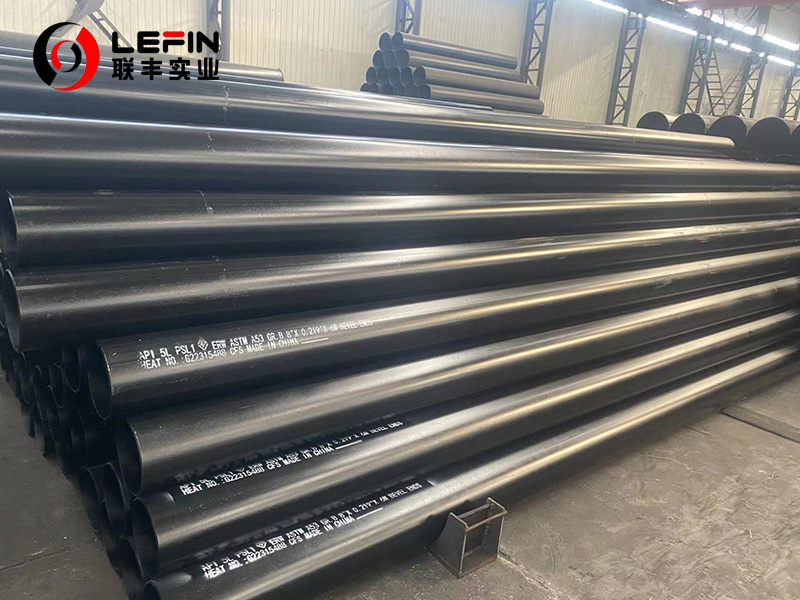
API 5L steel pipes are the standard for pipeline materials used in the oil and gas industry, and they were formulated by the American Petroleum Institute (API). The following table can help you quickly understand the main steel grades and key performance characteristics of these pipes. I will then explain the meaning of the table information and how to select the type.
Steel grade classification (example) Minimum yield strength (MPa) Minimum tensile strength (MPa) Main application scenarios (summary) Grade B (L245) ≥ 241 ≥ 415 Low-pressure, non-critical general-purpose piping X42 (L290) ≥ 290 ≥ 415 Low and medium pressure oil and gas transportation X52 (L360) ≥ 359 ≥ 460 Medium-pressure oil and gas transportation X60 (L415) ≥ 414 ≥ 520 High-pressure gas and oil transportation X65 (L450) ≥ 448 ≥ 535 High-strength, high-pressure oil and gas transportation X70 (L485) ≥ 483 ≥ 570 High-strength, large-diameter pipelines X80 ≥ 551 - High-pressure and large-capacity pipelines X120 ≥ 827 ≥ 930 Ultra-high-strength pipelines for extreme environments (such as the polar regions and the deep sea) 
Understanding the unique features of API 5L steel pipes
The core of the API 5L standard lies in ensuring the safety, reliability and durability of steel pi
pes when transporting media such as oil and natural gas. Its uniqueness mainly manifests in the following aspects:
• Strict quality grades:The standard includes two product specification levels (PSL).
- PSL1 sets out the basic requirements for chemical composition and mechanical properties (such as tensile strength and yield strength).
- PSL2 has set even stricter requirements, including more stringent control of chemical composition, higher requirements for low-temperature impact toughness, and more comprehensive non-destructive testing (such as ultrasonic testing), in order to meet more demanding environmental conditions (such as high altitude, deep sea) or high-pressure applications.

• Outstanding performance guarantee:In addition to basic strength, API 5L steel pipes also place great emphasis on toughness (to prevent pipeline cracking), weldability (for ease of on-site construction), and corrosion resistance. For special environments, such as offshore platforms or pipelines transporting corrosive media like oil and gas, there are specific appendices (such as API 5L Annex J) that impose additional requirements on the materials.
• Precise manufacturing and inspection:
The production process must adhere to strict process control, such as controlled rolling and controlled cooling (TMCP). Each steel pipe needs to undergo a series of tests, such as hydrostatic testing (to verify the pressure-bearing capacity) and non-destructive testing (to inspect welds and internal defects), to ensure quality.
How to Choose the Right Steel Grade
Selecting the steel grade is a comprehensive decision that requires balancing technical requirements and economic benefits.
1. Based on design pressure:This is the most direct factor. The higher the working pressure, the higher the strength grade of the steel pipe usually required. For instance, urban gas branch lines might use X52 or X60, while main lines or submarine pipelines might need to adopt X65 or X70 or even higher grades.
2. Consider environmental conditions:- Low-temperature environment:In cold regions, steel pipes must have excellent low-temperature impact toughness to prevent brittle fractures. At this time, PSL2 grade or specific steel grades (such as X60QO, X65QO) should be selected.
- Corrosive environment: If the transported medium contains corrosive components such as hydrogen sulfide, or if it is in a high-salt marine environment, it is necessary to select steel pipes with anti-hydrogen-induced cracking (HIC) or anti-sulfide stress cracking (SSC) properties
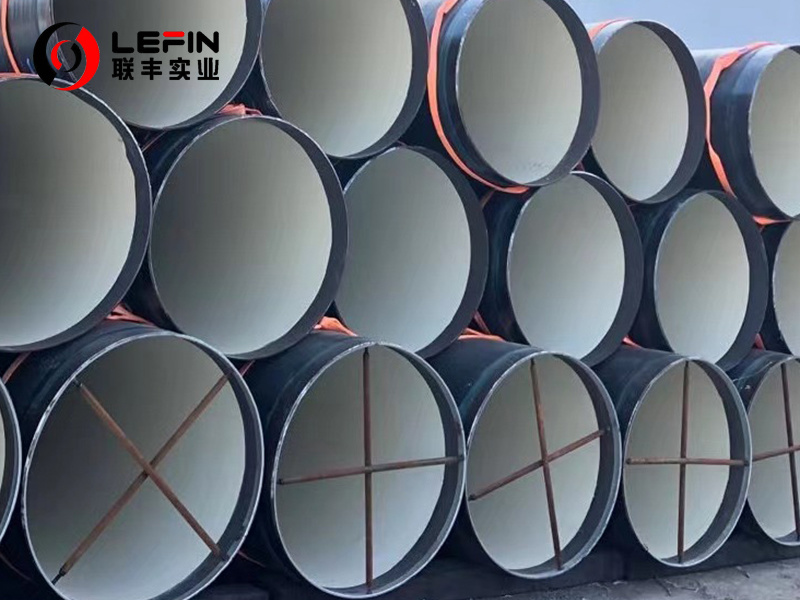
3. Economic assessment:Although high-grade steel pipes (such as X80) have high strength and can reduce wall thickness and weight while maintaining the same flow rate, their own costs and welding process requirements are also higher. A full life cycle cost analysis is necessary. For non-critical or low-pressure conditions, choosing an appropriate lower grade (such as Grade B or X42) may be more economical.
4. Focus on construction and compliance:High-grade steel pipes have extremely strict requirements for on-site circumferential welding techniques. Additionally, the selected materials must comply with the safety regulations and industry standards of the country or region where the project is located.
In simple term
Choosing API 5L steel pipes essentially means selecting the most suitable "blood vessels" for a specific transportation task. The pressure level, environmental conditions, budget size, and regulatory requirements are the four fundamental factors for making the right choice.
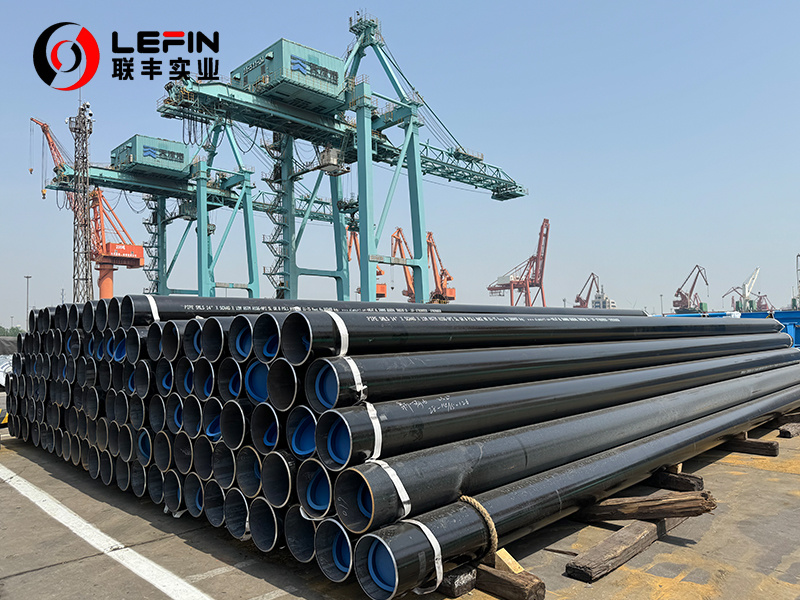


API5L STEEL PIPE
Subcategory
Keyword
- Details
-
API 5L steel pipes are the standard for pipeline materials used in the oil and gas industry, and they were formulated by the American Petroleum Institute (API). The following table can help you quickly understand the main steel grades and key performance characteristics of these pipes. I will then explain the meaning of the table information and how to select the type.
Steel grade classification (example) Minimum yield strength (MPa) Minimum tensile strength (MPa) Main application scenarios (summary) Grade B (L245) ≥ 241 ≥ 415 Low-pressure, non-critical general-purpose piping X42 (L290) ≥ 290 ≥ 415 Low and medium pressure oil and gas transportation X52 (L360) ≥ 359 ≥ 460 Medium-pressure oil and gas transportation X60 (L415) ≥ 414 ≥ 520 High-pressure gas and oil transportation X65 (L450) ≥ 448 ≥ 535 High-strength, high-pressure oil and gas transportation X70 (L485) ≥ 483 ≥ 570 High-strength, large-diameter pipelines X80 ≥ 551 - High-pressure and large-capacity pipelines X120 ≥ 827 ≥ 930 Ultra-high-strength pipelines for extreme environments (such as the polar regions and the deep sea) Understanding the unique features of API 5L steel pipes
The core of the API 5L standard lies in ensuring the safety, reliability and durability of steel pi
pes when transporting media such as oil and natural gas. Its uniqueness mainly manifests in the following aspects:
• Strict quality grades:The standard includes two product specification levels (PSL).
- PSL1 sets out the basic requirements for chemical composition and mechanical properties (such as tensile strength and yield strength).
- PSL2 has set even stricter requirements, including more stringent control of chemical composition, higher requirements for low-temperature impact toughness, and more comprehensive non-destructive testing (such as ultrasonic testing), in order to meet more demanding environmental conditions (such as high altitude, deep sea) or high-pressure applications.
• Outstanding performance guarantee:In addition to basic strength, API 5L steel pipes also place great emphasis on toughness (to prevent pipeline cracking), weldability (for ease of on-site construction), and corrosion resistance. For special environments, such as offshore platforms or pipelines transporting corrosive media like oil and gas, there are specific appendices (such as API 5L Annex J) that impose additional requirements on the materials.
• Precise manufacturing and inspection:
The production process must adhere to strict process control, such as controlled rolling and controlled cooling (TMCP). Each steel pipe needs to undergo a series of tests, such as hydrostatic testing (to verify the pressure-bearing capacity) and non-destructive testing (to inspect welds and internal defects), to ensure quality.
How to Choose the Right Steel Grade
Selecting the steel grade is a comprehensive decision that requires balancing technical requirements and economic benefits.
1. Based on design pressure:This is the most direct factor. The higher the working pressure, the higher the strength grade of the steel pipe usually required. For instance, urban gas branch lines might use X52 or X60, while main lines or submarine pipelines might need to adopt X65 or X70 or even higher grades.
2. Consider environmental conditions:- Low-temperature environment:In cold regions, steel pipes must have excellent low-temperature impact toughness to prevent brittle fractures. At this time, PSL2 grade or specific steel grades (such as X60QO, X65QO) should be selected.
- Corrosive environment: If the transported medium contains corrosive components such as hydrogen sulfide, or if it is in a high-salt marine environment, it is necessary to select steel pipes with anti-hydrogen-induced cracking (HIC) or anti-sulfide stress cracking (SSC) properties
3. Economic assessment:Although high-grade steel pipes (such as X80) have high strength and can reduce wall thickness and weight while maintaining the same flow rate, their own costs and welding process requirements are also higher. A full life cycle cost analysis is necessary. For non-critical or low-pressure conditions, choosing an appropriate lower grade (such as Grade B or X42) may be more economical.
4. Focus on construction and compliance:High-grade steel pipes have extremely strict requirements for on-site circumferential welding techniques. Additionally, the selected materials must comply with the safety regulations and industry standards of the country or region where the project is located.
In simple term
Choosing API 5L steel pipes essentially means selecting the most suitable "blood vessels" for a specific transportation task. The pressure level, environmental conditions, budget size, and regulatory requirements are the four fundamental factors for making the right choice.
Related products
Product Consulting
Address: Hengtai Road,Daqiuzhuang Town,Jinghai County,Tianjin,China
Mob: +8615122229899(whatspp)
Phone: +86 22 58171905
Fax: +86 22 58171902
E-mail:info@lefinsteel.com
Get company updates
Tianjin Lefin Industrial Co.,Ltd. All rights reserved City sub-station SEO www.300.cn