

-
About us
 Tianjin lefin Industrial
TIANJIN LEFIN STEEL GROUP containing Tianjin lefin Industrial Co.,Ltd. 、Tianjin lefin steel import & export Co.,Ltd and Tianjin Shengqifeng International Trading Co., Ltd. -
Products
Steel Pipe Processing
Our main products include 1/2inch to 16 inch ERW PIPE/GI PIPE which has been produced according to BS1387/ASTM A53/EN10219/EN10255/EN10217 Standard -
-
Service Capability
Guarantee Quality
Our steel pipes are suitable for oil, natural gas, shipbuilding, chemical industry, water conservancy, electrical, steel structure, construction and other related fields.
- Details
-
"HEAT TREATMENT HOLLOW SECTIONS" literally means "heat treatment hollow sections". The core is to optimize the performance of hollow cross-section metal materials through specific heat treatment processes (such as quenching, tempering, normalizing, etc.) The final product combines the "lightweight advantage of hollow structure" with the "high strength/high toughness characteristics after heat treatment", and is a key component in fields such as mechanical manufacturing and engineering structures.
I. Core Definition
1. Basic composition
- Base material :Mainly steel (carbon steel, alloy steel, stainless steel), aluminum alloy, titanium alloy, etc., which are made into "hollow sections" (such as round tubes, square tubes, rectangular tubes, and special-shaped hollow parts) through processes like extrusion, welding, and seamless rolling.
- Core Process :Heat treatment is carried out on the hollow base material (common: quenching + tempering, some use normalizing and solution treatment), with the aim of altering the internal metallographic structure of the material and addressing the pain points of common hollow profiles such as "low strength, poor toughness, and insufficient fatigue resistance".
- Final form :While maintaining a hollow structure, it achieves precise mechanical properties (such as high strength, high hardness, and good impact toughness), and the cross-sectional dimensions can be customized (from a few millimeters to tens of centimeters).
2. The core difference from ordinary hollow profiles
Comparison dimensions Common hollow profiles Heat-treated hollow profiles Process Only forming (extrusion/welding), no heat treatment Forming + targeted heat treatment Mechanical properties Low strength (such as the yield strength of ordinary carbon steel hollow tubes ≤355MPa), average toughness; High strength (yield strength can reach 460-1500MPa), high toughness, excellent fatigue resistance Applicable scenarios Low-pressure pipelines, frame supports (without heavy load/impact requirements); Heavy-load structures, dynamic load-bearing components, extreme environment applications Cost Low Medium to high (with an additional heat treatment process, and the base material is mostly alloy) II. Uniqueness: Why Is It "Irreplaceable"?
The core advantage of heat-treated hollow profiles lies in the "dual superposition of structural advantage and performance advantage", which can be specifically broken down into five points:
1.The "Perfect balance" between lightweight and high strength
- Hollow structure:Compared with solid profiles, the weight is reduced by 30% to 70% (under the same cross-sectional dimensions), which can significantly lower the self-weight of the overall equipment/structure.
Heat treatment strengthening: Through quenching and tempering, the yield strength of the material is increased by 50% to 200% (for example, after heat treatment, the yield strength of Q355 carbon steel hollow tubes can reach over 690MPa). Its strength is comparable to that of solid steel parts, but its weight is only 1/3 to 1/2.
- Key value:In scenarios where the demands for "weight reduction" and "load-bearing" are in contradiction (such as aviation, racing, and construction machinery), it is an irreplaceable choice - ensuring structural safety while reducing energy consumption and enhancing maneuverability.
2. Excellent fatigue resistance and durability
- Heat treatment processes (especially tempering) can eliminate the internal stress during the forming of hollow profiles and prevent cracking caused by stress concentration during use.
- The optimized metallographic structure (such as tempered martensite and fine-grained ferrite) endows the material with excellent impact toughness (impact energy ≥47J at -20℃), enabling it to withstand repeated dynamic loads (such as robotic arm swinging and vehicle jolting).
- Service life advantage: Under the same working conditions, the service life of heat-treated hollow profiles is 2 to 5 times that of ordinary hollow profiles, reducing maintenance and replacement costs.3. Section flexibility and molding compatibility
- Diverse cross-sections: It can be made into round tubes, square tubes, rectangular tubes, elliptical tubes, and special-shaped hollow parts (such as complex cross-section tubes for car chassis), meeting the installation requirements of different structures.
- Forming + heat treatment compatibility: Whether it is seamless hollow tubes (hot rolling + heat treatment) or welded hollow tubes (overall heat treatment after welding), the heat treatment parameters (temperature, holding time, cooling rate) can be adjusted to match the characteristics of the base material, avoiding performance degradation at the welded area.4. Good processability and customization
- Convenient subsequent processing: After heat treatment, cutting, drilling, bending, welding (some require preheating), and surface treatment (spraying, electroplating, anti-rust treatment) can be carried out without affecting the core mechanical properties.
- Performance customization: Adjust the heat treatment process according to requirements - If high hardness is needed (such as mechanical bushings), "quenching + low-temperature tempering" can be adopted; If high toughness is required (such as in construction machinery arms), "quenching + high-temperature tempering" can be adopted. Aluminum alloy hollow profiles can achieve customized strength through "solution treatment + aging" (for example, the yield strength of 6061-T6 aluminum alloy can reach 276MPa).5. Structural stability and mechanical rationality
- The torsional and bending resistance of hollow sections is superior: Compared with solid profiles, hollow pipes have a greater moment of inertia (under the same weight), and their bending and torsional resistance is stronger (for example, the bending strength of hollow round pipes of the same weight is 1.8 times that of solid round steel).
- Uniform force distribution: The hollow structure has no "stress dead corners", and external loads can be evenly transmitted through the cross-section, reducing the risk of local overload. It is particularly suitable for use as core components such as load-bearing beams, drive shafts, and support columns.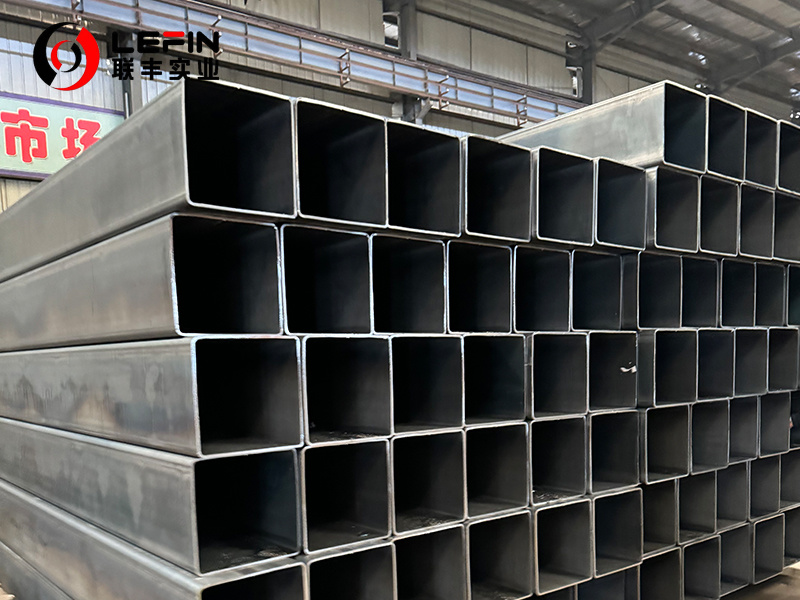
III. Core Application Areas: Where Will It Be Used?
The application scenarios of heat-treated hollow profiles are mainly concentrated in industries with strict requirements for weight, strength and durability, covering everything from high-end manufacturing to basic engineering. The specific detailed scenarios are as follows:
1. Transportation sector (Core requirements: Weight reduction + high strength + fatigue resistance)
- Automotive industry:
- Racing cars/high-performance vehicles: chassis frames (such as tube frames), roll cages, suspension arms, drive shafts (mostly alloy steel heat-treated hollow tubes) - For instance, the frame of an F1 racing car is made of chromium-molybdenum alloy steel heat-treated hollow tubes, weighing only about 20kg but capable of withstanding an impact load of 20G.
- Commercial vehicles/new energy vehicles: Frame longitudinal beams and crossbeams (aluminum alloy/high-strength steel heat-treated hollow tubes). After weight reduction, the driving range can be increased (for new energy vehicles, for every 100kg weight reduction, the driving range increases by 10-15km).
- Aerospace: Aircraft landing gear support tubes, wing/tail wing structural components (titanium alloy/aluminum alloy heat-treated hollow tubes), weight reduction is the core demand (for every 1kg reduction in aircraft weight, approximately $3,000 in fuel costs can be saved annually).
- Rail transit: Car body frames and bogie support components (stainless steel/aluminum alloy heat-treated hollow tubes) for high-speed railways/subways, taking into account both lightweight and anti-vibration fatigue properties.2. Construction Machinery and Heavy Equipment (Core Requirements: High strength + High Toughness + Durability)
- Excavators/cranes: Boom, boom, telescopic boom (high-strength steel heat-treated hollow tubes) - For instance, the boom of an excavator uses Q690 grade heat-treated hollow square tubes, which are 40% lighter than traditional solid steel booms, enhancing operational flexibility.
- Agricultural machinery: Tractor suspension systems, harvester cutting components (carbon steel/stainless steel heat-treated hollow tubes), suitable for impact loads in complex field road conditions;
- Port machinery: The boom and support columns of container cranes (high-strength alloy steel heat-treated hollow tubes), which take into account both load-bearing capacity and resistance to sea breeze corrosion (some are made of stainless steel base material + heat treatment).3. Mechanical Manufacturing and Industrial Equipment (Core Requirements: Customized Performance + Compact Structure)
- Machine tool equipment: spindle sleeves, guide rail support tubes, mechanical arms (alloy steel heat-treated hollow tubes), requiring high hardness (HRC35-45) and high precision (deformation after heat treatment ≤0.1%);
- Automated equipment: Conveyor line rollers, robot articulated arms (aluminum alloy/carbon steel heat-treated hollow tubes), lightweight can increase movement speed and response sensitivity;
- Pressure vessels and pipelines: High-pressure fluid conveying pipes (such as oil pipes in hydraulic systems and steam pipes) shall be made of seamless heat-treated hollow pipes, which need to meet the requirements of high pressure (≥10MPa) and fatigue resistance (no leakage after repeated starts and stops).4. Construction and Infrastructure Engineering (Core Requirements: Lightweight + Seismic Resistance + Environmental Protection)
- Large-span buildings:Truss structures (stainless steel/aluminum alloy heat-treated hollow tubes) in stadiums and exhibition centers can reduce weight by 30% to 50% compared to traditional steel structures, lower the cost of foundation construction, and have better seismic performance (hollow structures can absorb seismic energy).
- Curtain wall and decoration:The support frame for the building's exterior facade (aluminum alloy heat-treated hollow tubes), which combines strength and aesthetics and can be processed into irregular cross-sections;
- Bridge engineering:Main beams of pedestrian overpasses and landscape Bridges (high-strength steel heat-treated hollow tubes), lightweight for easy hoisting, and resistant to corrosion and fatigue (adaptable to repeated loads from vehicles and people).
5. Other special fields
- National defense and military industry:Protective frames for armored vehicles and support structures for missile launchers (high-strength alloy steel heat-treated hollow tubes), which require high strength and impact resistance;
- Medical devices:Scaffolds for rehabilitation equipment and hollow shafts (stainless steel heat-treated hollow tubes) for surgical instruments, which need to meet the requirements of high cleanliness, high toughness and corrosion resistance;
- New energy:Nacelle brackets for wind power equipment and photovoltaic brackets (aluminum alloy/carbon steel heat-treated hollow tubes) are lightweight, which can reduce installation difficulty and are resistant to wind loads and fatigue.
IV. Supplementary Notes: Selection and Precautions
1. Substrate Selection :
- Steel:Suitable for heavy-duty and high-temperature scenarios (such as construction machinery and high-pressure pipelines), commonly used materials include Q355, Q690, 42CrMo, and 304 stainless steel.
- Aluminum alloy:Suitable for lightweight and medium to low strength scenarios (such as automobiles and aviation), commonly used materials include 6061 and 7075 (treated with solution and aging).
- Titanium alloy:Suitable for high-end scenarios (aviation, military industry), it features high strength and corrosion resistance, but it is relatively expensive.
2. Heat Treatment Process Matching
- Welded hollow tubes: "post-weld overall heat treatment" should be adopted to avoid coarse grains at the welded area causing uneven performance.
- Thin-walled hollow tubes: During heat treatment, the cooling rate should be controlled (such as oil cooling rather than water cooling) to prevent deformation or cracking.
- Aluminum alloy: "Quenching + tempering" cannot be adopted. Instead, "solution treatment + artificial aging" (T6 state) should be used to enhance strength.3. Cost Considerations :
The cost of heat-treated hollow profiles is 20% to 80% higher than that of ordinary hollow profiles (depending on the base material and process complexity), but the "weight reduction benefit + life benefit" from long-term use usually covers the initial cost, making it suitable for scenarios with rigid performance requirements.Summary
The core value of heat-treated hollow profiles lies in "achieving higher performance with a lighter weight". Its uniqueness lies in the deep integration of the lightweight advantage of hollow structures with the strengthening advantage of heat treatment, resolving the contradiction of traditional materials being "heavy but strong" or "light but weak". From racing car chassis to aircraft landing gear, from construction machinery arms to building trusses, any scenario that requires "weight reduction, load-bearing capacity and fatigue resistance" is its core application field, and it is an indispensable key material in high-end manufacturing and engineering fields.
HEAT TREATMENT STEEL HOLLOW SECTIONS
Subcategory
Keyword
- Details
-
"HEAT TREATMENT HOLLOW SECTIONS" literally means "heat treatment hollow sections". The core is to optimize the performance of hollow cross-section metal materials through specific heat treatment processes (such as quenching, tempering, normalizing, etc.) The final product combines the "lightweight advantage of hollow structure" with the "high strength/high toughness characteristics after heat treatment", and is a key component in fields such as mechanical manufacturing and engineering structures.
I. Core Definition
1. Basic composition
- Base material :Mainly steel (carbon steel, alloy steel, stainless steel), aluminum alloy, titanium alloy, etc., which are made into "hollow sections" (such as round tubes, square tubes, rectangular tubes, and special-shaped hollow parts) through processes like extrusion, welding, and seamless rolling.
- Core Process :Heat treatment is carried out on the hollow base material (common: quenching + tempering, some use normalizing and solution treatment), with the aim of altering the internal metallographic structure of the material and addressing the pain points of common hollow profiles such as "low strength, poor toughness, and insufficient fatigue resistance".
- Final form :While maintaining a hollow structure, it achieves precise mechanical properties (such as high strength, high hardness, and good impact toughness), and the cross-sectional dimensions can be customized (from a few millimeters to tens of centimeters).
2. The core difference from ordinary hollow profiles
Comparison dimensions Common hollow profiles Heat-treated hollow profiles Process Only forming (extrusion/welding), no heat treatment Forming + targeted heat treatment Mechanical properties Low strength (such as the yield strength of ordinary carbon steel hollow tubes ≤355MPa), average toughness; High strength (yield strength can reach 460-1500MPa), high toughness, excellent fatigue resistance Applicable scenarios Low-pressure pipelines, frame supports (without heavy load/impact requirements); Heavy-load structures, dynamic load-bearing components, extreme environment applications Cost Low Medium to high (with an additional heat treatment process, and the base material is mostly alloy) II. Uniqueness: Why Is It "Irreplaceable"?
The core advantage of heat-treated hollow profiles lies in the "dual superposition of structural advantage and performance advantage", which can be specifically broken down into five points:
1.The "Perfect balance" between lightweight and high strength
- Hollow structure:Compared with solid profiles, the weight is reduced by 30% to 70% (under the same cross-sectional dimensions), which can significantly lower the self-weight of the overall equipment/structure.
Heat treatment strengthening: Through quenching and tempering, the yield strength of the material is increased by 50% to 200% (for example, after heat treatment, the yield strength of Q355 carbon steel hollow tubes can reach over 690MPa). Its strength is comparable to that of solid steel parts, but its weight is only 1/3 to 1/2.
- Key value:In scenarios where the demands for "weight reduction" and "load-bearing" are in contradiction (such as aviation, racing, and construction machinery), it is an irreplaceable choice - ensuring structural safety while reducing energy consumption and enhancing maneuverability.
2. Excellent fatigue resistance and durability
- Heat treatment processes (especially tempering) can eliminate the internal stress during the forming of hollow profiles and prevent cracking caused by stress concentration during use.
- The optimized metallographic structure (such as tempered martensite and fine-grained ferrite) endows the material with excellent impact toughness (impact energy ≥47J at -20℃), enabling it to withstand repeated dynamic loads (such as robotic arm swinging and vehicle jolting).
- Service life advantage: Under the same working conditions, the service life of heat-treated hollow profiles is 2 to 5 times that of ordinary hollow profiles, reducing maintenance and replacement costs.3. Section flexibility and molding compatibility
- Diverse cross-sections: It can be made into round tubes, square tubes, rectangular tubes, elliptical tubes, and special-shaped hollow parts (such as complex cross-section tubes for car chassis), meeting the installation requirements of different structures.
- Forming + heat treatment compatibility: Whether it is seamless hollow tubes (hot rolling + heat treatment) or welded hollow tubes (overall heat treatment after welding), the heat treatment parameters (temperature, holding time, cooling rate) can be adjusted to match the characteristics of the base material, avoiding performance degradation at the welded area.4. Good processability and customization
- Convenient subsequent processing: After heat treatment, cutting, drilling, bending, welding (some require preheating), and surface treatment (spraying, electroplating, anti-rust treatment) can be carried out without affecting the core mechanical properties.
- Performance customization: Adjust the heat treatment process according to requirements - If high hardness is needed (such as mechanical bushings), "quenching + low-temperature tempering" can be adopted; If high toughness is required (such as in construction machinery arms), "quenching + high-temperature tempering" can be adopted. Aluminum alloy hollow profiles can achieve customized strength through "solution treatment + aging" (for example, the yield strength of 6061-T6 aluminum alloy can reach 276MPa).5. Structural stability and mechanical rationality
- The torsional and bending resistance of hollow sections is superior: Compared with solid profiles, hollow pipes have a greater moment of inertia (under the same weight), and their bending and torsional resistance is stronger (for example, the bending strength of hollow round pipes of the same weight is 1.8 times that of solid round steel).
- Uniform force distribution: The hollow structure has no "stress dead corners", and external loads can be evenly transmitted through the cross-section, reducing the risk of local overload. It is particularly suitable for use as core components such as load-bearing beams, drive shafts, and support columns.III. Core Application Areas: Where Will It Be Used?
The application scenarios of heat-treated hollow profiles are mainly concentrated in industries with strict requirements for weight, strength and durability, covering everything from high-end manufacturing to basic engineering. The specific detailed scenarios are as follows:
1. Transportation sector (Core requirements: Weight reduction + high strength + fatigue resistance)
- Automotive industry:
- Racing cars/high-performance vehicles: chassis frames (such as tube frames), roll cages, suspension arms, drive shafts (mostly alloy steel heat-treated hollow tubes) - For instance, the frame of an F1 racing car is made of chromium-molybdenum alloy steel heat-treated hollow tubes, weighing only about 20kg but capable of withstanding an impact load of 20G.
- Commercial vehicles/new energy vehicles: Frame longitudinal beams and crossbeams (aluminum alloy/high-strength steel heat-treated hollow tubes). After weight reduction, the driving range can be increased (for new energy vehicles, for every 100kg weight reduction, the driving range increases by 10-15km).
- Aerospace: Aircraft landing gear support tubes, wing/tail wing structural components (titanium alloy/aluminum alloy heat-treated hollow tubes), weight reduction is the core demand (for every 1kg reduction in aircraft weight, approximately $3,000 in fuel costs can be saved annually).
- Rail transit: Car body frames and bogie support components (stainless steel/aluminum alloy heat-treated hollow tubes) for high-speed railways/subways, taking into account both lightweight and anti-vibration fatigue properties.2. Construction Machinery and Heavy Equipment (Core Requirements: High strength + High Toughness + Durability)
- Excavators/cranes: Boom, boom, telescopic boom (high-strength steel heat-treated hollow tubes) - For instance, the boom of an excavator uses Q690 grade heat-treated hollow square tubes, which are 40% lighter than traditional solid steel booms, enhancing operational flexibility.
- Agricultural machinery: Tractor suspension systems, harvester cutting components (carbon steel/stainless steel heat-treated hollow tubes), suitable for impact loads in complex field road conditions;
- Port machinery: The boom and support columns of container cranes (high-strength alloy steel heat-treated hollow tubes), which take into account both load-bearing capacity and resistance to sea breeze corrosion (some are made of stainless steel base material + heat treatment).3. Mechanical Manufacturing and Industrial Equipment (Core Requirements: Customized Performance + Compact Structure)
- Machine tool equipment: spindle sleeves, guide rail support tubes, mechanical arms (alloy steel heat-treated hollow tubes), requiring high hardness (HRC35-45) and high precision (deformation after heat treatment ≤0.1%);
- Automated equipment: Conveyor line rollers, robot articulated arms (aluminum alloy/carbon steel heat-treated hollow tubes), lightweight can increase movement speed and response sensitivity;
- Pressure vessels and pipelines: High-pressure fluid conveying pipes (such as oil pipes in hydraulic systems and steam pipes) shall be made of seamless heat-treated hollow pipes, which need to meet the requirements of high pressure (≥10MPa) and fatigue resistance (no leakage after repeated starts and stops).4. Construction and Infrastructure Engineering (Core Requirements: Lightweight + Seismic Resistance + Environmental Protection)
- Large-span buildings:Truss structures (stainless steel/aluminum alloy heat-treated hollow tubes) in stadiums and exhibition centers can reduce weight by 30% to 50% compared to traditional steel structures, lower the cost of foundation construction, and have better seismic performance (hollow structures can absorb seismic energy).
- Curtain wall and decoration:The support frame for the building's exterior facade (aluminum alloy heat-treated hollow tubes), which combines strength and aesthetics and can be processed into irregular cross-sections;
- Bridge engineering:Main beams of pedestrian overpasses and landscape Bridges (high-strength steel heat-treated hollow tubes), lightweight for easy hoisting, and resistant to corrosion and fatigue (adaptable to repeated loads from vehicles and people).
5. Other special fields
- National defense and military industry:Protective frames for armored vehicles and support structures for missile launchers (high-strength alloy steel heat-treated hollow tubes), which require high strength and impact resistance;
- Medical devices:Scaffolds for rehabilitation equipment and hollow shafts (stainless steel heat-treated hollow tubes) for surgical instruments, which need to meet the requirements of high cleanliness, high toughness and corrosion resistance;
- New energy:Nacelle brackets for wind power equipment and photovoltaic brackets (aluminum alloy/carbon steel heat-treated hollow tubes) are lightweight, which can reduce installation difficulty and are resistant to wind loads and fatigue.
IV. Supplementary Notes: Selection and Precautions
1. Substrate Selection :
- Steel:Suitable for heavy-duty and high-temperature scenarios (such as construction machinery and high-pressure pipelines), commonly used materials include Q355, Q690, 42CrMo, and 304 stainless steel.
- Aluminum alloy:Suitable for lightweight and medium to low strength scenarios (such as automobiles and aviation), commonly used materials include 6061 and 7075 (treated with solution and aging).
- Titanium alloy:Suitable for high-end scenarios (aviation, military industry), it features high strength and corrosion resistance, but it is relatively expensive.
2. Heat Treatment Process Matching
- Welded hollow tubes: "post-weld overall heat treatment" should be adopted to avoid coarse grains at the welded area causing uneven performance.
- Thin-walled hollow tubes: During heat treatment, the cooling rate should be controlled (such as oil cooling rather than water cooling) to prevent deformation or cracking.
- Aluminum alloy: "Quenching + tempering" cannot be adopted. Instead, "solution treatment + artificial aging" (T6 state) should be used to enhance strength.3. Cost Considerations :
The cost of heat-treated hollow profiles is 20% to 80% higher than that of ordinary hollow profiles (depending on the base material and process complexity), but the "weight reduction benefit + life benefit" from long-term use usually covers the initial cost, making it suitable for scenarios with rigid performance requirements.Summary
The core value of heat-treated hollow profiles lies in "achieving higher performance with a lighter weight". Its uniqueness lies in the deep integration of the lightweight advantage of hollow structures with the strengthening advantage of heat treatment, resolving the contradiction of traditional materials being "heavy but strong" or "light but weak". From racing car chassis to aircraft landing gear, from construction machinery arms to building trusses, any scenario that requires "weight reduction, load-bearing capacity and fatigue resistance" is its core application field, and it is an indispensable key material in high-end manufacturing and engineering fields.
Related products
Product Consulting
Address: Hengtai Road,Daqiuzhuang Town,Jinghai County,Tianjin,China
Mob: +8615122229899(whatspp)
Phone: +86 22 58171905
Fax: +86 22 58171902
E-mail:info@lefinsteel.com
Get company updates
Tianjin Lefin Industrial Co.,Ltd. All rights reserved City sub-station SEO www.300.cn