

-
About us
 Tianjin lefin Industrial
TIANJIN LEFIN STEEL GROUP containing Tianjin lefin Industrial Co.,Ltd. 、Tianjin lefin steel import & export Co.,Ltd and Tianjin Shengqifeng International Trading Co., Ltd. -
Products
Steel Pipe Processing
Our main products include 1/2inch to 16 inch ERW PIPE/GI PIPE which has been produced according to BS1387/ASTM A53/EN10219/EN10255/EN10217 Standard -
-
Service Capability
Guarantee Quality
Our steel pipes are suitable for oil, natural gas, shipbuilding, chemical industry, water conservancy, electrical, steel structure, construction and other related fields.
- Details
-
Basic Infromation
ASTM A501 GR.B HOLLOW SECTION
Standard: ASTM A501
Grade: GR.BSize: SQUARE:20*20 --1200*1200MM
RECTANGULAR:20MMX30MM -- 1500MMX1200MM
Wall thickness: 1.3 -- 50MM
Wall Thickness Tolerance: ±10%
Length: 1 -- 12M, normally 6M/12M, also depends on the requirements
Surface treatment: Galvanizing, Black vanish, Carving, Slightly oil painting, PVC clothes cover each bundle ect.
Production capacity: 300000 tons per year
Production delivery time:15-30 days acc to order quantity and sizes
Shipping: Bulk vessel shipment & Container shipment
Brand: LEFIN STEEL
Chemical composition
COMPOSITION, %
GRADE B
ELEMENT
HEAT ANALYSIS
PRODUCT ANALYSIS
Carbon(C),max
0.22
0.26
Manganese(Mn),max
1.40
1.45
Phosphorus(P),max
0.030
0.040
Sulfur(S),max
0.020
0.030
Copper(Cu),min
0.20
0.18
ASTM A501 Grade B Chemical composition Benefits:
1. Sulfur (S) and phosphorus (P) content:. These low contents help to reduce the hot and cold brittleness of the steel and improve the weldability and mechanical properties.
2. Manganese (Mn) content: The maximum manganese content of 1.45% helps to improve the strength of steel and improve the hot working properties.
3. Copper (Cu) content: 0.2000% to 0.3500% copper content can improve the corrosion resistance and strength of steel.
The specific proportions and control of these chemical compositions help ensure high strength, good weldability and excellent mechanical properties of ASTM A501 Grade B materials. Help to improve the strength of steel and improve the hot working properties.
Physical requirement
ASTM A501 GRADE B Tensile and Impact Requirements
Wall Thickness
GRADE B
TENSILE STRENGTH,min
All
65000psi
448MPa
WT≤25mm
46000psi
315MPa
25mm<WT≤50mm
45000psi
310MPa
YIELD STRENGTH,min
50mm<WT≤76mm
42500psi
290MPa
76mm<WT≤100mm
40000psi
280MPa
ELONGATION,min
24%
Yield Strength:
Yield Strength is the maximum stress that a material can withstand before it becomes plastic. For metal materials, yield strength is an important mechanical property index, which marks the limit of material transformation from elastic deformation to plastic deformation.
On a stress-strain curve, the yield strength usually corresponds to a specific point on the curve, the yield point. For many metals, the yield point is a distinct feature that appears as an inflection point or plateau on a curve. At this point, the material begins to undergo plastic deformation, and the deformation continues even though the stress is no longer increasing.
Tensile Strength:
Tensile Strength is the amount of stress a material is subjected to during a tensile test. It is an important mechanical property index to measure the resistance to tensile fracture of materials.
When a tensile test is performed, the material sample is stretched until it breaks. The tensile strength usually corresponds to the highest point on the stress-strain curve, indicating the maximum stress a material can withstand before breaking. When the tensile strength is reached, the material will break or be destroyed.
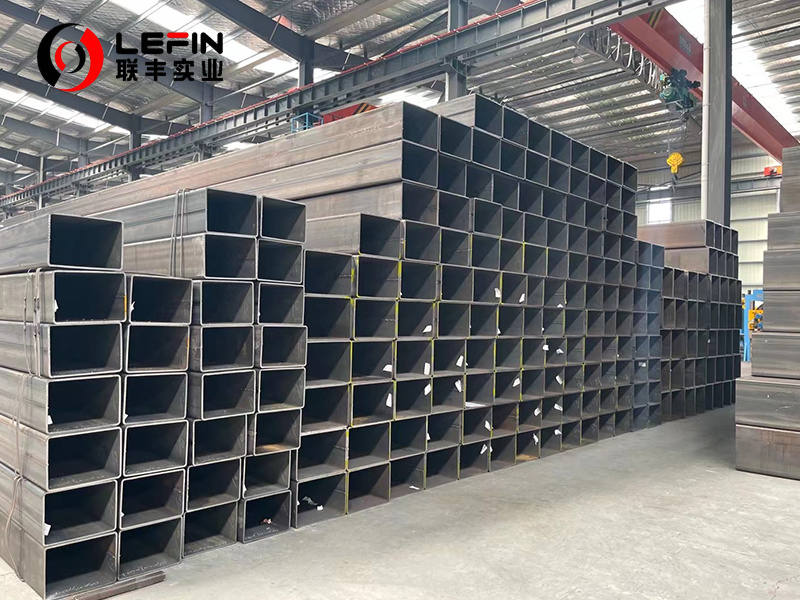
In what circumstances ASTM A501 Grade B best?
1. Thermoformed welded and seamless carbon steel structural pipes: ASTM A501 Grade B is suitable for thermoformed welded and seamless carbon steel structural pipes, mainly used in the construction of welded, riveted or bolted Bridges and buildings, as well as for general structural purposes.
2. High temperature environments: ASTM A501 Grade B has a heat treatment temperature range of 1666°C to 1797°C, which shows that it can maintain its mechanical properties in high temperature environments.
3. General structural use: The material is suitable for pipes and fittings for general structural use to ensure their safety and reliability.
What structures is this material commonly used for?
ASTM A501 Grade B materials are commonly used in the following structures where they exhibit excellent properties and advantages:
1. Bridge structure
ASTM A501 Grade B is widely used in bridge construction. It is suitable for welded, riveted or bolted bridge structures. The high strength and good weldability of this material make it ideal for bridge construction. For example, look at its minimum yield strength, which means it can withstand large loads without plastic deformation. In addition, its corrosion resistance also makes it suitable for use in wet and harsh environmental conditions.
2. Building structure
In the field of construction, ASTM A501 Grade B also excels. It is not only used for general structural purposes, but also for specific applications that require high strength and good toughness. For example, it can be used to manufacture support structures for high-rise buildings, because its high strength and good mechanical properties can provide the necessary support. In addition, its corrosion resistance also makes it suitable for use in various climatic conditions.
3. Welding structure
ASTM A501 Grade B materials are also widely used in welded structures. Its high strength and good weldability make it an ideal material for manufacturing welding structures. For example, it can be used to manufacture pipelines for the oil and gas industry because of its high strength and good toughness to withstand high pressure and harsh environmental conditions.
4. Bolt structure
ASTM A501 Grade B is also suitable for bolted structures. Its high strength and good mechanical properties make it ideal for manufacturing bolt structures. For example, it can be used to make frames for large machinery, because its high strength and good toughness can provide the necessary support.
5. Riveted structure
ASTM A501 Grade B is also widely used in riveted structures. Its high strength and good mechanical properties make it an ideal material for the manufacture of riveted structures. For example, it can be used to make the fuselage structure of an aircraft because of its high strength and good toughness to withstand high pressure and harsh environmental conditions.
Performance and benefits:
- High strength: ASTM A501 Grade B has a minimum yield strength of 50,000 psi (345 MPa), which means it can withstand large loads without plastic deformation.
- Good weldability: The chemical composition and mechanical properties of this material make it suitable for various welding operations.
- Corrosion resistance: The corrosion resistance of ASTM A501 Grade B makes it suitable for use in wet and harsh environmental conditions.
- A variety of shapes: square, round, rectangular and special shapes are available to meet different design needs.
- Manufacturing process: seamless, bottom welding, resistance welding or submerged arc welding and other processes are used to ensure structural strength and quality.
- Wide application: Suitable for Bridges, buildings and general structural purposes.
In general, ASTM A501 Grade B materials are widely used in Bridges, construction, welding, bolted and riveted structures due to their high strength, good weldability and corrosion resistance. These properties and advantages make it an indispensable material choice in these fields.
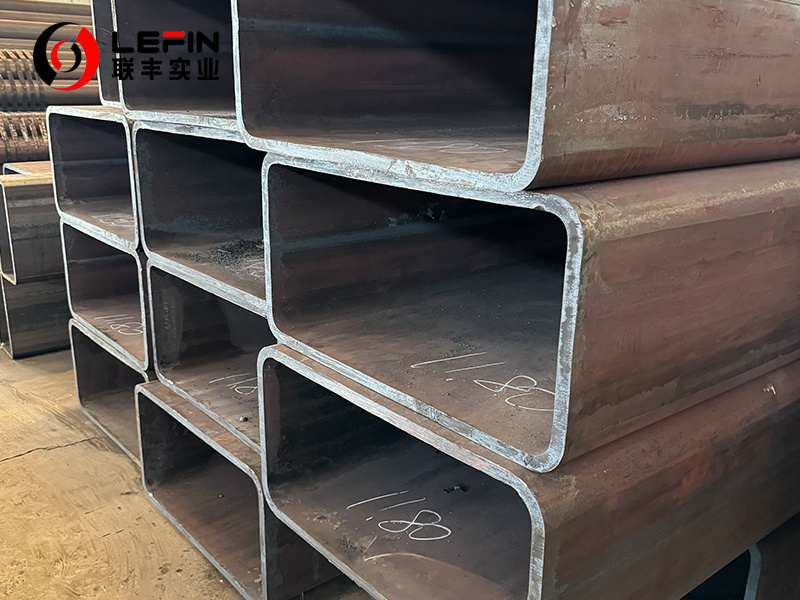
ASTM A501 GRADE B HOLLOW SECTION
Subcategory
Keyword
- Details
-
Basic Infromation
ASTM A501 GR.B HOLLOW SECTION
Standard: ASTM A501
Grade: GR.BSize: SQUARE:20*20 --1200*1200MM
RECTANGULAR:20MMX30MM -- 1500MMX1200MM
Wall thickness: 1.3 -- 50MM
Wall Thickness Tolerance: ±10%
Length: 1 -- 12M, normally 6M/12M, also depends on the requirements
Surface treatment: Galvanizing, Black vanish, Carving, Slightly oil painting, PVC clothes cover each bundle ect.
Production capacity: 300000 tons per year
Production delivery time:15-30 days acc to order quantity and sizes
Shipping: Bulk vessel shipment & Container shipment
Brand: LEFIN STEEL
Chemical composition
COMPOSITION, %
GRADE B
ELEMENT
HEAT ANALYSIS
PRODUCT ANALYSIS
Carbon(C),max
0.22
0.26
Manganese(Mn),max
1.40
1.45
Phosphorus(P),max
0.030
0.040
Sulfur(S),max
0.020
0.030
Copper(Cu),min
0.20
0.18
ASTM A501 Grade B Chemical composition Benefits:
1. Sulfur (S) and phosphorus (P) content:. These low contents help to reduce the hot and cold brittleness of the steel and improve the weldability and mechanical properties.
2. Manganese (Mn) content: The maximum manganese content of 1.45% helps to improve the strength of steel and improve the hot working properties.
3. Copper (Cu) content: 0.2000% to 0.3500% copper content can improve the corrosion resistance and strength of steel.
The specific proportions and control of these chemical compositions help ensure high strength, good weldability and excellent mechanical properties of ASTM A501 Grade B materials. Help to improve the strength of steel and improve the hot working properties.
Physical requirement
ASTM A501 GRADE B Tensile and Impact Requirements
Wall Thickness
GRADE B
TENSILE STRENGTH,min
All
65000psi
448MPa
WT≤25mm
46000psi
315MPa
25mm<WT≤50mm
45000psi
310MPa
YIELD STRENGTH,min
50mm<WT≤76mm
42500psi
290MPa
76mm<WT≤100mm
40000psi
280MPa
ELONGATION,min
24%
Yield Strength:
Yield Strength is the maximum stress that a material can withstand before it becomes plastic. For metal materials, yield strength is an important mechanical property index, which marks the limit of material transformation from elastic deformation to plastic deformation.
On a stress-strain curve, the yield strength usually corresponds to a specific point on the curve, the yield point. For many metals, the yield point is a distinct feature that appears as an inflection point or plateau on a curve. At this point, the material begins to undergo plastic deformation, and the deformation continues even though the stress is no longer increasing.
Tensile Strength:
Tensile Strength is the amount of stress a material is subjected to during a tensile test. It is an important mechanical property index to measure the resistance to tensile fracture of materials.
When a tensile test is performed, the material sample is stretched until it breaks. The tensile strength usually corresponds to the highest point on the stress-strain curve, indicating the maximum stress a material can withstand before breaking. When the tensile strength is reached, the material will break or be destroyed.
In what circumstances ASTM A501 Grade B best?
1. Thermoformed welded and seamless carbon steel structural pipes: ASTM A501 Grade B is suitable for thermoformed welded and seamless carbon steel structural pipes, mainly used in the construction of welded, riveted or bolted Bridges and buildings, as well as for general structural purposes.
2. High temperature environments: ASTM A501 Grade B has a heat treatment temperature range of 1666°C to 1797°C, which shows that it can maintain its mechanical properties in high temperature environments.
3. General structural use: The material is suitable for pipes and fittings for general structural use to ensure their safety and reliability.
What structures is this material commonly used for?
ASTM A501 Grade B materials are commonly used in the following structures where they exhibit excellent properties and advantages:
1. Bridge structure
ASTM A501 Grade B is widely used in bridge construction. It is suitable for welded, riveted or bolted bridge structures. The high strength and good weldability of this material make it ideal for bridge construction. For example, look at its minimum yield strength, which means it can withstand large loads without plastic deformation. In addition, its corrosion resistance also makes it suitable for use in wet and harsh environmental conditions.
2. Building structure
In the field of construction, ASTM A501 Grade B also excels. It is not only used for general structural purposes, but also for specific applications that require high strength and good toughness. For example, it can be used to manufacture support structures for high-rise buildings, because its high strength and good mechanical properties can provide the necessary support. In addition, its corrosion resistance also makes it suitable for use in various climatic conditions.
3. Welding structure
ASTM A501 Grade B materials are also widely used in welded structures. Its high strength and good weldability make it an ideal material for manufacturing welding structures. For example, it can be used to manufacture pipelines for the oil and gas industry because of its high strength and good toughness to withstand high pressure and harsh environmental conditions.
4. Bolt structure
ASTM A501 Grade B is also suitable for bolted structures. Its high strength and good mechanical properties make it ideal for manufacturing bolt structures. For example, it can be used to make frames for large machinery, because its high strength and good toughness can provide the necessary support.
5. Riveted structure
ASTM A501 Grade B is also widely used in riveted structures. Its high strength and good mechanical properties make it an ideal material for the manufacture of riveted structures. For example, it can be used to make the fuselage structure of an aircraft because of its high strength and good toughness to withstand high pressure and harsh environmental conditions.
Performance and benefits:
- High strength: ASTM A501 Grade B has a minimum yield strength of 50,000 psi (345 MPa), which means it can withstand large loads without plastic deformation.
- Good weldability: The chemical composition and mechanical properties of this material make it suitable for various welding operations.
- Corrosion resistance: The corrosion resistance of ASTM A501 Grade B makes it suitable for use in wet and harsh environmental conditions.
- A variety of shapes: square, round, rectangular and special shapes are available to meet different design needs.
- Manufacturing process: seamless, bottom welding, resistance welding or submerged arc welding and other processes are used to ensure structural strength and quality.
- Wide application: Suitable for Bridges, buildings and general structural purposes.
In general, ASTM A501 Grade B materials are widely used in Bridges, construction, welding, bolted and riveted structures due to their high strength, good weldability and corrosion resistance. These properties and advantages make it an indispensable material choice in these fields.
Related products
Product Consulting
Address: Hengtai Road,Daqiuzhuang Town,Jinghai County,Tianjin,China
Mob: +8615122229899(whatspp)
Phone: +86 22 58171905
Fax: +86 22 58171902
E-mail:info@lefinsteel.com
Get company updates
Tianjin Lefin Industrial Co.,Ltd. All rights reserved City sub-station SEO www.300.cn