

-
About us
 Tianjin lefin Industrial
TIANJIN LEFIN STEEL GROUP containing Tianjin lefin Industrial Co.,Ltd. 、Tianjin lefin steel import & export Co.,Ltd and Tianjin Shengqifeng International Trading Co., Ltd. -
Products
Steel Pipe Processing
Our main products include 1/2inch to 16 inch ERW PIPE/GI PIPE which has been produced according to BS1387/ASTM A53/EN10219/EN10255/EN10217 Standard -
-
Service Capability
Guarantee Quality
Our steel pipes are suitable for oil, natural gas, shipbuilding, chemical industry, water conservancy, electrical, steel structure, construction and other related fields.
- Details
-
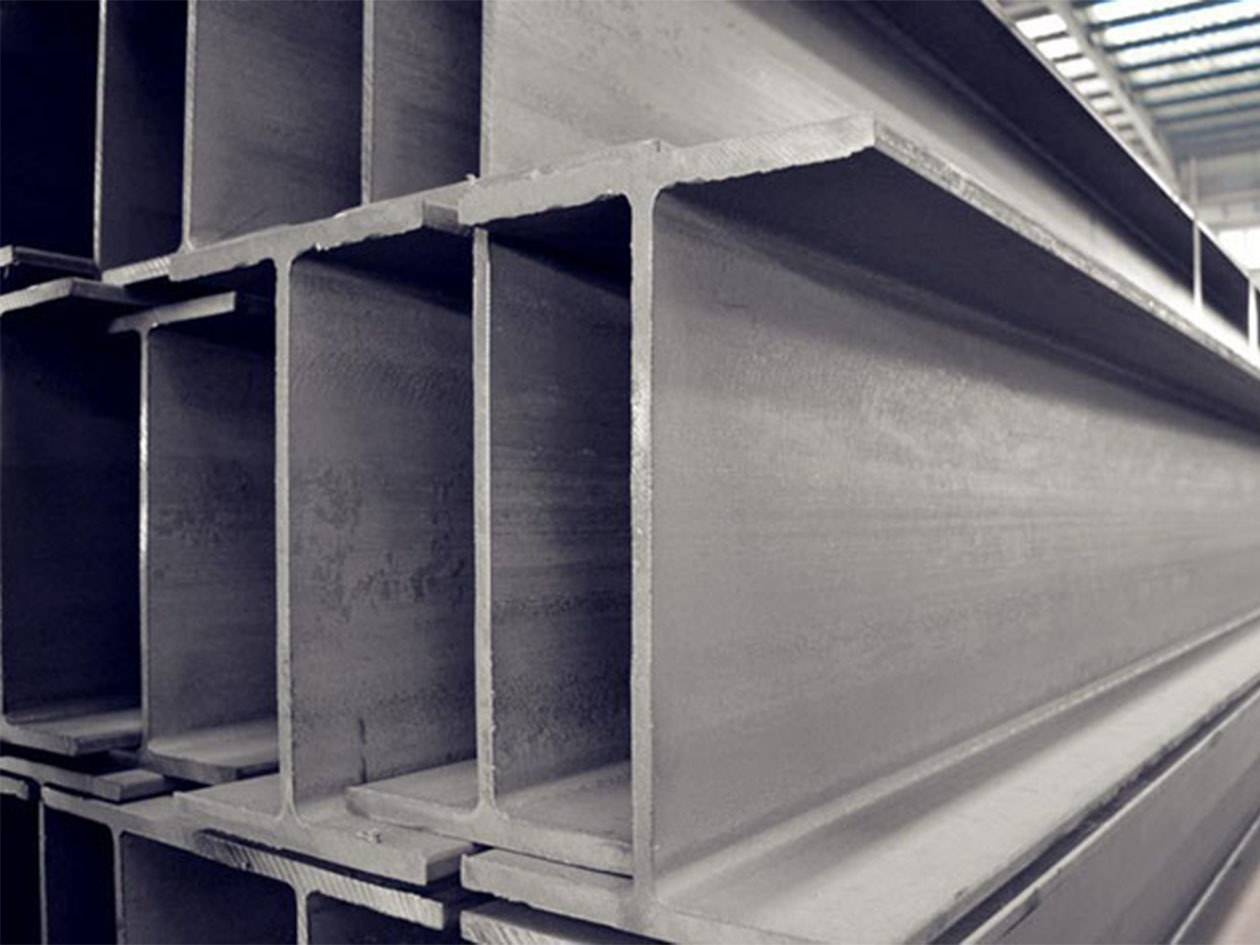
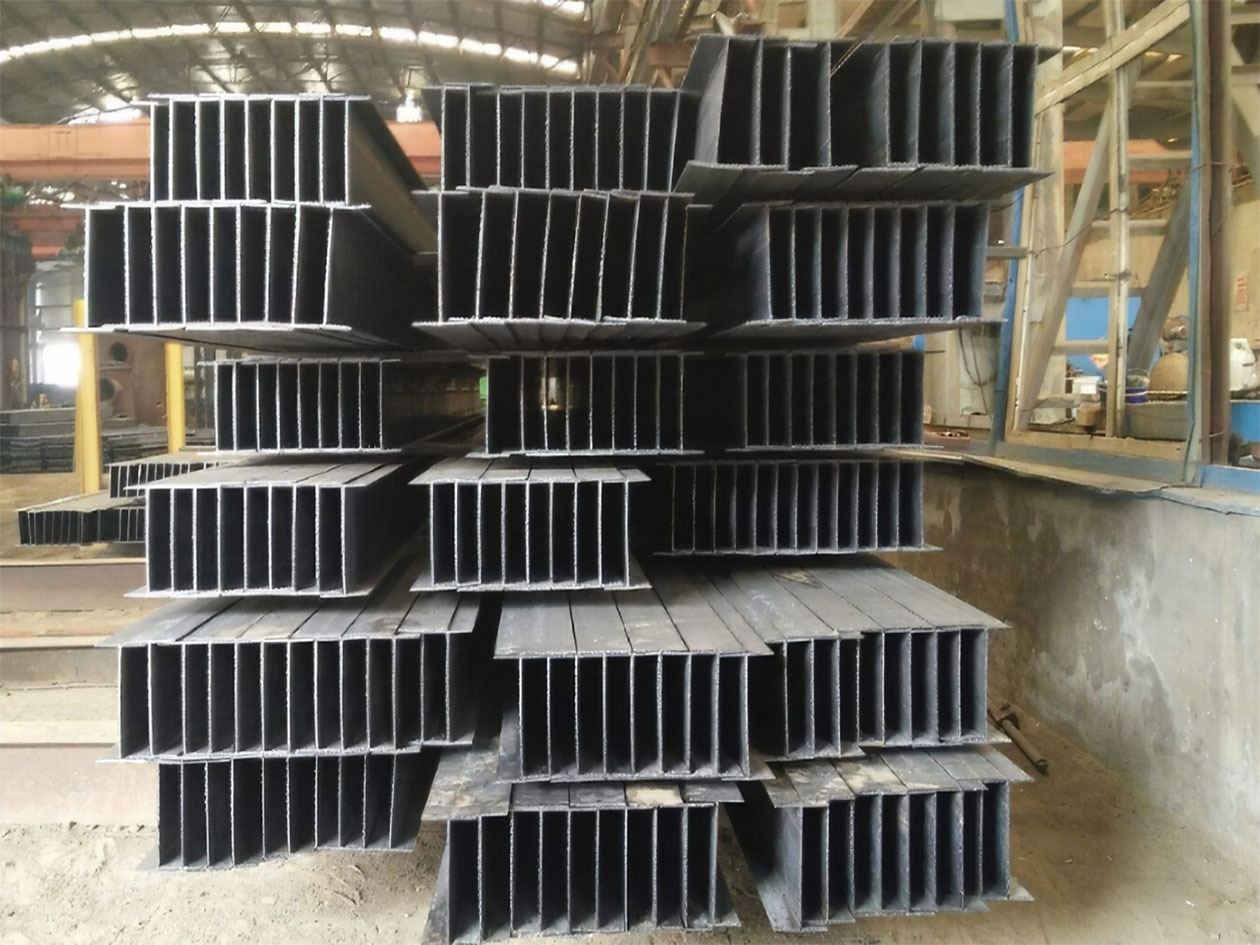
H sections, commonly referred to as H-beams or wide-flange beams, are structural steel members shaped like the letter "H" when viewed in cross-section. They are widely used in construction and engineering due to their high strength-to-weight ratio and efficiency in load-bearing applications. Below is a detailed overview:
● The web width (H) ranges from 100mm - 900mm.
● The flange width (B) from 100mm - 300mm.
● The web thickness (t1) from 5mm - 30mm.
● The flange thickness (t2) also from 5mm - 30mm.
● More to see EN 10365-2017.
● Common Grades:
S235JR, S275JR, and S355JR according to EN10025.
A36, A529, and A572 according to ASTM.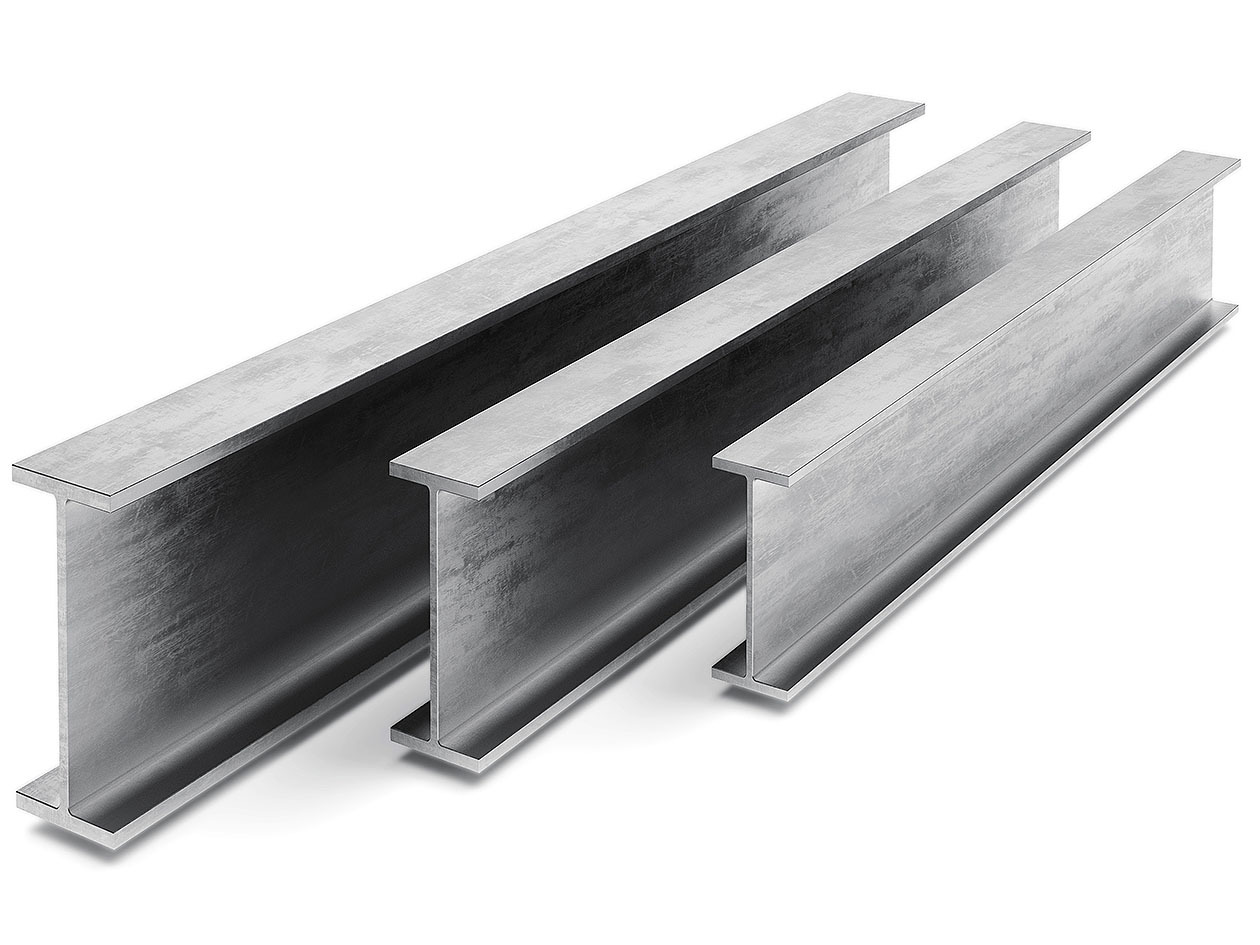
Definition And Structure
An H-section consists of:● Two horizontal flanges (top and bottom) – Wider than those in I-beams, providing better load distribution.
● A vertical web – Connects the flanges, resisting shear forces.
The design ensures optimal strength against bending and deflection, making H-sections ideal for long spans and heavy loads.
Material And Manufacturing
Material:
H-sections are typically made from carbon steel, which offers a good balance of strength and cost-effectiveness. For applications requiring higher strength or corrosion resistance, alloy steels or stainless steels may be used.
Manufacturing Process:
The most common manufacturing method is hot rolling. In this process, steel ingots or billets are heated to a high temperature and then passed through a series of rolling mills to shape them into the H-section profile. Cold rolling is also used for producing H-sections with tighter tolerances and smoother surfaces, but it is less common due to higher costs.
Applications And Advantages
Common Applications
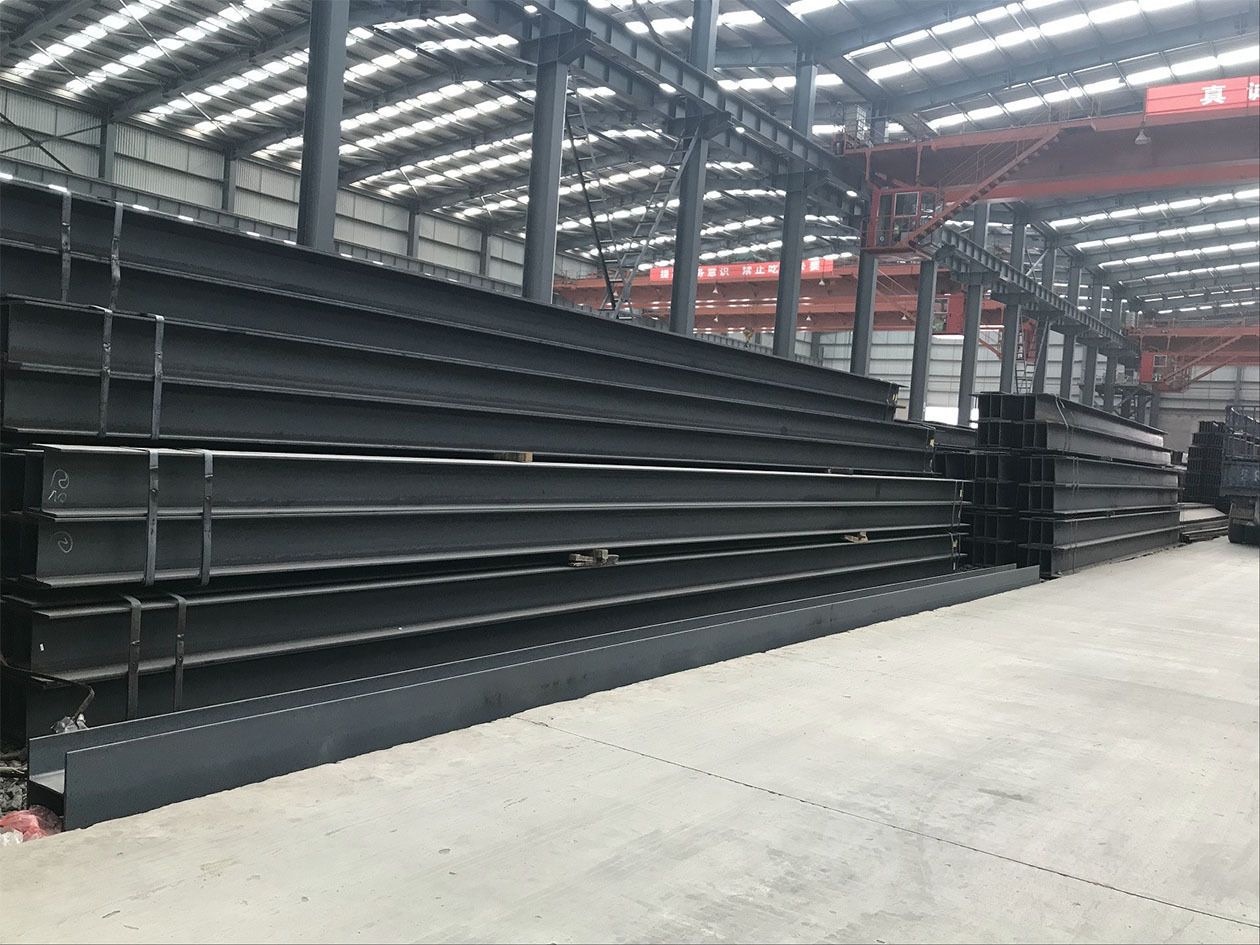
● Construction: Widely used in building frameworks as columns and beams to support floors, roofs, and walls in both residential and commercial structures.
● Bridges: Ideal for main girders in bridges due to their ability to span long distances and carry heavy loads, providing structural integrity and durability.
● Industrial Structures: Commonly used in factories and warehouses to support heavy machinery and equipment, ensuring the structural stability of these buildings.
Advantages
● Load-Bearing Capacity: The wide flanges and narrow web provide a high moment of inertia, making H-sections highly resistant to bending and shear forces.
● Stability: The symmetrical design ensures stability in both vertical and horizontal directions, reducing the risk of buckling under compressive loads.
● Ease of Connection: H-sections can be easily connected to other steel members using bolts, welding, or rivets, making them versatile for constructing complex steel structures.
Comparison To I-Sections
Feature
H-Section (e.g., HEA/HEB/W-shape)
I-Section (e.g., IPE/INP/S-shape)
Cross-Section Shape Wider, parallel flanges; resembles "H" Tapered (sloped) flanges; resembles "I" Flange Width Wider (optimized for load distribution) Narrower (tapered toward edges) Web Thickness Thinner (relative to flange width) Thicker (to compensate for narrower flanges) Weight Distribution More material in flanges, less in web More balanced between web and flanges Moment of Inertia Higher (stronger against bending) Lower (compared to similar-depth H-section) Load Capacity Superior for heavy loads and long spans Suitable for moderate spans and lighter loads Torsional Resistance Lower (open section) Slightly better due to tapered flanges Common Standards EN 10025 (HEA/HEB), ASTM A6 (W-shapes), JIS G 3101 EN 10025 (IPE), ASTM A6 (S-shapes), JIS G 3101 Typical Applications - Heavy construction (bridges, high-rises)
- Columns and beams in large frames
- Crane rails- Residential/light commercial buildings
- Secondary beams
- Short-span supportsEase of Connection Easier (wide flanges accommodate bolts/welds) Challenging (narrower flanges limit bolt space) Cost Efficiency Higher initial cost but reduces total material use Lower cost for small-scale projects Axial Loading (Columns) Better (flanges resist buckling) Less efficient (prone to buckling under compression) Fabrication Requires precision due to thin web Easier to cut/weld (thicker web) Aesthetic Use Rare (industrial appearance) More common (sleeker profile for visible structures) 
Key Takeaways:
● Choose H-sections when:
High load capacity or long spans are needed (e.g., skyscrapers, bridges).The structure requires columns with high axial resistance.
● Choose I-sections when:
Cost is a priority for smaller projects.
Moderate loads and shorter spans are involved (e.g., roof beams).
Tapered flanges are preferred for torsional stability.
Conclusion
H-sections are fundamental in modern steel construction, offering a balance of strength, adaptability, and cost-effectiveness. Their design minimizes material waste while maximizing structural integrity, making them indispensable in large-scale projects.
H Sections
Subcategory
Keyword
- Details
-
H sections, commonly referred to as H-beams or wide-flange beams, are structural steel members shaped like the letter "H" when viewed in cross-section. They are widely used in construction and engineering due to their high strength-to-weight ratio and efficiency in load-bearing applications. Below is a detailed overview:
● The web width (H) ranges from 100mm - 900mm.
● The flange width (B) from 100mm - 300mm.
● The web thickness (t1) from 5mm - 30mm.
● The flange thickness (t2) also from 5mm - 30mm.
● More to see EN 10365-2017.
● Common Grades:
S235JR, S275JR, and S355JR according to EN10025.
A36, A529, and A572 according to ASTM.Definition And Structure
An H-section consists of:● Two horizontal flanges (top and bottom) – Wider than those in I-beams, providing better load distribution.
● A vertical web – Connects the flanges, resisting shear forces.
The design ensures optimal strength against bending and deflection, making H-sections ideal for long spans and heavy loads.
Material And Manufacturing
Material:
H-sections are typically made from carbon steel, which offers a good balance of strength and cost-effectiveness. For applications requiring higher strength or corrosion resistance, alloy steels or stainless steels may be used.
Manufacturing Process:
The most common manufacturing method is hot rolling. In this process, steel ingots or billets are heated to a high temperature and then passed through a series of rolling mills to shape them into the H-section profile. Cold rolling is also used for producing H-sections with tighter tolerances and smoother surfaces, but it is less common due to higher costs.
Applications And Advantages
Common Applications
● Construction: Widely used in building frameworks as columns and beams to support floors, roofs, and walls in both residential and commercial structures.
● Bridges: Ideal for main girders in bridges due to their ability to span long distances and carry heavy loads, providing structural integrity and durability.
● Industrial Structures: Commonly used in factories and warehouses to support heavy machinery and equipment, ensuring the structural stability of these buildings.
Advantages
● Load-Bearing Capacity: The wide flanges and narrow web provide a high moment of inertia, making H-sections highly resistant to bending and shear forces.
● Stability: The symmetrical design ensures stability in both vertical and horizontal directions, reducing the risk of buckling under compressive loads.
● Ease of Connection: H-sections can be easily connected to other steel members using bolts, welding, or rivets, making them versatile for constructing complex steel structures.
Comparison To I-Sections
Feature
H-Section (e.g., HEA/HEB/W-shape)
I-Section (e.g., IPE/INP/S-shape)
Cross-Section Shape Wider, parallel flanges; resembles "H" Tapered (sloped) flanges; resembles "I" Flange Width Wider (optimized for load distribution) Narrower (tapered toward edges) Web Thickness Thinner (relative to flange width) Thicker (to compensate for narrower flanges) Weight Distribution More material in flanges, less in web More balanced between web and flanges Moment of Inertia Higher (stronger against bending) Lower (compared to similar-depth H-section) Load Capacity Superior for heavy loads and long spans Suitable for moderate spans and lighter loads Torsional Resistance Lower (open section) Slightly better due to tapered flanges Common Standards EN 10025 (HEA/HEB), ASTM A6 (W-shapes), JIS G 3101 EN 10025 (IPE), ASTM A6 (S-shapes), JIS G 3101 Typical Applications - Heavy construction (bridges, high-rises)
- Columns and beams in large frames
- Crane rails- Residential/light commercial buildings
- Secondary beams
- Short-span supportsEase of Connection Easier (wide flanges accommodate bolts/welds) Challenging (narrower flanges limit bolt space) Cost Efficiency Higher initial cost but reduces total material use Lower cost for small-scale projects Axial Loading (Columns) Better (flanges resist buckling) Less efficient (prone to buckling under compression) Fabrication Requires precision due to thin web Easier to cut/weld (thicker web) Aesthetic Use Rare (industrial appearance) More common (sleeker profile for visible structures) Key Takeaways:
● Choose H-sections when:
High load capacity or long spans are needed (e.g., skyscrapers, bridges).The structure requires columns with high axial resistance.
● Choose I-sections when:
Cost is a priority for smaller projects.
Moderate loads and shorter spans are involved (e.g., roof beams).
Tapered flanges are preferred for torsional stability.
Conclusion
H-sections are fundamental in modern steel construction, offering a balance of strength, adaptability, and cost-effectiveness. Their design minimizes material waste while maximizing structural integrity, making them indispensable in large-scale projects.
Related products
Product Consulting
Address: Hengtai Road,Daqiuzhuang Town,Jinghai County,Tianjin,China
Mob: +8615122229899(whatspp)
Phone: +86 22 58171905
Fax: +86 22 58171902
E-mail:info@lefinsteel.com
Get company updates
Tianjin Lefin Industrial Co.,Ltd. All rights reserved City sub-station SEO www.300.cn