

-
About us
 Tianjin lefin Industrial
TIANJIN LEFIN STEEL GROUP containing Tianjin lefin Industrial Co.,Ltd. 、Tianjin lefin steel import & export Co.,Ltd and Tianjin Shengqifeng International Trading Co., Ltd. -
Products
Steel Pipe Processing
Our main products include 1/2inch to 16 inch ERW PIPE/GI PIPE which has been produced according to BS1387/ASTM A53/EN10219/EN10255/EN10217 Standard -
-
Service Capability
Guarantee Quality
Our steel pipes are suitable for oil, natural gas, shipbuilding, chemical industry, water conservancy, electrical, steel structure, construction and other related fields.
- Details
-
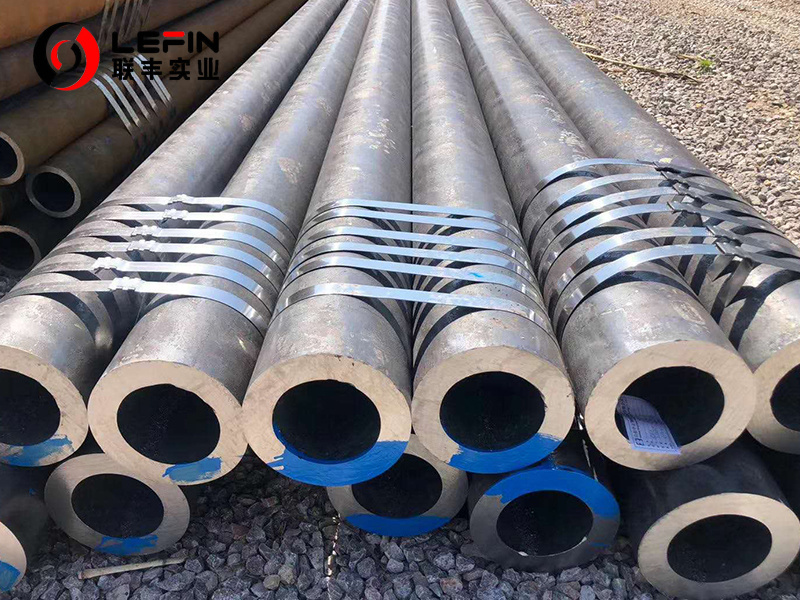
BOILER SEAMLESS PIPE is a high performance seamless pipe designed specifically for BOILER systems, mainly for heat transfer and steam circulation in high temperature and high pressure environments. Its core feature is the welded-free structure, which avoids the potential weak points of traditional welded pipes, and thus performs better in terms of safety, pressure resistance and corrosion resistance.
1. Core application Fields
- Boiler system: It is used for key parts such as steam pipes, superheaters, reheaters and heat exchangers in power station boilers and industrial boilers.
- High-temperature and high-pressure environment: It can withstand a long-term temperature range of 400°C to 600°C and a pressure of over 30MPa.
- Special media: Conveying water, steam, high-temperature flue gas or corrosive media (such as sulfur-containing gas).
2. Materials and Manufacturing standards
- Common materials:
- Carbon steel: ASTM A106 (high-temperature service), A192 (high-pressure small-diameter tubes), A210 (medium and low-temperature boiler tubes).
- Alloy steel: ASTM A335 (chromium-molybdenum alloy, resistant to high-temperature corrosion).
- Stainless steel: Used in highly corrosive environments (such as nuclear power or chemical boilers).
- International standards:
- China: GB 5310 "Seamless Steel Tubes for High-Pressure Boilers"
- United States: ASTM Series A (such as A106, A192).
- European Union: EN 10216 (P195/P235/P265, etc.)
- Japan: JIS G3461/G3462.
3. Key Features
- Welded-free structure:
Eliminates the risk of weld cracking and ADAPTS to high-pressure cyclic loads.
- High temperature and high pressure resistance:
The material undergoes strict heat treatment (such as normalizing and tempering) to ensure stable strength at high temperatures.
- Corrosion resistance:
Enhance corrosion resistance through alloy composition design (such as Cr, Mo) or surface treatment (such as shot blasting).
- Precision dimensions:
Strict tolerances (such as outer diameter ±1%, wall thickness ±10%) ensure the system's sealing performance.
4. Manufacturing process flow
- Hot rolling process:
Round steel billets are heated to 1200°C, then perforated and formed into rough tubes by rolling mills.
It is suitable for large-diameter thick-walled pipes (such as the main steam pipes of power stations).
- Cold drawing process:
Hot-rolled rough tubes are pickled and cold-drawn to obtain high-precision small-diameter tubes (such as superheater tubes).
- Heat treatment:
Normalizing improves the grain structure, while tempering eliminates internal stress.
- Inspection:
• Non-destructive testing: Ultrasonic (UT) and eddy current (ET) detection of internal defects.
• Physical and chemical tests: tensile test, hardness test, metallographic analysis.
5. Selection and Precautions
Parameter matching:- Temperature/Pressure: For example, A106 is suitable for ≤450°C, and A335 P11/P22 is suitable for ≤600°C.
- Medium corrosiveness: In sulfur-containing environments, Cr-Mo alloy or austenitic stainless steel should be selected.
- Dimensional requirements: such as outer diameter (OD 10-1200mm), wall thickness (2-100mm).
6. Maintenance and Life Management
- Regular inspection:
Ultrasonic thickness measurement (for monitoring wall thickness thinning) and endoscopy for internal corrosion inspection.
Pay attention to thermal fatigue cracks (especially near welds or at elbows).- Replacement standard:
The wall thickness loss exceeds the design value by 20%, or severe oxidation and peeling occur.
7. Industry application expansion
- Nuclear power: Heat transfer tubes for steam generators in the nuclear island (using Inconel alloy seamless tubes).
- Petrochemical industry: Hydrogenation reactors, high-temperature cracking furnace pipelines.
- New energy: Molten salt heat transfer tubes in solar thermal power generation systems.

Summary
Boiler seamless steel tubes are the "blood vessels" of the boiler system. Their weld-free design and high-performance materials ensure safe operation under extreme working conditions. When selecting the model, the working condition parameters must be strictly matched. Regular maintenance extends service life.


BOILER SEAMLESS PIPE
Subcategory
Keyword
- Details
-
BOILER SEAMLESS PIPE is a high performance seamless pipe designed specifically for BOILER systems, mainly for heat transfer and steam circulation in high temperature and high pressure environments. Its core feature is the welded-free structure, which avoids the potential weak points of traditional welded pipes, and thus performs better in terms of safety, pressure resistance and corrosion resistance.
1. Core application Fields
- Boiler system: It is used for key parts such as steam pipes, superheaters, reheaters and heat exchangers in power station boilers and industrial boilers.
- High-temperature and high-pressure environment: It can withstand a long-term temperature range of 400°C to 600°C and a pressure of over 30MPa.
- Special media: Conveying water, steam, high-temperature flue gas or corrosive media (such as sulfur-containing gas).
2. Materials and Manufacturing standards
- Common materials:
- Carbon steel: ASTM A106 (high-temperature service), A192 (high-pressure small-diameter tubes), A210 (medium and low-temperature boiler tubes).
- Alloy steel: ASTM A335 (chromium-molybdenum alloy, resistant to high-temperature corrosion).
- Stainless steel: Used in highly corrosive environments (such as nuclear power or chemical boilers).
- International standards:
- China: GB 5310 "Seamless Steel Tubes for High-Pressure Boilers"
- United States: ASTM Series A (such as A106, A192).
- European Union: EN 10216 (P195/P235/P265, etc.)
- Japan: JIS G3461/G3462.
3. Key Features
- Welded-free structure:
Eliminates the risk of weld cracking and ADAPTS to high-pressure cyclic loads.
- High temperature and high pressure resistance:
The material undergoes strict heat treatment (such as normalizing and tempering) to ensure stable strength at high temperatures.
- Corrosion resistance:
Enhance corrosion resistance through alloy composition design (such as Cr, Mo) or surface treatment (such as shot blasting).
- Precision dimensions:
Strict tolerances (such as outer diameter ±1%, wall thickness ±10%) ensure the system's sealing performance.
4. Manufacturing process flow
- Hot rolling process:
Round steel billets are heated to 1200°C, then perforated and formed into rough tubes by rolling mills.
It is suitable for large-diameter thick-walled pipes (such as the main steam pipes of power stations).
- Cold drawing process:
Hot-rolled rough tubes are pickled and cold-drawn to obtain high-precision small-diameter tubes (such as superheater tubes).
- Heat treatment:
Normalizing improves the grain structure, while tempering eliminates internal stress.
- Inspection:
• Non-destructive testing: Ultrasonic (UT) and eddy current (ET) detection of internal defects.
• Physical and chemical tests: tensile test, hardness test, metallographic analysis.
5. Selection and Precautions
Parameter matching:- Temperature/Pressure: For example, A106 is suitable for ≤450°C, and A335 P11/P22 is suitable for ≤600°C.
- Medium corrosiveness: In sulfur-containing environments, Cr-Mo alloy or austenitic stainless steel should be selected.
- Dimensional requirements: such as outer diameter (OD 10-1200mm), wall thickness (2-100mm).
6. Maintenance and Life Management
- Regular inspection:
Ultrasonic thickness measurement (for monitoring wall thickness thinning) and endoscopy for internal corrosion inspection.
Pay attention to thermal fatigue cracks (especially near welds or at elbows).- Replacement standard:
The wall thickness loss exceeds the design value by 20%, or severe oxidation and peeling occur.
7. Industry application expansion
- Nuclear power: Heat transfer tubes for steam generators in the nuclear island (using Inconel alloy seamless tubes).
- Petrochemical industry: Hydrogenation reactors, high-temperature cracking furnace pipelines.
- New energy: Molten salt heat transfer tubes in solar thermal power generation systems.
Summary
Boiler seamless steel tubes are the "blood vessels" of the boiler system. Their weld-free design and high-performance materials ensure safe operation under extreme working conditions. When selecting the model, the working condition parameters must be strictly matched. Regular maintenance extends service life.
Related products
Product Consulting
Address: Hengtai Road,Daqiuzhuang Town,Jinghai County,Tianjin,China
Mob: +8615122229899(whatspp)
Phone: +86 22 58171905
Fax: +86 22 58171902
E-mail:info@lefinsteel.com
Get company updates
Tianjin Lefin Industrial Co.,Ltd. All rights reserved City sub-station SEO www.300.cn