

-
About us
 Tianjin lefin Industrial
TIANJIN LEFIN STEEL GROUP containing Tianjin lefin Industrial Co.,Ltd. 、Tianjin lefin steel import & export Co.,Ltd and Tianjin Shengqifeng International Trading Co., Ltd. -
Products
Steel Pipe Processing
Our main products include 1/2inch to 16 inch ERW PIPE/GI PIPE which has been produced according to BS1387/ASTM A53/EN10219/EN10255/EN10217 Standard -
-
Service Capability
Guarantee Quality
Our steel pipes are suitable for oil, natural gas, shipbuilding, chemical industry, water conservancy, electrical, steel structure, construction and other related fields.
- Details
-
ASTM A500: Standard Specification For Cold-Formed Welded And Seamless Carbon Steel Structural Tubing In Rounds And Shapes
Scope
ASTM A500 is a standard specification developed by ASTM International that covers cold-formed welded and seamless carbon steel structural tubing in round, square, rectangular, and other shapes. This specification is widely used in construction, bridges, industrial frameworks, and other structural applications where high strength and durability are required.Grades And Chemical Composition
ASTM A500 covers several grades based on mechanical properties rather than chemical composition. However, typical carbon steel grades include:Grade A, B, C, and D(with increasing strength levels)
Grade A: Lower strength, suitable for general light structural applications.CLICK HERE➡ to see more about ASTM A500 GR.A
Grade B: Medium strength, commonly used in various structural applications.
CLICK HERE➡ to see more about ASTM A500 GR.B
Grade C: Higher strength, used in heavy-duty structural applications such as bridges and high-rise buildings.
CLICK HERE➡ to see more about ASTM A500 GR.C
Grade D: Requires heat treatment, primarily used for round tubing with higher yield strength.
CLICK HERE➡ to see more about ASTM A500 GR.D
Common elements include carbon (C), manganese (Mn), phosphorus (P), sulfur (S), and small amounts of other alloying elements.
Mechanical Properties
The key mechanical properties for ASTM A500 tubing are:Grade
Tensile Strength (min, ksi)
Yield Strength (min, ksi)
Elongation (% in 2 in.)
A 45 33 25 B 58 42 23 C 62 46 21 D 58 36 23 Manufacturing Process
Welded Process: The steel plate is rolled and welded into a tube using the electric resistance welding (ERW) process. Non-destructive testing (NDT) technology is used to ensure weld quality.
Seamless Process: The steel billet is processed into a tube through hot rolling or cold drawing technology, resulting in high-precision and high-strength tubing.
Cold-Forming: The tubing is shaped at room temperature, enhancing strength and dimensional accuracy.
Shapes And Sizes
Round Tubing: Commonly used in construction and mechanical applications.Outside diameter: 20 mm - 660mm, Wall Thickness: 1.3mm - 16mm.
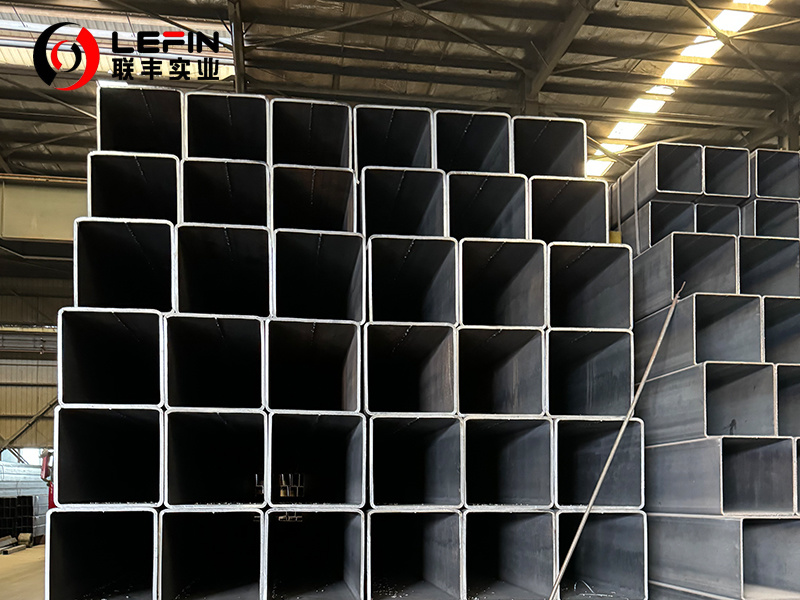
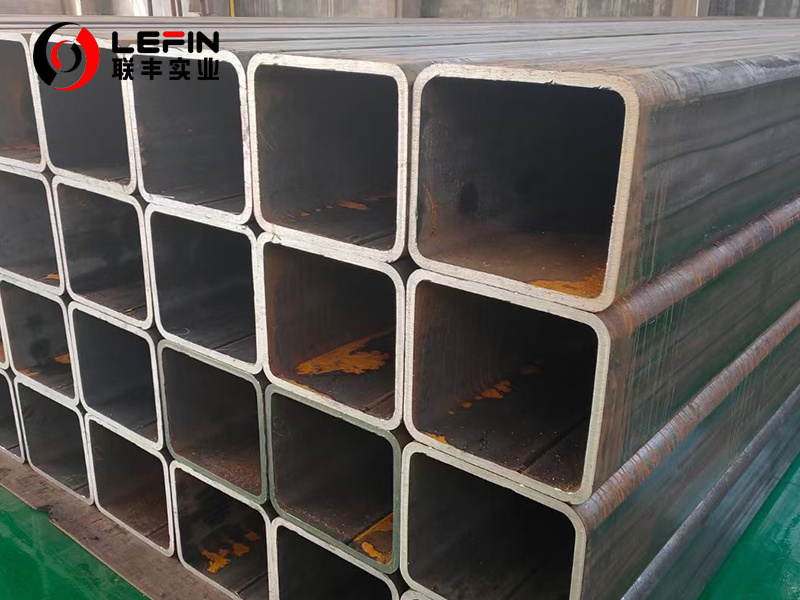
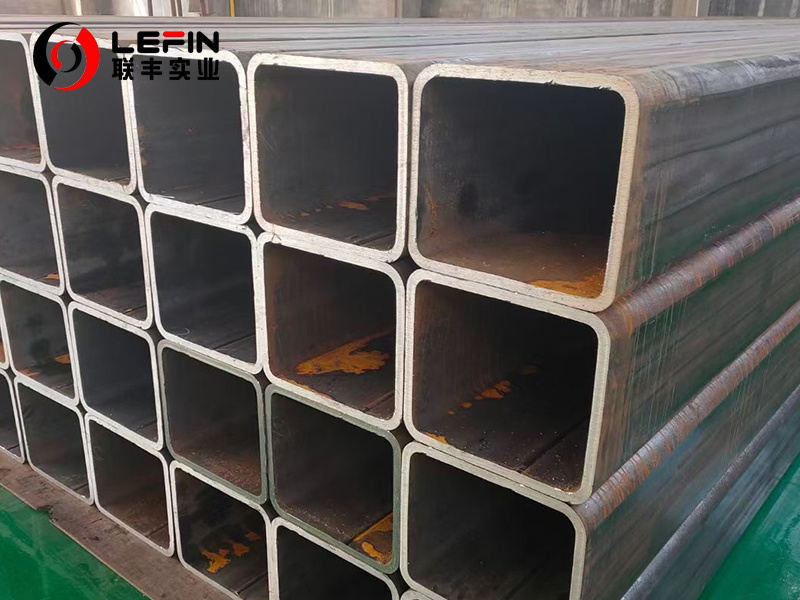
Square & Rectangular Tubing: Preferred for architectural and structural frameworks.Outside diameter: 20*20 - 1500*1500mm, Wall Thickness: 1.2mm - 50mm.
(The Wall Thickness Tolerance: Control within the standard limits, Length: Normally 5.8m, 6m, 12m or as your required.)Surface Condition & Finish
Bare (Uncoated): Typically supplied with a mill finish.
Galvanized (Optional): For corrosion resistance (requires additional specifications).
Testing & Inspection Requirements
Tensile & Yield Strength Testing: Ensures compliance with strength requirements.Flattening Test: Checks ductility and weld integrity (for welded tubes).
Hydrostatic or Nondestructive Testing (NDT): Optional, based on application needs.
Dimensional Tolerances: Strict controls on outer diameter (OD), wall thickness, and straightness.
Applications
Construction: Building frames, columns, and support structures.
Bridges & Infrastructure: Light poles, sign supports, and guardrails.
Industrial Equipment: Conveyors, machinery frames, and storage racks.
Architectural Uses: Handrails, decorative structures.
Advantages Of ASTM A500
High strength-to-weight ratio.
Cost-effective compared to hot-formed alternatives.
Excellent weldability and formability.
Consistent quality due to standardized manufacturing.In summary, ASTM A500 is a versatile and high-strength standard for carbon steel structural tubing, offering a balance of strength, formability, and cost efficiency. Widely used in construction, mechanical engineering, and other industries. Its strict chemical composition and mechanical property requirements ensure its reliability and performance in various applications
ASTM A500 Standard
Subcategory
Keyword
- Details
-
ASTM A500: Standard Specification For Cold-Formed Welded And Seamless Carbon Steel Structural Tubing In Rounds And Shapes
Scope
ASTM A500 is a standard specification developed by ASTM International that covers cold-formed welded and seamless carbon steel structural tubing in round, square, rectangular, and other shapes. This specification is widely used in construction, bridges, industrial frameworks, and other structural applications where high strength and durability are required.Grades And Chemical Composition
ASTM A500 covers several grades based on mechanical properties rather than chemical composition. However, typical carbon steel grades include:Grade A, B, C, and D(with increasing strength levels)
Grade A: Lower strength, suitable for general light structural applications.CLICK HERE➡ to see more about ASTM A500 GR.A
Grade B: Medium strength, commonly used in various structural applications.
CLICK HERE➡ to see more about ASTM A500 GR.B
Grade C: Higher strength, used in heavy-duty structural applications such as bridges and high-rise buildings.
CLICK HERE➡ to see more about ASTM A500 GR.C
Grade D: Requires heat treatment, primarily used for round tubing with higher yield strength.
CLICK HERE➡ to see more about ASTM A500 GR.D
Common elements include carbon (C), manganese (Mn), phosphorus (P), sulfur (S), and small amounts of other alloying elements.
Mechanical Properties
The key mechanical properties for ASTM A500 tubing are:Grade
Tensile Strength (min, ksi)
Yield Strength (min, ksi)
Elongation (% in 2 in.)
A 45 33 25 B 58 42 23 C 62 46 21 D 58 36 23 Manufacturing Process
Welded Process: The steel plate is rolled and welded into a tube using the electric resistance welding (ERW) process. Non-destructive testing (NDT) technology is used to ensure weld quality.
Seamless Process: The steel billet is processed into a tube through hot rolling or cold drawing technology, resulting in high-precision and high-strength tubing.
Cold-Forming: The tubing is shaped at room temperature, enhancing strength and dimensional accuracy.
Shapes And Sizes
Round Tubing: Commonly used in construction and mechanical applications.Outside diameter: 20 mm - 660mm, Wall Thickness: 1.3mm - 16mm.
Square & Rectangular Tubing: Preferred for architectural and structural frameworks.Outside diameter: 20*20 - 1500*1500mm, Wall Thickness: 1.2mm - 50mm.
(The Wall Thickness Tolerance: Control within the standard limits, Length: Normally 5.8m, 6m, 12m or as your required.)Surface Condition & Finish
Bare (Uncoated): Typically supplied with a mill finish.
Galvanized (Optional): For corrosion resistance (requires additional specifications).
Testing & Inspection Requirements
Tensile & Yield Strength Testing: Ensures compliance with strength requirements.Flattening Test: Checks ductility and weld integrity (for welded tubes).
Hydrostatic or Nondestructive Testing (NDT): Optional, based on application needs.
Dimensional Tolerances: Strict controls on outer diameter (OD), wall thickness, and straightness.
Applications
Construction: Building frames, columns, and support structures.
Bridges & Infrastructure: Light poles, sign supports, and guardrails.
Industrial Equipment: Conveyors, machinery frames, and storage racks.
Architectural Uses: Handrails, decorative structures.
Advantages Of ASTM A500
High strength-to-weight ratio.
Cost-effective compared to hot-formed alternatives.
Excellent weldability and formability.
Consistent quality due to standardized manufacturing.In summary, ASTM A500 is a versatile and high-strength standard for carbon steel structural tubing, offering a balance of strength, formability, and cost efficiency. Widely used in construction, mechanical engineering, and other industries. Its strict chemical composition and mechanical property requirements ensure its reliability and performance in various applications
Related products
Product Consulting
Address: Hengtai Road,Daqiuzhuang Town,Jinghai County,Tianjin,China
Mob: +8615122229899(whatspp)
Phone: +86 22 58171905
Fax: +86 22 58171902
E-mail:info@lefinsteel.com
Get company updates
Tianjin Lefin Industrial Co.,Ltd. All rights reserved City sub-station SEO www.300.cn