

-
About us
 Tianjin lefin Industrial
TIANJIN LEFIN STEEL GROUP containing Tianjin lefin Industrial Co.,Ltd. 、Tianjin lefin steel import & export Co.,Ltd and Tianjin Shengqifeng International Trading Co., Ltd. -
Products
Steel Pipe Processing
Our main products include 1/2inch to 16 inch ERW PIPE/GI PIPE which has been produced according to BS1387/ASTM A53/EN10219/EN10255/EN10217 Standard -
-
Service Capability
Guarantee Quality
Our steel pipes are suitable for oil, natural gas, shipbuilding, chemical industry, water conservancy, electrical, steel structure, construction and other related fields.
- Details
-
Brief Introduction
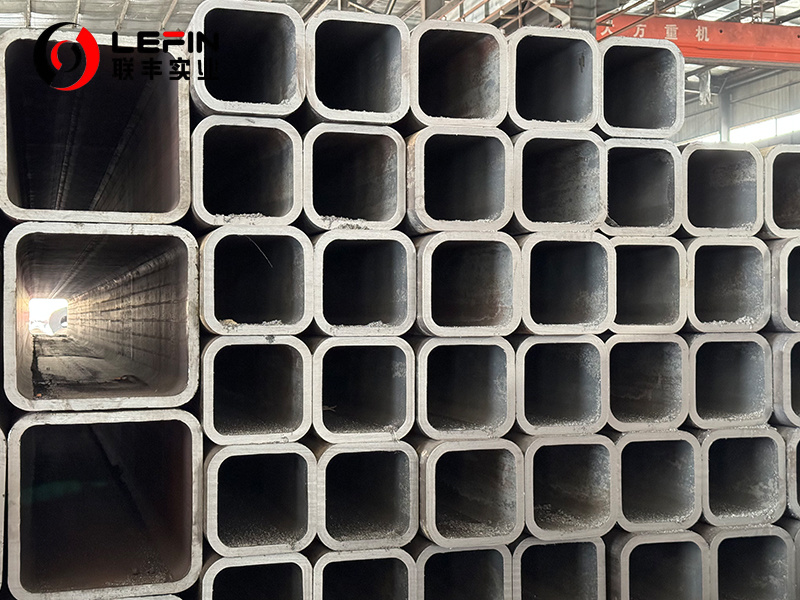
EN 10210 STEEL TUBE
Standard: EN 10210
Grade: S235JRH, S275J0H, S275J2H, S355J0H, S355J2H, S275NH, S355NH
Outside Diameter:
1/2 INCH - 24 INCH(CHS)
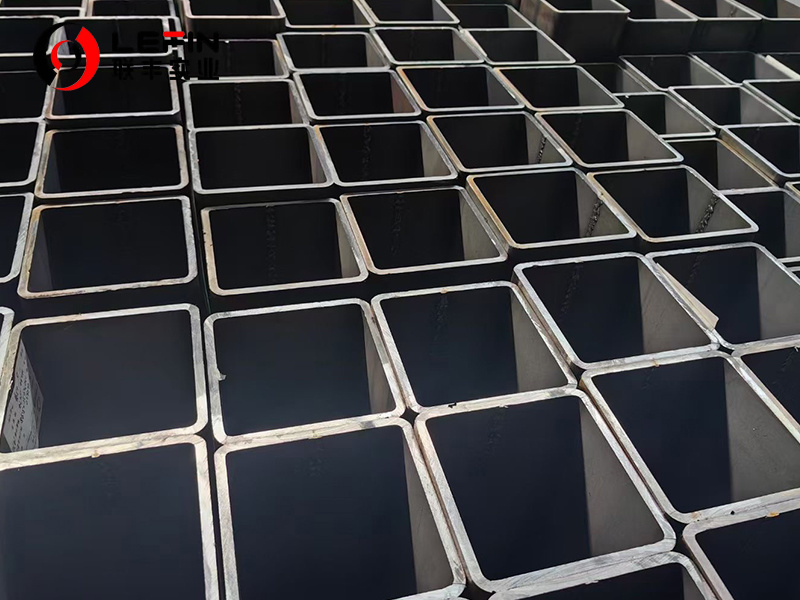
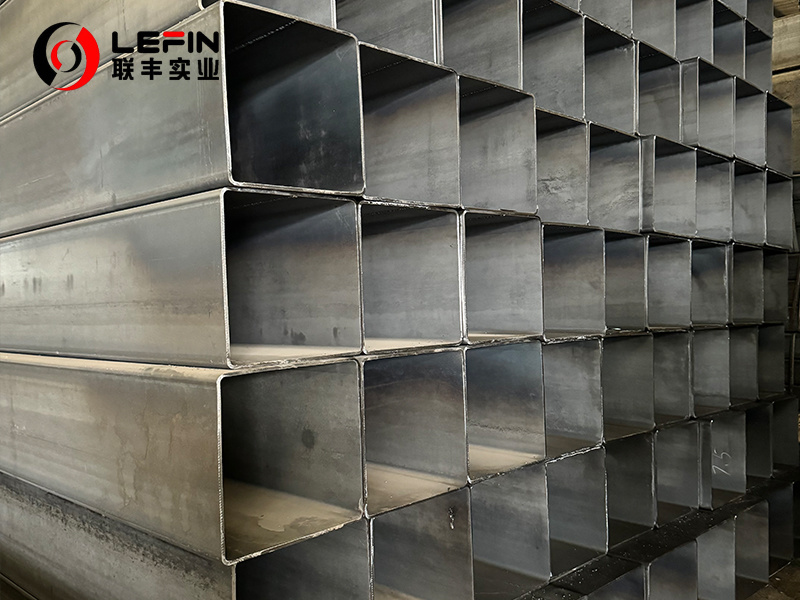
20MM × 20MM - 1200MM × 1200MM(SHS)
20MM × 30MM - 1000MM × 1500MM(RHS)
Wall Thickness: 1.3MM - 22MM(CHS), 1.3MM - 50MM(SHS,RHS)
The Wall Thickness Tolerance: ±5%
Length: Normally used 5.8m, 6m, 12m
Surface Treatment: Bare Finish, Painting, Oiling, Galvanization, 3PE, FBE coated, etc.Chemical requirements
Unalloyed hollow section steel for steel structure
Analyze the melting chemical composition of products with thickness ≤65mm
GRADE
COMPOSITION % MAX
C
Si
Mn
P
S
N
Nominal thickness≤40mm
40mm<Nominal thickness≤65mm
S235JRH
0.17
0.20
-
1.40
0.045
0.045
0.009
S275J0H
0.20
0.22
-
1.50
0.040
0.040
0.009
S275J2H
0.20
0.22
-
1.50
0.035
0.035
-
S355J0H
0.22
0.22
0.55
1.60
0.040
0.040
0.009
S355J2H
0.22
0.22
0.55
1.60
0.035
0.035
-
Physiacal requirements
Mechanical properties of unalloyed steels
GRADE
Yield strength
Tensile strength
Nominal thickness≤16
16<Nominal thickness≤40
40<Nominal thickness≤65
Nominal thickness<3
3≤Nominal thickness≤65
S235JRH
235
225
215
360-510
340-470
S275J0H
275
265
255
430-580
410-560
S275J2H
S355J0H
355
345
335
510-680
490-630
S355J2H
Detailed Information
The EN 10210 standard consists of two parts:
•EN 10210-1: specifies the technical requirements and delivery conditions for hot rolled hollow structural profiles;
•EN 10210-2: covers details of dimensions, tolerances and mass per unit length of seamless and welded steel tubes.
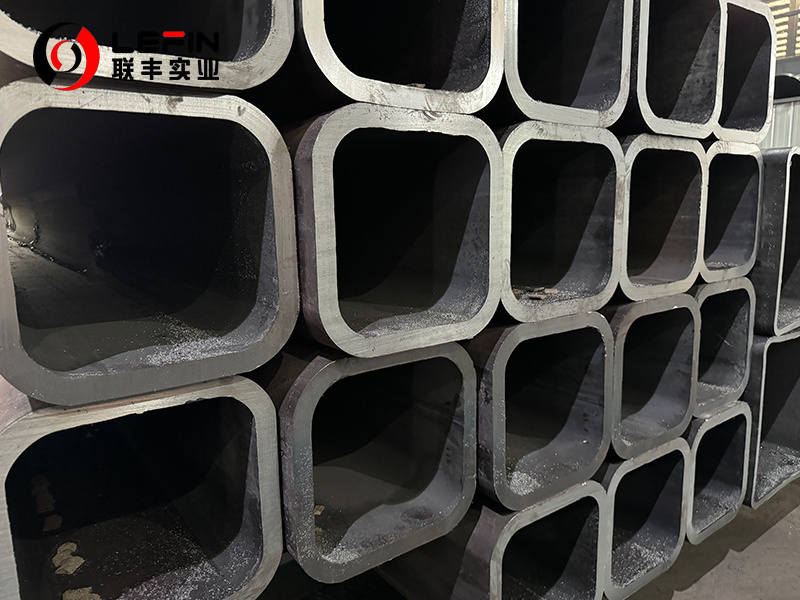
This standard is applicable to round, rectangular, square or oval steel pipes formed by hot rolling process, mainly used in construction steel structures, offshore platforms, heavy machinery and other load-bearing structures.Production process and material characteristics:
1. Thermoforming process• The steel is formed after plastic deformation at high temperature (seamless or welded), which effectively reduces the internal residual stress and improves the toughness and fatigue resistance of the material.
• Thermoformed steel tubes have slightly wider dimensional tolerances than cold-formed steel tubes (EN 10219), but can withstand greater dynamic loads.
2. Commonly used material grade• Ordinary carbon steel: such as S235JRH, S275J0H/J2H, S355J0H/J2H/K2H, suitable for general load-bearing structures.
• High-strength low-alloy steels such as S420NH, S460NH/NLH for extreme environments such as offshore platforms or low-temperature scenarios.
3. Mechanical properties• Yield strength: S355 grade steel pipe yield strength ≥355 MPa, tensile strength up to 470-630 MPa.
• Impact toughness: For example, the impact work of S355J2H is greater than or equal to 27 J (-20℃ test) to ensure safety in high-impact environments.
• Elongation: ≥22% (S235 grade) to ensure the ductility of the material in deformation.


Typical application areas:
1. Buildings and Bridges: such as high-load bridge components and high-rise building frames, dynamic load and seismic requirements need to be combined.
2. Heavy machinery: crane boom, mining equipment and other structural parts to withstand shock and vibration.
3. Offshore engineering: Scenarios with corrosion resistance and high strength requirements such as oil drilling platforms and offshore wind power towers.
4. Energy and high temperature equipment: boiler pipes, thermal system pipes and other parts that need high temperature resistance.In accordance with the EU Construction Products Regulation (305/2011/EU), EN 10210 steel pipes exported to Europe are required to obtain the CE mark through the following steps:
1. Initial Type inspection (ITT) : test chemical composition, mechanical properties (such as tensile strength, impact toughness) and weldability.
2. Factory Production control (FPC) : to ensure that raw material verification, process control, identification traceability, etc. comply with standards.
3. Notified body audit: The FPC compliance certificate issued by the EU authorized body allows the use of CE marking and Performance Declaration (DOP).Selection Suggestions
Priority is given to EN 10210 scenarios: structures requiring high toughness (such as impact loads), resistance to high temperatures or dynamic loads, or applications sensitive to residual stress.
• Alternative: If dimensional accuracy and surface finish are required and the load is static, cold-formed steel pipe EN 10219 can be considered.


EN10210 STEEL TUBE
Subcategory
Keyword
- Details
-
Brief Introduction
EN 10210 STEEL TUBE
Standard: EN 10210
Grade: S235JRH, S275J0H, S275J2H, S355J0H, S355J2H, S275NH, S355NH
Outside Diameter:
1/2 INCH - 24 INCH(CHS)
20MM × 20MM - 1200MM × 1200MM(SHS)
20MM × 30MM - 1000MM × 1500MM(RHS)
Wall Thickness: 1.3MM - 22MM(CHS), 1.3MM - 50MM(SHS,RHS)
The Wall Thickness Tolerance: ±5%
Length: Normally used 5.8m, 6m, 12m
Surface Treatment: Bare Finish, Painting, Oiling, Galvanization, 3PE, FBE coated, etc.Chemical requirements
Unalloyed hollow section steel for steel structure
Analyze the melting chemical composition of products with thickness ≤65mm
GRADE
COMPOSITION % MAX
C
Si
Mn
P
S
N
Nominal thickness≤40mm
40mm<Nominal thickness≤65mm
S235JRH
0.17
0.20
-
1.40
0.045
0.045
0.009
S275J0H
0.20
0.22
-
1.50
0.040
0.040
0.009
S275J2H
0.20
0.22
-
1.50
0.035
0.035
-
S355J0H
0.22
0.22
0.55
1.60
0.040
0.040
0.009
S355J2H
0.22
0.22
0.55
1.60
0.035
0.035
-
Physiacal requirements
Mechanical properties of unalloyed steels
GRADE
Yield strength
Tensile strength
Nominal thickness≤16
16<Nominal thickness≤40
40<Nominal thickness≤65
Nominal thickness<3
3≤Nominal thickness≤65
S235JRH
235
225
215
360-510
340-470
S275J0H
275
265
255
430-580
410-560
S275J2H
S355J0H
355
345
335
510-680
490-630
S355J2H
Detailed Information
The EN 10210 standard consists of two parts:
•EN 10210-1: specifies the technical requirements and delivery conditions for hot rolled hollow structural profiles;
•EN 10210-2: covers details of dimensions, tolerances and mass per unit length of seamless and welded steel tubes.
This standard is applicable to round, rectangular, square or oval steel pipes formed by hot rolling process, mainly used in construction steel structures, offshore platforms, heavy machinery and other load-bearing structures.Production process and material characteristics:
1. Thermoforming process• The steel is formed after plastic deformation at high temperature (seamless or welded), which effectively reduces the internal residual stress and improves the toughness and fatigue resistance of the material.
• Thermoformed steel tubes have slightly wider dimensional tolerances than cold-formed steel tubes (EN 10219), but can withstand greater dynamic loads.
2. Commonly used material grade• Ordinary carbon steel: such as S235JRH, S275J0H/J2H, S355J0H/J2H/K2H, suitable for general load-bearing structures.
• High-strength low-alloy steels such as S420NH, S460NH/NLH for extreme environments such as offshore platforms or low-temperature scenarios.
3. Mechanical properties• Yield strength: S355 grade steel pipe yield strength ≥355 MPa, tensile strength up to 470-630 MPa.
• Impact toughness: For example, the impact work of S355J2H is greater than or equal to 27 J (-20℃ test) to ensure safety in high-impact environments.
• Elongation: ≥22% (S235 grade) to ensure the ductility of the material in deformation.
Typical application areas:
1. Buildings and Bridges: such as high-load bridge components and high-rise building frames, dynamic load and seismic requirements need to be combined.
2. Heavy machinery: crane boom, mining equipment and other structural parts to withstand shock and vibration.
3. Offshore engineering: Scenarios with corrosion resistance and high strength requirements such as oil drilling platforms and offshore wind power towers.
4. Energy and high temperature equipment: boiler pipes, thermal system pipes and other parts that need high temperature resistance.In accordance with the EU Construction Products Regulation (305/2011/EU), EN 10210 steel pipes exported to Europe are required to obtain the CE mark through the following steps:
1. Initial Type inspection (ITT) : test chemical composition, mechanical properties (such as tensile strength, impact toughness) and weldability.
2. Factory Production control (FPC) : to ensure that raw material verification, process control, identification traceability, etc. comply with standards.
3. Notified body audit: The FPC compliance certificate issued by the EU authorized body allows the use of CE marking and Performance Declaration (DOP).Selection Suggestions
Priority is given to EN 10210 scenarios: structures requiring high toughness (such as impact loads), resistance to high temperatures or dynamic loads, or applications sensitive to residual stress.
• Alternative: If dimensional accuracy and surface finish are required and the load is static, cold-formed steel pipe EN 10219 can be considered.
Related products
Product Consulting
Address: Hengtai Road,Daqiuzhuang Town,Jinghai County,Tianjin,China
Mob: +8615122229899(whatspp)
Phone: +86 22 58171905
Fax: +86 22 58171902
E-mail:info@lefinsteel.com
Get company updates
Tianjin Lefin Industrial Co.,Ltd. All rights reserved City sub-station SEO www.300.cn