

-
About us
 Tianjin lefin Industrial
TIANJIN LEFIN STEEL GROUP containing Tianjin lefin Industrial Co.,Ltd. 、Tianjin lefin steel import & export Co.,Ltd and Tianjin Shengqifeng International Trading Co., Ltd. -
Products
Steel Pipe Processing
Our main products include 1/2inch to 16 inch ERW PIPE/GI PIPE which has been produced according to BS1387/ASTM A53/EN10219/EN10255/EN10217 Standard -
-
Service Capability
Guarantee Quality
Our steel pipes are suitable for oil, natural gas, shipbuilding, chemical industry, water conservancy, electrical, steel structure, construction and other related fields.
- Details
-
Products Description
ASTM A501 GR.B TUBE
Size: Square Tube: 20MM * 20MM - 1200MM * 1200MM
Rectangular Tube: 20MM * 30MM - 1500MM * 1200MM
Wall Thickness: 1.3MM - 50MM
Length: 1M - 12M, normally 5.8M, 6M, 12M, also depends on the requirements.
Surface Treatment: Galvanizing, Black vanish, Carving, Slightly oil painting, PVC clothes cover each bundle etc.
Application: Bolted construction of bridges and buildings, as well as for General structural purposes.Chemcial Composition
COMPOSITION, %
GRADE A
GRADE B,C
HEAT ANALYSIS
PRODUCT ANALYSIS
HEAT ANALYSIS
PRODUCT ANALYSIS
Carbon(C),max
0.26
0.30
0.22
0.26
Manganese(Mn),max
no requirement
no requirement
1.40
1.45
Phosphorus(P),max
0.035
0.045
0.030
0.040
Sulfur(S),max
0.035
0.045
0.020
0.030
Copper(Cu),min
0.20
0.18
0.20
0.18
Physical requirements
ASTM A501 Tensile and Impact Requirements
Wall Thickness
GRADE A
GRADE B
GRADE C
TENSILE STRENGTH,min
All
58000psi
400MPa
65000psi
448MPa
70000psi
483MPa
WT≤25mm
39000psi
270MPa
46000psi
315MPa
50000psi
345MPa
25mm<WT≤50mm
38000psi
260MPa
45000psi
310MPa
49000psi
340MPa
YIELD STRENGTH,min
50mm<WT≤76mm
36500psi
250MPa
42500psi
290MPa
47500psi
330MPa
76mm<WT≤100mm
35000psi
240MPa
40000psi
280MPa
46000psi
315MPa
ELONGATION,min
25%
24%
23%
Detailed Information
In Storage:
1. Moisture and corrosion protection
• The storage environment should be kept dry and ventilated to avoid contact with rain or high humidity air.
• If the steel pipe is stored in the open air for a long time, it is recommended to protect the steel pipe with anti-rust coating (such as hot dip galvanizing or oil coating), and regularly check the surface rust.2. Stacking method
• Straight stacking: The steel pipe should be placed on a flat pad or support to avoid direct contact with the ground to prevent water or soil pollution.
• Interlayer isolation: Steel pipes of different specifications or materials should be stored in layers, separated by cushion wood to avoid indentation or deformation.
• Height limit: The stacking height should not be too high (generally not more than 2 meters) to prevent the bottom steel pipe from bending due to excessive load bearing.3. Avoid pollution and damage
• Keep away from corrosive chemicals such as acid, alkali and salt to avoid surface chemical corrosion.
• Use a soft sling or protective cover during handling to avoid deformation caused by mechanical scratches or impact.4. Get regular checkups
• Check the storage environment and steel pipe status regularly, and timely treatment is required if rust, deformation or coating damage is found.In Usage:
1. Check before installation
• Check the specifications, grades and surface quality of the steel pipe to ensure that there are no cracks, serious rust or deformation.
• If welding is required, check the weld area for compliance with standards (such as ASTM A501 for weld position).2. Processing and welding
• Cutting and drilling: Use special tools to avoid degradation of material properties due to local overheating.
• Welding process:
• Welding materials and methods in accordance with the specifications (such as arc welding, gas shielded welding).
• After welding, clean the welding slag and carry out non-destructive testing (such as ultrasonic testing) to ensure the quality of the weld.
• Cold bending: Avoid excessive bending and prevent local thinning or cracking of the pipe wall.3. Load and structure design
• Use in strict accordance with design drawings and engineering specifications, and shall not be overloaded.
• Consider the directivity of the steel tube (such as the strong axis direction of a rectangular tube) to optimize load-bearing performance.4. Corrosion protection
• If galvanized or coated steel pipes are not used, perform regular anti-corrosion maintenance (such as painting anti-rust paint) in an exposed environment.
• Avoid direct contact with dissimilar metals (such as copper, aluminum) to prevent electrochemical corrosion.5. Perform safe operations
• Wear protective equipment (gloves, goggles, etc.) during handling and installation to prevent injuries caused by cuts or splashing.
• Fixed steel pipe when working at height to prevent falling risk.Special environmental precautions:
1. High humidity/coastal areas: hot dip galvanized steel pipe is preferred, and the maintenance period is shortened.
2. High or low temperature environment: pay attention to the thermal expansion/contraction characteristics of the material, and reserve the expansion margin.
3. Dynamic load scenarios (such as Bridges) : it is necessary to check whether the fatigue strength meets the design requirements.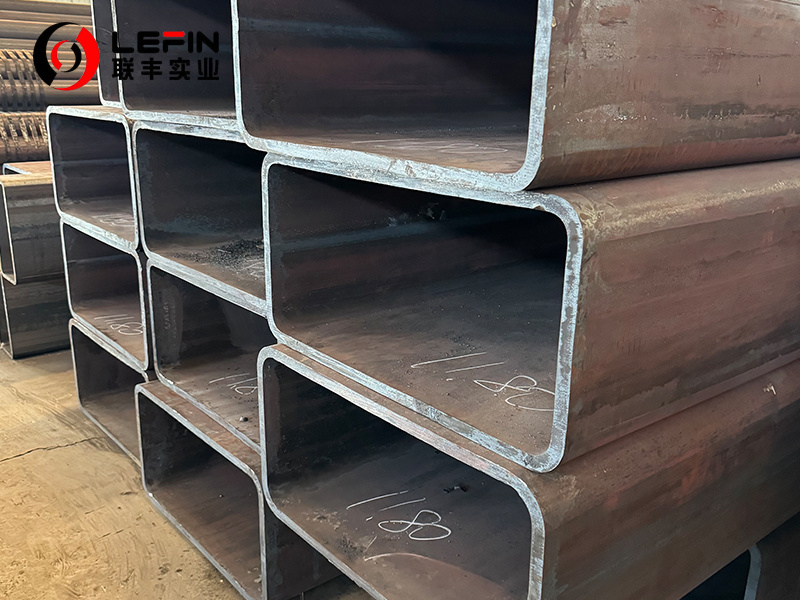

ASTM A501 STEEL PIPES
Subcategory
Keyword
- Details
-
Products Description
ASTM A501 GR.B TUBE
Size: Square Tube: 20MM * 20MM - 1200MM * 1200MM
Rectangular Tube: 20MM * 30MM - 1500MM * 1200MM
Wall Thickness: 1.3MM - 50MM
Length: 1M - 12M, normally 5.8M, 6M, 12M, also depends on the requirements.
Surface Treatment: Galvanizing, Black vanish, Carving, Slightly oil painting, PVC clothes cover each bundle etc.
Application: Bolted construction of bridges and buildings, as well as for General structural purposes.Chemcial Composition
COMPOSITION, %
GRADE A
GRADE B,C
HEAT ANALYSIS
PRODUCT ANALYSIS
HEAT ANALYSIS
PRODUCT ANALYSIS
Carbon(C),max
0.26
0.30
0.22
0.26
Manganese(Mn),max
no requirement
no requirement
1.40
1.45
Phosphorus(P),max
0.035
0.045
0.030
0.040
Sulfur(S),max
0.035
0.045
0.020
0.030
Copper(Cu),min
0.20
0.18
0.20
0.18
Physical requirements
ASTM A501 Tensile and Impact Requirements
Wall Thickness
GRADE A
GRADE B
GRADE C
TENSILE STRENGTH,min
All
58000psi
400MPa
65000psi
448MPa
70000psi
483MPa
WT≤25mm
39000psi
270MPa
46000psi
315MPa
50000psi
345MPa
25mm<WT≤50mm
38000psi
260MPa
45000psi
310MPa
49000psi
340MPa
YIELD STRENGTH,min
50mm<WT≤76mm
36500psi
250MPa
42500psi
290MPa
47500psi
330MPa
76mm<WT≤100mm
35000psi
240MPa
40000psi
280MPa
46000psi
315MPa
ELONGATION,min
25%
24%
23%
Detailed Information
In Storage:
1. Moisture and corrosion protection
• The storage environment should be kept dry and ventilated to avoid contact with rain or high humidity air.
• If the steel pipe is stored in the open air for a long time, it is recommended to protect the steel pipe with anti-rust coating (such as hot dip galvanizing or oil coating), and regularly check the surface rust.2. Stacking method
• Straight stacking: The steel pipe should be placed on a flat pad or support to avoid direct contact with the ground to prevent water or soil pollution.
• Interlayer isolation: Steel pipes of different specifications or materials should be stored in layers, separated by cushion wood to avoid indentation or deformation.
• Height limit: The stacking height should not be too high (generally not more than 2 meters) to prevent the bottom steel pipe from bending due to excessive load bearing.3. Avoid pollution and damage
• Keep away from corrosive chemicals such as acid, alkali and salt to avoid surface chemical corrosion.
• Use a soft sling or protective cover during handling to avoid deformation caused by mechanical scratches or impact.4. Get regular checkups
• Check the storage environment and steel pipe status regularly, and timely treatment is required if rust, deformation or coating damage is found.In Usage:
1. Check before installation
• Check the specifications, grades and surface quality of the steel pipe to ensure that there are no cracks, serious rust or deformation.
• If welding is required, check the weld area for compliance with standards (such as ASTM A501 for weld position).2. Processing and welding
• Cutting and drilling: Use special tools to avoid degradation of material properties due to local overheating.
• Welding process:
• Welding materials and methods in accordance with the specifications (such as arc welding, gas shielded welding).
• After welding, clean the welding slag and carry out non-destructive testing (such as ultrasonic testing) to ensure the quality of the weld.
• Cold bending: Avoid excessive bending and prevent local thinning or cracking of the pipe wall.3. Load and structure design
• Use in strict accordance with design drawings and engineering specifications, and shall not be overloaded.
• Consider the directivity of the steel tube (such as the strong axis direction of a rectangular tube) to optimize load-bearing performance.4. Corrosion protection
• If galvanized or coated steel pipes are not used, perform regular anti-corrosion maintenance (such as painting anti-rust paint) in an exposed environment.
• Avoid direct contact with dissimilar metals (such as copper, aluminum) to prevent electrochemical corrosion.5. Perform safe operations
• Wear protective equipment (gloves, goggles, etc.) during handling and installation to prevent injuries caused by cuts or splashing.
• Fixed steel pipe when working at height to prevent falling risk.Special environmental precautions:
1. High humidity/coastal areas: hot dip galvanized steel pipe is preferred, and the maintenance period is shortened.
2. High or low temperature environment: pay attention to the thermal expansion/contraction characteristics of the material, and reserve the expansion margin.
3. Dynamic load scenarios (such as Bridges) : it is necessary to check whether the fatigue strength meets the design requirements.
Related products
Product Consulting
Address: Hengtai Road,Daqiuzhuang Town,Jinghai County,Tianjin,China
Mob: +8615122229899(whatspp)
Phone: +86 22 58171905
Fax: +86 22 58171902
E-mail:info@lefinsteel.com
Get company updates
Tianjin Lefin Industrial Co.,Ltd. All rights reserved City sub-station SEO www.300.cn