

-
About us
 Tianjin lefin Industrial
TIANJIN LEFIN STEEL GROUP containing Tianjin lefin Industrial Co.,Ltd. 、Tianjin lefin steel import & export Co.,Ltd and Tianjin Shengqifeng International Trading Co., Ltd. -
Products
Steel Pipe Processing
Our main products include 1/2inch to 16 inch ERW PIPE/GI PIPE which has been produced according to BS1387/ASTM A53/EN10219/EN10255/EN10217 Standard -
-
Service Capability
Guarantee Quality
Our steel pipes are suitable for oil, natural gas, shipbuilding, chemical industry, water conservancy, electrical, steel structure, construction and other related fields.
- Details
-
Brief Introduction
ASTM A500 Steel Pipe
Standard: ASTM A500
Grade: GR.A, GR.B, GR.C, GR.D
Surface Treatment: Bare Finish, Painting, Oiling, Galvanzation, 3PE, FBE coated......
ASTM A500 Steel Pipe
1. Standard Scope:
ASTM A500 is a specification established by the American Society for Testing and Materials (ASTM) for cold-formed welded and seamless carbon steel structural tubing. It is primarily used in structural applications, distinguishing it from other standards like ASTM A53 (general-purpose) or A106 (high-temperature service).2. Material and Grades:
Carbon Steel: Predominantly used, offering a balance of strength and affordability.
Grades: Includes Grades A, B, C, and D, with increasing strength levels.
3. Shapes and Sizes:
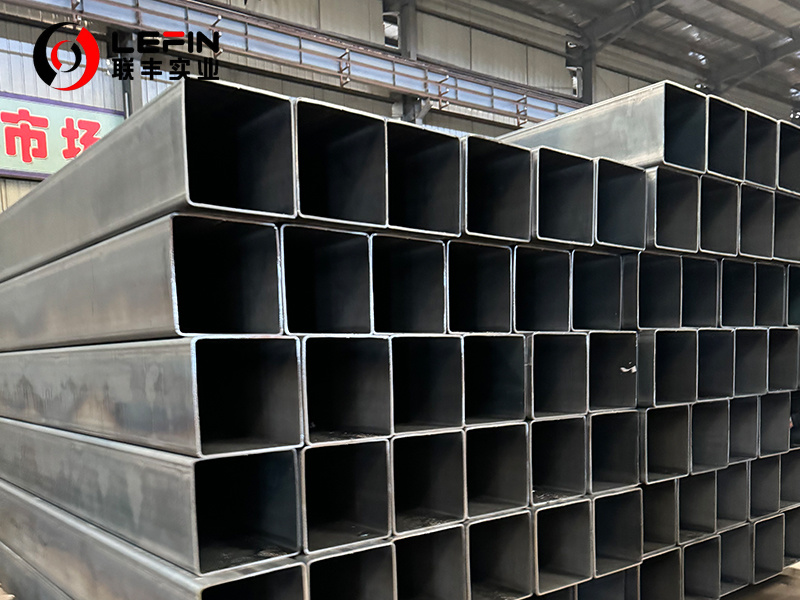
Available in round, square, rectangular, and custom shapes.
Standard sizes cover a range of outer diameters (for round) and side dimensions (for square/rectangular), with specified wall thicknesses.
4. Manufacturing Processes:
Cold-formed Welded: Enhances strength through work hardening.
Seamless: Offers uniform strength without welded seams, ideal for high-pressure applications.
5. Mechanical Properties:
Yield Strength: Varies by grade (e.g., 39–70 ksi).
Tensile Strength: Typically 58–90 ksi.
Elongation: Minimum requirements ensure ductility (e.g., 23% elongation for Grade B).
6. Chemical Composition:
Limits on elements like carbon (C), manganese (Mn), phosphorus (P), and sulfur (S) to ensure weldability and durability.
Example: Grade C max carbon content ~0.23%.
7. Testing and Quality Control:
Tensile Testing: Verifies strength and elongation.
Hydrostatic Testing: Ensures leak resistance.
Non-Destructive Testing (NDT): Detects surface flaws.
8. Applications:
Structural Frameworks: Buildings, bridges, stadiums.
Transportation: Automotive frames, railings.
Industrial: Machinery, support columns.
9. Advantages:
Cost-Effective: Competitive strength-to-weight ratio.
Versatility: Available in multiple shapes and sizes.
Durability: Suitable for load-bearing structures.
10. Limitations:
Corrosion Susceptibility: Requires protective coatings (e.g., galvanization) in corrosive environments.
Not for High-Temperature Use: Unlike ASTM A106.
11. Comparison to Other Standards:
ASTM A53: General-purpose, lower strength.
ASTM A1085: Enhanced properties and tighter tolerances.
12. Metric Considerations:
ASTM A500/A500M includes metric dimensions for global applicability.
Conclusion:
ASTM A500 steel tubing is a go-to choice for structural engineers seeking reliable, high-strength carbon steel in versatile shapes. Its graded system allows customization based on project demands, though corrosion protection is essential for longevity.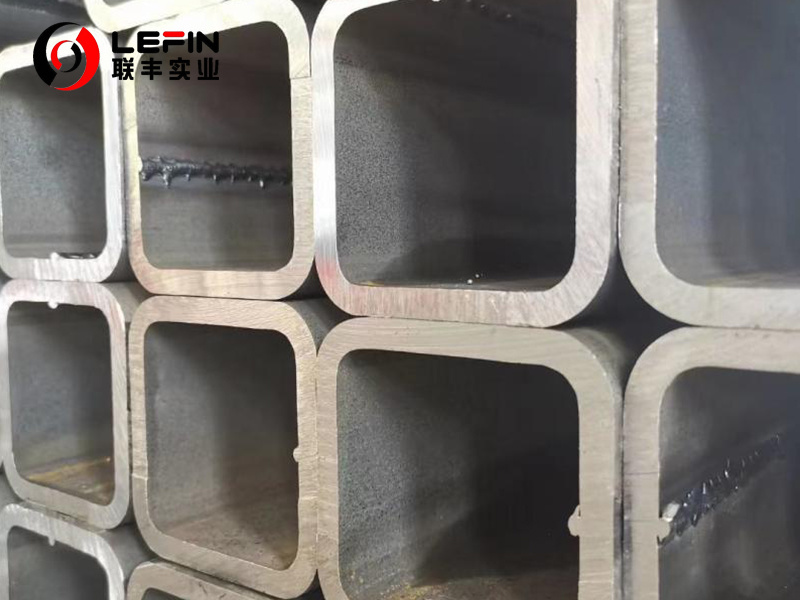
Physical Requirement
ASTM A500 ROUND STRUCTURAL TUBING
GRADE
TENSILE STRENGTH
YIELD STRENGTH
ELONGATION
GR.A
45000psi
310MPa
33000psi
230MPa
25%
GR.B
58000psi
400MPa
42000psi
290MPa
23%
GR.C
62000psi
425MPa
46000psi
315MPa
21%
GR.D
58000psi
400MPa
36000psi
250MPa
23%
ASTM A500 SHAPED STRUCTURAL TUBING
GRADE
TENSILE STRENGTH
YIELD STRENGTH
ELONGATION
GR.A
45000psi
310MPa
39000psi
270MPa
25%
GR.B
58000psi
400MPa
46000psi
315MPa
23%
GR.C
62000psi
425MPa
50000psi
345MPa
21%
GR.D
58000psi
400MPa
36000psi
250MPa
23%
Chemcial Composition
COMPOSITION, %
GRADE A,B,and D
GRADE C
HEAT ANALYSIS
PRODUCT ANALYSIS
HEAT ANALYSIS
PRODUCT ANALYSIS
Carbon(C),max
0.26
0.30
0.23
0.27
Manganese(Mn),max
1.35
1.40
1.35
1.40
Phosphorus(P),max
0.035
0.045
0.035
0.045
Sulfur(S),max
0.035
0.045
0.035
0.045
Copper(Cu),min
0.20
0.18
0.20
0.18


ASTM A500 Steel Pipe
Subcategory
Keyword
- Details
-
Brief Introduction
ASTM A500 Steel Pipe
Standard: ASTM A500
Grade: GR.A, GR.B, GR.C, GR.D
Surface Treatment: Bare Finish, Painting, Oiling, Galvanzation, 3PE, FBE coated......
ASTM A500 Steel Pipe
1. Standard Scope:
ASTM A500 is a specification established by the American Society for Testing and Materials (ASTM) for cold-formed welded and seamless carbon steel structural tubing. It is primarily used in structural applications, distinguishing it from other standards like ASTM A53 (general-purpose) or A106 (high-temperature service).2. Material and Grades:
Carbon Steel: Predominantly used, offering a balance of strength and affordability.
Grades: Includes Grades A, B, C, and D, with increasing strength levels.
3. Shapes and Sizes:
Available in round, square, rectangular, and custom shapes.
Standard sizes cover a range of outer diameters (for round) and side dimensions (for square/rectangular), with specified wall thicknesses.
4. Manufacturing Processes:
Cold-formed Welded: Enhances strength through work hardening.
Seamless: Offers uniform strength without welded seams, ideal for high-pressure applications.
5. Mechanical Properties:
Yield Strength: Varies by grade (e.g., 39–70 ksi).
Tensile Strength: Typically 58–90 ksi.
Elongation: Minimum requirements ensure ductility (e.g., 23% elongation for Grade B).
6. Chemical Composition:
Limits on elements like carbon (C), manganese (Mn), phosphorus (P), and sulfur (S) to ensure weldability and durability.
Example: Grade C max carbon content ~0.23%.
7. Testing and Quality Control:
Tensile Testing: Verifies strength and elongation.
Hydrostatic Testing: Ensures leak resistance.
Non-Destructive Testing (NDT): Detects surface flaws.
8. Applications:
Structural Frameworks: Buildings, bridges, stadiums.
Transportation: Automotive frames, railings.
Industrial: Machinery, support columns.
9. Advantages:
Cost-Effective: Competitive strength-to-weight ratio.
Versatility: Available in multiple shapes and sizes.
Durability: Suitable for load-bearing structures.
10. Limitations:
Corrosion Susceptibility: Requires protective coatings (e.g., galvanization) in corrosive environments.
Not for High-Temperature Use: Unlike ASTM A106.
11. Comparison to Other Standards:
ASTM A53: General-purpose, lower strength.
ASTM A1085: Enhanced properties and tighter tolerances.
12. Metric Considerations:
ASTM A500/A500M includes metric dimensions for global applicability.
Conclusion:
ASTM A500 steel tubing is a go-to choice for structural engineers seeking reliable, high-strength carbon steel in versatile shapes. Its graded system allows customization based on project demands, though corrosion protection is essential for longevity.Physical Requirement
ASTM A500 ROUND STRUCTURAL TUBING
GRADE
TENSILE STRENGTH
YIELD STRENGTH
ELONGATION
GR.A
45000psi
310MPa
33000psi
230MPa
25%
GR.B
58000psi
400MPa
42000psi
290MPa
23%
GR.C
62000psi
425MPa
46000psi
315MPa
21%
GR.D
58000psi
400MPa
36000psi
250MPa
23%
ASTM A500 SHAPED STRUCTURAL TUBING
GRADE
TENSILE STRENGTH
YIELD STRENGTH
ELONGATION
GR.A
45000psi
310MPa
39000psi
270MPa
25%
GR.B
58000psi
400MPa
46000psi
315MPa
23%
GR.C
62000psi
425MPa
50000psi
345MPa
21%
GR.D
58000psi
400MPa
36000psi
250MPa
23%
Chemcial Composition
COMPOSITION, %
GRADE A,B,and D
GRADE C
HEAT ANALYSIS
PRODUCT ANALYSIS
HEAT ANALYSIS
PRODUCT ANALYSIS
Carbon(C),max
0.26
0.30
0.23
0.27
Manganese(Mn),max
1.35
1.40
1.35
1.40
Phosphorus(P),max
0.035
0.045
0.035
0.045
Sulfur(S),max
0.035
0.045
0.035
0.045
Copper(Cu),min
0.20
0.18
0.20
0.18
Related products
Product Consulting
Address: Hengtai Road,Daqiuzhuang Town,Jinghai County,Tianjin,China
Mob: +8615122229899(whatspp)
Phone: +86 22 58171905
Fax: +86 22 58171902
E-mail:info@lefinsteel.com
Get company updates
Tianjin Lefin Industrial Co.,Ltd. All rights reserved City sub-station SEO www.300.cn