

-
About us
 Tianjin lefin Industrial
TIANJIN LEFIN STEEL GROUP containing Tianjin lefin Industrial Co.,Ltd. 、Tianjin lefin steel import & export Co.,Ltd and Tianjin Shengqifeng International Trading Co., Ltd. -
Products
Steel Pipe Processing
Our main products include 1/2inch to 16 inch ERW PIPE/GI PIPE which has been produced according to BS1387/ASTM A53/EN10219/EN10255/EN10217 Standard -
-
Service Capability
Guarantee Quality
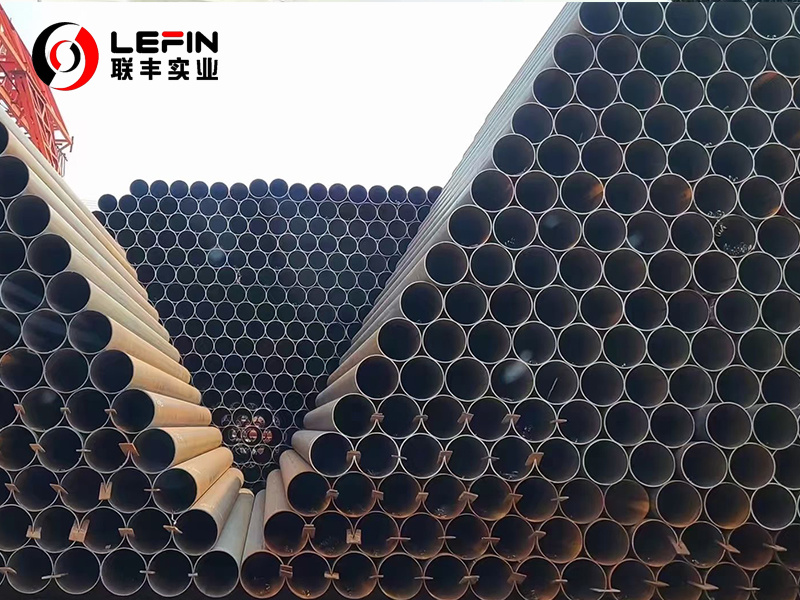
Our steel pipes are suitable for oil, natural gas, shipbuilding, chemical industry, water conservancy, electrical, steel structure, construction and other related fields.

Our main products include 1/2inch to 16 inch ERW PIPE/GI PIPE which has been produced according to BS1387/ASTM A53/EN10219/EN10255/EN10217 Standard
Our main products include 1/2inch to 16 inch ERW PIPE/GI PIPE which has been produced according to BS1387/ASTM A53/EN10219/EN10255/EN10217 Standard
Has rich experience in steel pipe processing, can be customized according to customer requirements according to the drawing and sample processing, assist in the development of new products.
zambia JIS G3444 STK500,STK540 Carbon Steel Tubes
Category:
Product Description
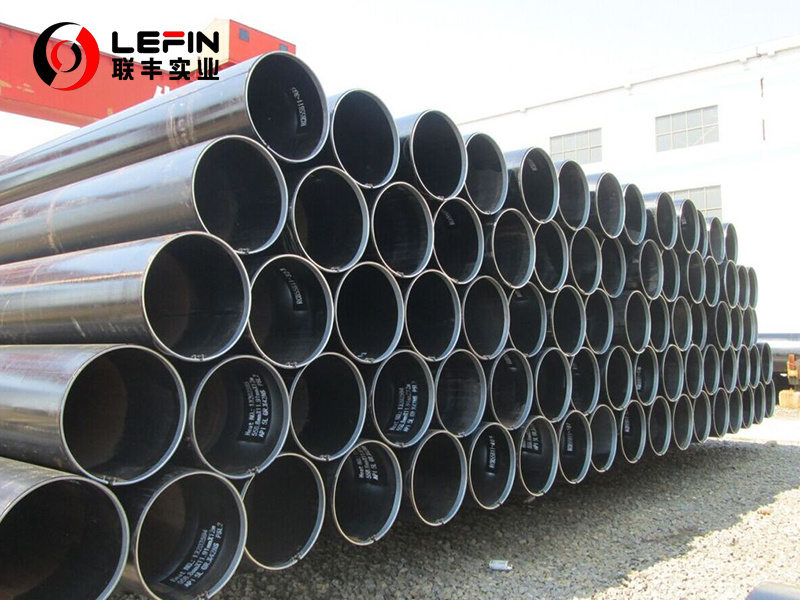
JIS G3444 is a Japanese Industrial Standard that specifies the requirements for carbon steel tubes used in general structural applications, such as construction, machinery, and other engineering purposes. The standard covers seamless and welded tubes made from carbon steel, with specified mechanical properties and dimensional tolerances. Below is a detailed description of STK 500 and STK 540 under this standard:
Material Grades: STK500 And STK540
The standard includes several grades, among which STK500 and STK540 are common. These grades denote the minimum tensile strength of the steel tubes:
STK500: Minimum tensile strength of 500 MPa
STK540: Minimum tensile strength of 540 MPa
Both grades are widely used in structural applications where moderate strength and good weldability are required.
Chemical Composition (Typical Values)
The chemical composition of STK500 and STK540 generally follows:
Element | STK500 | STK540 |
|---|---|---|
| Carbon (C) | ≤ 0.24% | ≤ 0.23% |
| Silicon (Si) | ≤ 0.35% | ≤ 0.55% |
| Manganese (Mn) | 0.30% ~ 1.50% | ≤ 1.50% |
| Phosphorus (P) | ≤ 0.040% | ≤ 0.040% |
| Sulfur (S) | ≤ 0.040% | ≤ 0.040% |
Exact composition may vary slightly depending on the manufacturer and production method.
Mechanical Properties
Property | STK500 | STK540 |
|---|---|---|
| Tensile Strength (min) | 500 MPa | 540 MPa |
| Yield Strength (min) | 355 MPa | 390 MPa |
| Elongation (min, %) | 15% | 20% |
| Weld Tensile Strength (min) | 500 MPa | 540 MPa |
| Flattening Resistance | 7/8D (where D is the outside diameter) | 7/8D (where D is the outside diameter) |
| Bendability | 90° bend with an inside radius of 8D | 90° bend with an inside radius of 6D |
These properties ensure that the tubes can withstand structural loads while maintaining ductility.
● Flattening Test: This test checks for flaws or cracks in the pipe by flattening a specimen between two parallel plates. For STK 500 and STK 540, the distance between the plates is 7/8 of the outside diameter (D). The specimen must not show any cracks after the test.
● Bendability Test: Pipes with an outside diameter of 50 mm or less can be tested for bendability. The pipe must be bent to a 90° angle around a mandrel with a specified radius (8D for STK 500 and 6D for STK 540) without cracking.
Manufacturing Process
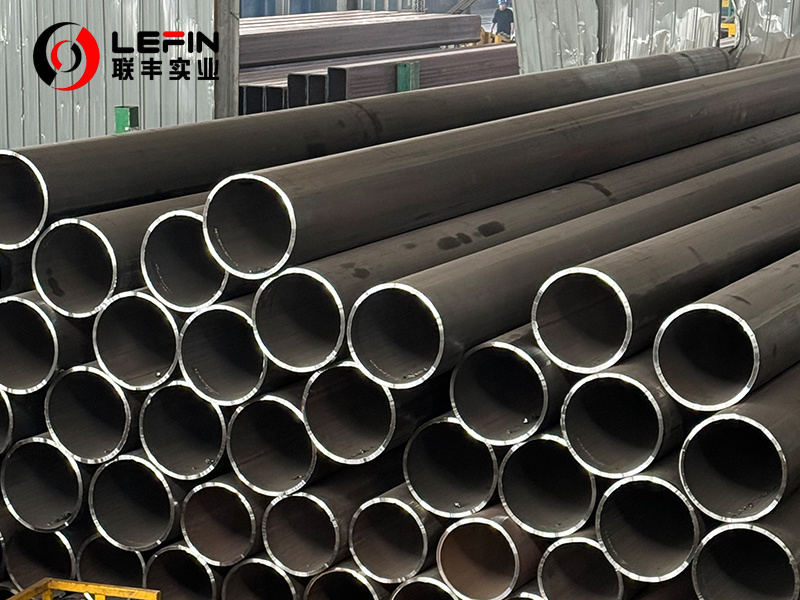
The manufacturing methods for these pipes include seamless (S), electric resistance welding (E), butt welding (B), and automatic arc welding (A).
The finishing methods can be hot finished (H) or cold finished (C).
Applications
STK 500 and STK 540 pipes are suitable for applications requiring higher strength and reliability. They are commonly used in:
● Structural frameworks for buildings and bridges
● Piling and foundation works
● Automotive components and trailers
● General industrial applications where high load-bearing capacity is needed
These grades offer a balance of strength and ductility, making them versatile for various engineering and construction projects.
Conclusion
JIS G3444 STK500 and STK540 are medium-strength carbon steel tubes suitable for structural applications where good strength, weldability, and formability are required. They are widely used in Japan and internationally in construction and mechanical engineering.
Address: Hengtai Road,Daqiuzhuang Town,Jinghai County,Tianjin,China
Mob: +8615122229899(whatspp)
Phone: +86 22 58171905
Fax: +86 22 58171902
E-mail:info@lefinsteel.com
Get company updates
Tianjin Lefin Industrial Co.,Ltd. All rights reserved City sub-station SEO www.300.cn