

-
About us
 Tianjin lefin Industrial
TIANJIN LEFIN STEEL GROUP containing Tianjin lefin Industrial Co.,Ltd. 、Tianjin lefin steel import & export Co.,Ltd and Tianjin Shengqifeng International Trading Co., Ltd. -
Products
Steel Pipe Processing
Our main products include 1/2inch to 16 inch ERW PIPE/GI PIPE which has been produced according to BS1387/ASTM A53/EN10219/EN10255/EN10217 Standard -
-
Service Capability
Guarantee Quality
Our steel pipes are suitable for oil, natural gas, shipbuilding, chemical industry, water conservancy, electrical, steel structure, construction and other related fields.

Our main products include 1/2inch to 16 inch ERW PIPE/GI PIPE which has been produced according to BS1387/ASTM A53/EN10219/EN10255/EN10217 Standard
Our main products include 1/2inch to 16 inch ERW PIPE/GI PIPE which has been produced according to BS1387/ASTM A53/EN10219/EN10255/EN10217 Standard
Has rich experience in steel pipe processing, can be customized according to customer requirements according to the drawing and sample processing, assist in the development of new products.
PRODUCTS CENTER
south sudan republic Types Of Angle Steel
Category:
Product Description
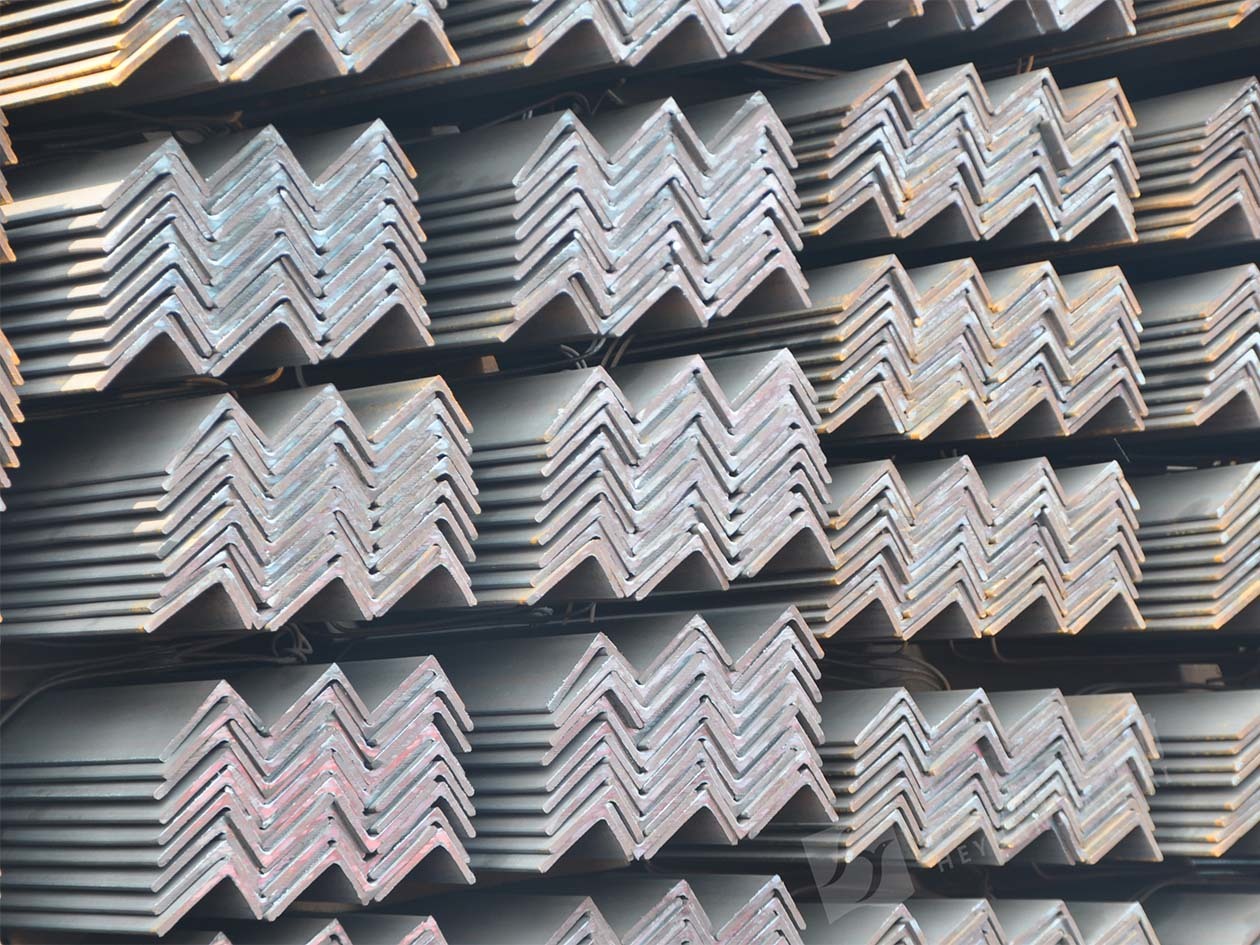
Angle Steel (Also Called Angle Bar, L-Section Steel, Or L-Angle) Is Classified Into Several Types Based On Shape, Manufacturing Process, Material, And Application.
Below Is A Comprehensive Breakdown Of The Different Types:
Classification By Leg Dimensions
(A) Equal Angle Steel
Description:
Both legs (flanges) are of equal length (e.g., 50×50 mm, 100×100 mm).
Features:
Symmetrical shape provides uniform strength in both directions.
Commonly used in structural frameworks, supports, and bracing.
Applications:
Building frames, shelves, brackets, and machinery supports.
(B) Unequal Angle Steel
Description:
The two legs have different lengths (e.g., 100×75 mm, 150×90 mm).
Features:
Used where asymmetric load distribution is required.
One longer leg provides more surface area for bolting/welding.
Applications:
Vehicle chassis, industrial equipment, and custom fabrication.

Classification By Manufacturing Process
(A) Hot-Rolled Angle Steel
Production Method:
Heated steel billets are passed through rollers to form the L-shape.
Features:
Higher strength due to grain structure refinement.
Rougher surface compared to cold-formed angles.
Standard sizes (e.g., ASTM A36, EN 10056).
Applications:
Heavy-duty construction, bridges, and industrial structures.
(B) Cold-Formed Angle Steel
Production Method:
Steel strips are bent at room temperature into an L-shape.
Features:
Smoother finish with tighter dimensional tolerances.
Less structural strength than hot-rolled angles.
Often galvanized or coated for corrosion resistance.
Applications:
Lightweight structures, furniture, electrical enclosures.

Classification By Material
(A) Carbon Steel Angle
Grades:
ASTM A36 (mild steel), A572 (high-strength low-alloy).
Features:
Economical and widely available.
Requires painting or galvanizing to prevent rust.
Applications:
General construction, machinery, and infrastructure.
(B) Stainless Steel Angle
Grades:
304 (general use), 316 (marine/chemical resistance).
Features:
Corrosion-resistant, ideal for harsh environments.
Higher cost than carbon steel.
Applications:
Food processing, marine structures, chemical plants.
(C) Aluminum Angle
Grades:
6061-T6 (structural), 6063 (architectural).
Features:
Lightweight & corrosion-resistant.
Lower strength than steel but easy to machine.
Applications:
Aerospace, decorative trim, lightweight frames.

Classification By Edge Type
(A) Sharp-Edged Angle Steel
Traditional 90° angle with sharp corners.
Used in general fabrication and welding.
(B) Rounded-Edged Angle Steel
Slightly rounded edges for safer handling.
Common in furniture and architectural applications.

Specialized Angle Steel Types
(A) Galvanized Angle Steel
Coated with zinc for corrosion resistance.
Used in outdoor structures, fencing, and electrical poles.
(B) Perforated Angle Steel
Has pre-drilled holes for easy assembly.
Used in shelving, cable trays, and DIY projects.
(C) Slotted Angle Steel
Features elongated slots for adjustable connections.
Common in modular storage systems and workbenches.

Comparison Table Of Angle Steel Types
| Type | Key Features | Common Applications |
|---|---|---|
| Equal Angle | Symmetrical legs, uniform strength | Building frames, brackets |
| Unequal Angle | Asymmetric legs, varied load capacity | Machinery, vehicle frames |
| Hot-Rolled Angle | High strength, rough surface | Bridges, heavy construction |
| Cold-Formed Angle | Smooth finish, precise dimensions | Light structures, furniture |
| Carbon Steel Angle | Affordable, requires coating | General construction |
| Stainless Angle | Rust-proof, high cost | Marine, chemical industries |
| Aluminum Angle | Lightweight, corrosion-resistant | Aerospace, architectural trim |
Angle steel comes in multiple variations, each suited for specific structural and industrial needs. The choice depends on factors like load requirements, corrosion resistance, and fabrication methods.


Address: Hengtai Road,Daqiuzhuang Town,Jinghai County,Tianjin,China
Mob: +8615122229899(whatspp)
Phone: +86 22 58171905
Fax: +86 22 58171902
E-mail:info@lefinsteel.com
Get company updates
Tianjin Lefin Industrial Co.,Ltd. All rights reserved City sub-station SEO www.300.cn