

-
About us
 Tianjin lefin Industrial
TIANJIN LEFIN STEEL GROUP containing Tianjin lefin Industrial Co.,Ltd. 、Tianjin lefin steel import & export Co.,Ltd and Tianjin Shengqifeng International Trading Co., Ltd. -
Products
Steel Pipe Processing
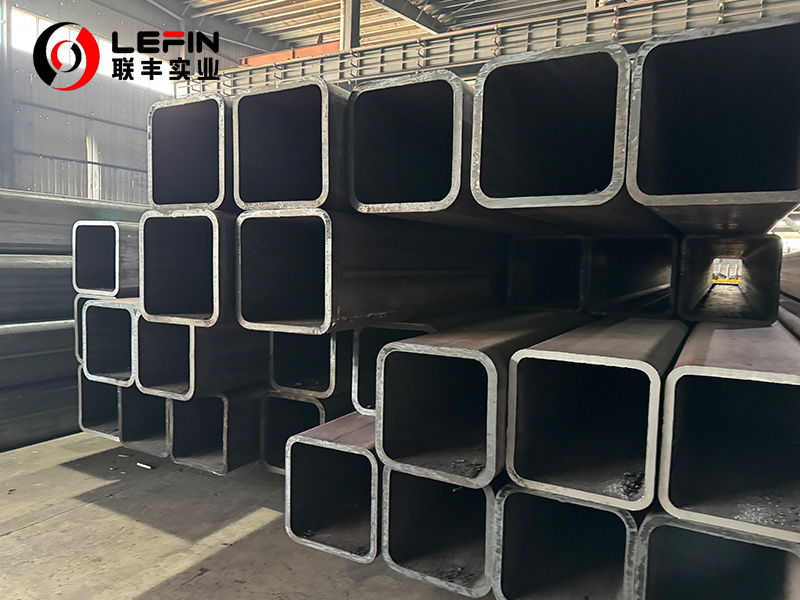
Our main products include 1/2inch to 16 inch ERW PIPE/GI PIPE which has been produced according to BS1387/ASTM A53/EN10219/EN10255/EN10217 Standard -
-
Service Capability
Guarantee Quality
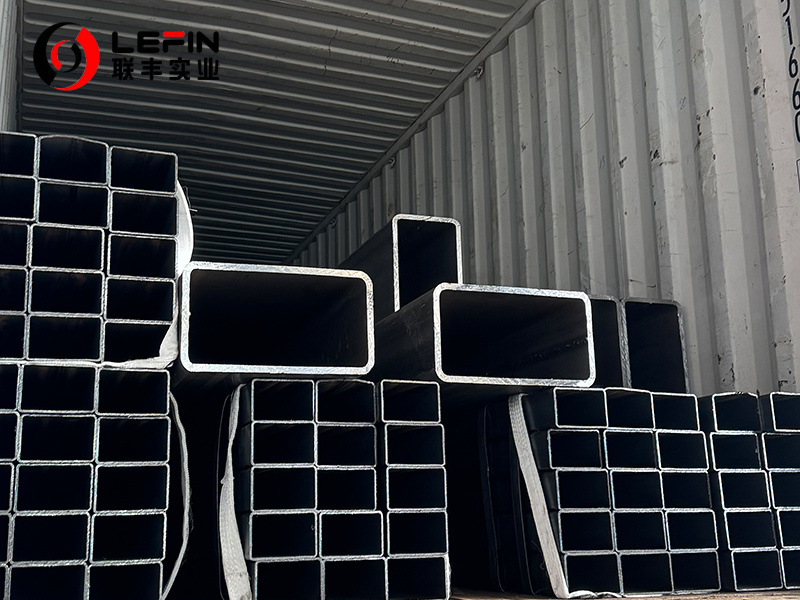
Our steel pipes are suitable for oil, natural gas, shipbuilding, chemical industry, water conservancy, electrical, steel structure, construction and other related fields.

Our main products include 1/2inch to 16 inch ERW PIPE/GI PIPE which has been produced according to BS1387/ASTM A53/EN10219/EN10255/EN10217 Standard
Our main products include 1/2inch to 16 inch ERW PIPE/GI PIPE which has been produced according to BS1387/ASTM A53/EN10219/EN10255/EN10217 Standard
Has rich experience in steel pipe processing, can be customized according to customer requirements according to the drawing and sample processing, assist in the development of new products.
PRODUCTS CENTER
sao tome and principe JIS G3444 STK490 TUBE
Product Description
Basic Information
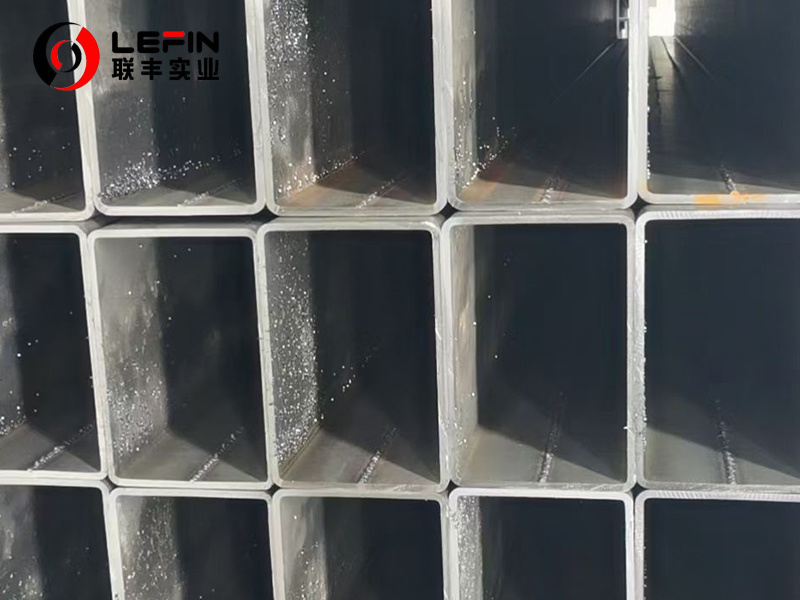
STK490 conforms to the Japanese Industrial Standards (JIS) G3444, ensuring that it meets specific quality and performance criteria. This standard covers the dimensions, tolerances, and mechanical properties of the steel tubes.
In the JIS G3444 standard, which specifies carbon steel tubes for general structural purposes, the relatively common steel grades are STK290, STK400, STK490, STK500, and STK540. Among these, STK490 is one of the more frequently used grades due to its balanced properties of strength and weldability.
JIS G3444 STK490 Tube
Standard: JIS G3444
Grade: STK290, STK400, STK490, STK500, STK540
Method Of Manufacture:
Seamless, Butt-welding, ERW and Arc welding process
Outside Diameter:
SSAW 219MM - 4084MM
LSAW 406MM - 1420MM
ERW 20MM - 660MM
Wall Thickness: 7.75 - 25.4MM(SSAW), 10 - 50MM(LSAW), 1.3 - 16MM(ERW)
Length: Commonly used 5.8M, 6M, 12M, also depends on the requirements
Advantages: High Strength, Durability, Easy to Fabricate.
Application: Transportation water, Construction industry, energy industry.
Chemical Composition
Element | Maximum % |
|---|---|
| Carbon (C) | 0.18 |
| Silicon (Si) | 0.55 |
| Manganese (Mn) | 1.65 |
| Phosphorus (P) | 0.035 |
| Sulfur (S) | 0.035 |
Carbon (C): The primary strengthening element. Higher carbon content increases strength and hardness but reduces weldability and ductility. STK490's moderate carbon content ensures a balance between strength and formability.
Manganese (Mn): Enhances strength and toughness while improving hardenability. It also helps refine the grain structure, improving overall mechanical properties.
Silicon (Si): Improves strength and oxidation resistance. It also aids in deoxidation during steel production, reducing impurities.
Phosphorus (P) and Sulfur (S): These are residual elements kept at low levels to avoid brittleness and reduce the risk of cracking during welding or forming.
Mechanical Properties
Property | Value (Typical) | Significance |
|---|---|---|
| Tensile Strength | 490 MPa (minimum) | Tensile strength is the maximum stress the material can withstand while being stretched or pulled before breaking. STK490's tensile strength of 490 MPa makes it suitable for load-bearing structures. |
| Yield Strength | 325 MPa (minimum) | Yield strength is the stress at which the material begins to deform plastically. A yield strength of 325 MPa ensures the steel can withstand significant loads without permanent deformation. |
| Elongation | 20% - 25% | Elongation measures the ductility of the material, or its ability to stretch before breaking. STK490's elongation of 20-25% indicates good formability and toughness. |
| Hardness | 140 - 180 HB | Hardness is a measure of the material's resistance to deformation. STK490's moderate hardness ensures it is strong enough for structural use while remaining machinable and weldable. |
| Impact Toughness | ≥ 27 J (at 20°C) | Impact toughness measures the material's ability to absorb energy during sudden loading. STK490's toughness ensures it can withstand dynamic loads and shocks. |
Tensile Strength and Yield Strength: These properties ensure that STK490 can withstand significant loads without failure, making it ideal for structural applications like building frames, bridges, and machinery.
Elongation: High elongation indicates good ductility, allowing the material to deform under stress without breaking. This is crucial for structures subjected to dynamic or impact loads.
Hardness: Moderate hardness ensures the material is strong enough for structural use while remaining workable and weldable.
Impact Toughness: STK490's ability to absorb energy during sudden loading makes it suitable for applications where shock resistance is important.
Comparison With Other Grades
STK400: STK490 offers higher tensile and yield strength compared to STK400, making it more suitable for applications requiring greater load-bearing capacity.
STK500: While STK500 has higher strength, STK490 provides better weldability and formability, making it more versatile for various structural applications.
Advantages And Applications
Advantages:
● High Strength: With a tensile strength of at least 490 MPa, STK490 is suitable for demanding structural applications.
● Good Weldability: The controlled chemical composition ensures excellent weldability, facilitating ease of fabrication.
● Ductility: Adequate elongation properties allow for deformation without fracture, enhancing safety in structural applications.
● Cost-Effective: Provides a good balance between performance and cost, making it a preferred choice for many industries.
Applications:
STK490 is extensively used in:
● Construction: For building frameworks, bridges, and other infrastructure.
● Automotive: In chassis and structural components.
● Machinery: For manufacturing heavy machinery and equipment.
● General Structural Purposes: In various engineering applications requiring high strength and durability.
STK490 under JIS G3444 is a high-strength, versatile steel grade with excellent mechanical properties and weldability. Its balanced chemical composition and robust performance make it a preferred choice for a wide range of structural applications, offering a cost-effective solution without compromising on strength and durability.

Address: Hengtai Road,Daqiuzhuang Town,Jinghai County,Tianjin,China
Mob: +8615122229899(whatspp)
Phone: +86 22 58171905
Fax: +86 22 58171902
E-mail:info@lefinsteel.com
Get company updates
Tianjin Lefin Industrial Co.,Ltd. All rights reserved City sub-station SEO www.300.cn