

-
About us
 Tianjin lefin Industrial
TIANJIN LEFIN STEEL GROUP containing Tianjin lefin Industrial Co.,Ltd. 、Tianjin lefin steel import & export Co.,Ltd and Tianjin Shengqifeng International Trading Co., Ltd. -
Products
Steel Pipe Processing
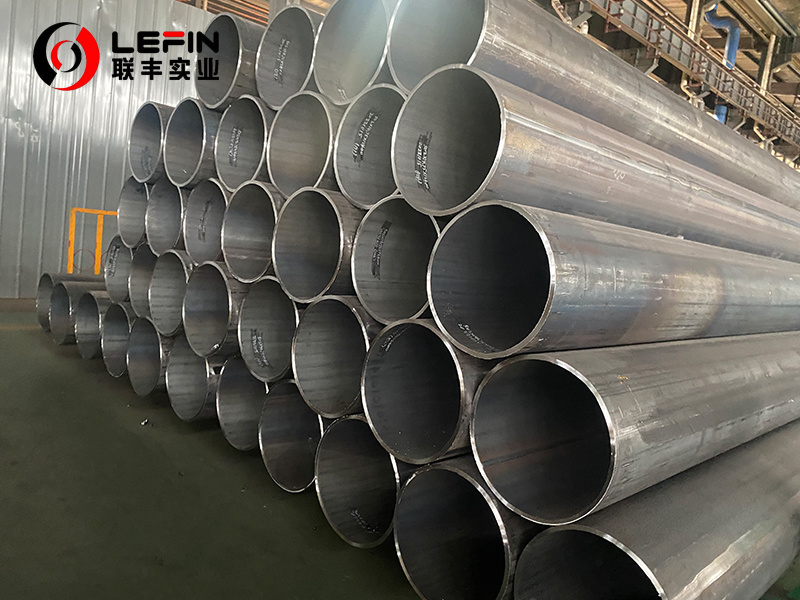
Our main products include 1/2inch to 16 inch ERW PIPE/GI PIPE which has been produced according to BS1387/ASTM A53/EN10219/EN10255/EN10217 Standard -
-
Service Capability
Guarantee Quality
Our steel pipes are suitable for oil, natural gas, shipbuilding, chemical industry, water conservancy, electrical, steel structure, construction and other related fields.

Our main products include 1/2inch to 16 inch ERW PIPE/GI PIPE which has been produced according to BS1387/ASTM A53/EN10219/EN10255/EN10217 Standard
Our main products include 1/2inch to 16 inch ERW PIPE/GI PIPE which has been produced according to BS1387/ASTM A53/EN10219/EN10255/EN10217 Standard
Has rich experience in steel pipe processing, can be customized according to customer requirements according to the drawing and sample processing, assist in the development of new products.
Product Description
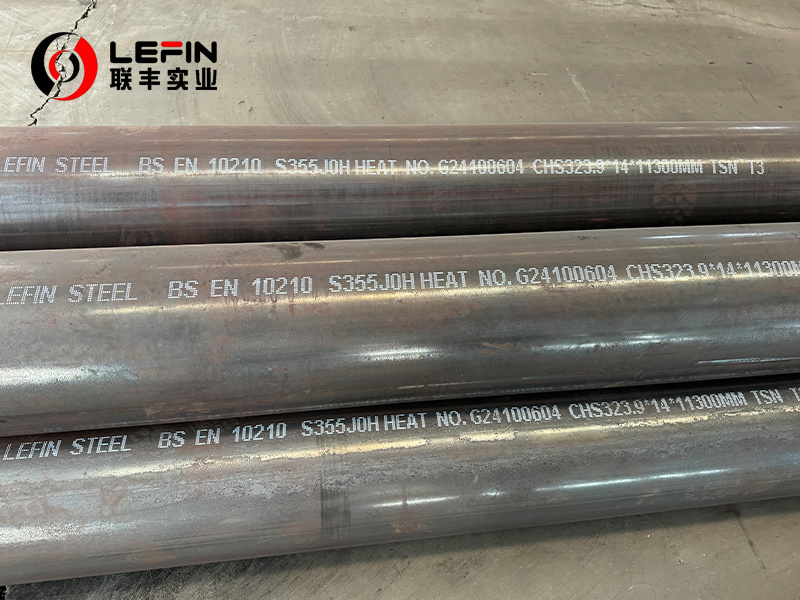
The non-alloy steel (carbon manganese steel) grades under the EN 10219 standard mainly include S235JRH, S275JOH, S275J2H, S355J0H, S355J2H, S355K2H, etc. The main differences among these steel grades lie in yield strength, chemical composition, impact toughness, manufacturing process and application scenarios.
Yield strength and tensile strength
| Steel grade | Yield strength (MPa) | Tensile strength (MPa) | Typical applications |
| S235JRH | ≥235 | 360-510 | Lightweight structure, roof support |
| S275JOH | ≥275 | 410-560 | Common building frame, conveying pipeline |
| S275J2H | ≥275 | 410-560 | General structure in low-temperature environments |
| S355J0H | ≥355 | 470-630 | Bridges, medium load-bearing structures |
| S355J2H | ≥355 | 470-630 | Heavy Structures in low-temperature environments |
| S355K2H | ≥355 | 470-630 | Applications with high impact toughness requirements |
Key differences:
- S235 has the lowest strength and is suitable for light-load structures. S355 has the highest strength and is used in load-bearing scenarios.
- The tensile strength range of S355K2H is the same as that of S355J0H/J2H, but it has higher requirements for impact toughness.
Differences in chemical composition
| Steel grade | Carbon (C)≤ | Manganese (Mn)≤ | Carbon equivalent (CEV)≤ | Other element requirements |
| S235JRH | 0.17% | 1.40% | 0.30% | Silicon (Si) ≤0.35% |
| S275JOH/J2H | 0.18% | 1.50 | 0.32% | Phosphorus (P) ≤0.025%, Sulfur (S) ≤0.020% |
| S355J0H/J2H | 0.20% | 1.60% | 0.40% | Chromium (Cr) ≤0.30%, Nickel (Ni) ≤0.30% |
| S355K2H | 0.20% | 1.60% | 0.40% | More stringent phosphorus and sulfur content (≤0.015%) |
Key differences:
- Carbon content: The carbon content of S235 is the lowest (0.17%), while that of S355 is slightly higher (0.20%), • indicating a relatively decreased weldability.
- Carbon equivalent (CEV) : The CEV of S355 is higher (0.40%), and preheating is required during welding to prevent cold cracking.
- Impurity control: S355K2H has stricter restrictions on impurities such as phosphorus (P) and sulfur (S) to enhance toughness.

Requirements for Impact toughness
| Steel grade | Impact test temperature | Minimum impact energy (J) | Applicable environment |
| S235JRH | Normal temperature (+20℃) | Not mandatory | Non-low-temperature environment |
| S275JOH | Normal temperature (+20℃) | ≥27J | Normal environment |
| S275J2H | -20℃ | ≥27J | Low-temperature environment (such as cold regions) |
| S355J0H | 0℃ | ≥27J | General low-temperature environment |
| S355J2H | -20℃ | ≥27J | Severe cold environment |
| S355K2H | -20℃ | ≥40J | High impact load or extremely cold environment |
Key differences:
• Impact temperature: The suffix "J0" indicates 0℃, "J2" indicates -20℃, and "K" indicates a higher impact energy.
The impact energy requirement of S355K2H (≥40J) is significantly higher than that of other steel grades, making it suitable for extreme impact or low-temperature environments.
Manufacturing Process and Delivery Status
| Steel grade | Delivery status | Process requirements |
| S235JRH | Cold formed state | No heat treatment required |
| S275JOH/J2H | Cold forming or normalizing | Select as required |
| S355J0H/J2H | Normalizing treatment | Normalizing is necessary to refine the grains |
| S355K2H | Normalizing or controlled rolling and controlled cooling | High toughness must be guaranteed |
Key differences:
- The S355 series usually requires normalizing treatment to enhance uniformity and toughness, while the S235/S275 can be cold-formed and delivered directly.
- The S355K2H may adopt the Controlled rolling and Controlled cooling (TMCP) process to further optimize its performance.
Selection Suggestions
1.General structure (cost priority) :
Choose S235JRH (light load) or S275JOH (medium load).
2. Low-temperature environment:
Choose S275J2H (-20℃) or S355J2H (severe cold and heavy load).
3. High impact loads (such as Bridges and port machinery) :
• Give priority to S355K2H (impact energy ≥40J).
4. High welding requirements:
Avoid high carbon equivalent steel grades (such as S355), or choose normalizing to improve weldability.
Summary
1.The core difference of non-alloy steel grades lies in:
Strength increase: S235 → S275 → S355.
2. Increasing low-temperature toughness: JRH (room temperature) → J0 (0℃) → J2 (-20℃) → K2H (high impact energy).
3. Decreasing weldability: The higher the carbon equivalent (CEV), the stricter the preheating requirements for welding.
When making a selection, a comprehensive trade-off should be made based on load strength, ambient temperature, impact requirements and processing technology. If necessary, refer to the original text of EN 10219 standard or consult the technical department of the steel plant.
Address: Hengtai Road,Daqiuzhuang Town,Jinghai County,Tianjin,China
Mob: +8615122229899(whatspp)
Phone: +86 22 58171905
Fax: +86 22 58171902
E-mail:info@lefinsteel.com
Get company updates
Tianjin Lefin Industrial Co.,Ltd. All rights reserved City sub-station SEO www.300.cn