

-
About us
 Tianjin lefin Industrial
TIANJIN LEFIN STEEL GROUP containing Tianjin lefin Industrial Co.,Ltd. 、Tianjin lefin steel import & export Co.,Ltd and Tianjin Shengqifeng International Trading Co., Ltd. -
Products
Steel Pipe Processing
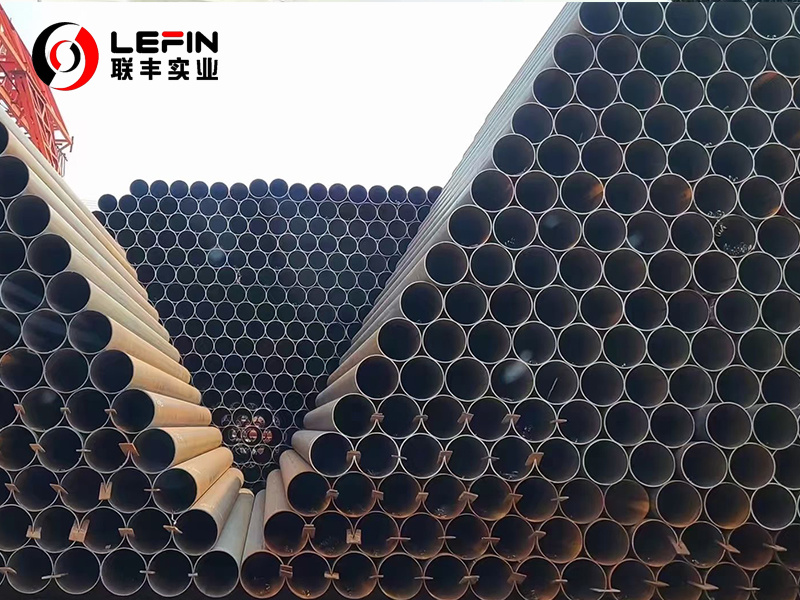
Our main products include 1/2inch to 16 inch ERW PIPE/GI PIPE which has been produced according to BS1387/ASTM A53/EN10219/EN10255/EN10217 Standard -
-
Service Capability
Guarantee Quality
Our steel pipes are suitable for oil, natural gas, shipbuilding, chemical industry, water conservancy, electrical, steel structure, construction and other related fields.

Our main products include 1/2inch to 16 inch ERW PIPE/GI PIPE which has been produced according to BS1387/ASTM A53/EN10219/EN10255/EN10217 Standard
Our main products include 1/2inch to 16 inch ERW PIPE/GI PIPE which has been produced according to BS1387/ASTM A53/EN10219/EN10255/EN10217 Standard
Has rich experience in steel pipe processing, can be customized according to customer requirements according to the drawing and sample processing, assist in the development of new products.
Türkiye AISI 1117 Carbon Steel Pipe
Category:
Product Description
Material Overview
AISI 1117 is a low-carbon, free-machining steel classified under the American Iron and Steel Institute (AISI) standards. It contains added sulfur and phosphorus to improve machinability, making it suitable for precision parts and piping applications requiring extensive machining.
Chemical Composition
The typical chemical composition of AISI 1117 steel is:
Element | Content (%) |
|---|---|
| Iron, Fe | 98.33 - 98.78 |
| Manganese, Mn | 1.0 - 1.30 |
| Carbon, C | 0.14 - 0.20 |
| Sulfur, S | 0.080 - 0.13 |
| Phosphorous, P | 0.040 |
● Manganese (Mn): 1.00–1.30% (enhances strength and hardenability)
● Carbon (C): 0.14–0.20% (low carbon content for good weldability and formability)
● Sulfur (S): 0.08–0.13% (increases machinability by forming MnS inclusions)
● Phosphorus (P): ≤ 0.040% (improves machinability but may reduce ductility)
● Iron (Fe): Balance
● The increased sulfur content enhances machinability but may reduce weldability and impact toughness.
Mechanical Properties
The mechanical properties of AISI 1117 carbon steel are outlined in the following table.
Properties | Metric | Imperial |
|---|---|---|
| Tensile strength | 475 MPa | 68900 psi |
| Yield strength | 400 MPa | 58000 psi |
| Bulk modulus (typical for steel) | 140 GPa | 20300 ksi |
| Shear modulus (typical for steel) | 80.0 GPa | 11600 ksi |
| Elastic modulus | 190-210 GPa | 27557-30458 ksi |
| Poisson's ratio | 0.27-0.30 | 0.27-0.30 |
| Elongation at break (in 50 mm) | 15% | 15% |
| Reduction of area | 40% | 40% |
| Hardness, Brinell | 137 | 137 |
| Hardness, Knoop (converted from Brinell hardness) | 156 | 156 |
| Hardness, Rockwell B (converted from Brinell hardness) | 75 | 75 |
| Hardness, Vickers (converted from Brinell hardness) | 143 | 143 |
Common Applications
AISI 1117 steel pipes are used in:
● Shafts, pins, and fasteners (machined components)
● Hydraulic systems and low-pressure fluid transport
● Automotive non-critical parts (bushings, spacers)
● General machinery and tooling components
Fabrication And Weldability
Machining: Excellent due to sulfur inclusions.
Welding: Not recommended for critical welds (sulfur causes hot cracking). If welding is necessary, preheating and low-hydrogen electrodes are advised.
Cold Working: Suitable for bending and forming.
Manufacturing And Standards
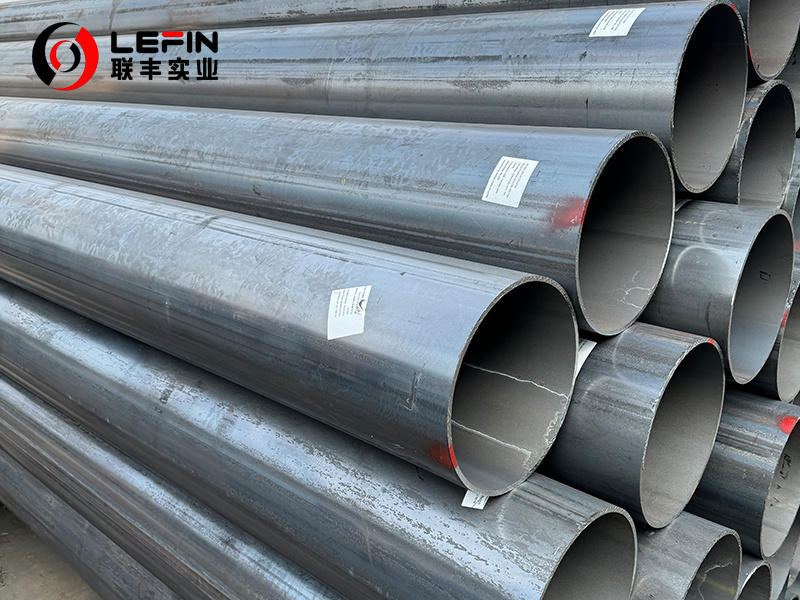
Pipe Types: Seamless or welded (ERW/electric resistance welded).
Standards: ASTM A53 (general pipe standards), ASTM A106 (high-temperature service), ASTM A519 (seamless mechanical tubing), G11170(UNS), or custom machining specifications.
Surface Treatment: Often supplied as-drawn, turned, or with protective coatings (e.g., oil, zinc plating).
Advantages And Limitations
Pros: Cost-effective, easy to machine, readily available.
Cons: Lower corrosion resistance (requires coatings), limited strength for high-load applications.
Conclusion
AISI 1117 carbon steel pipes are cost-effective for machining-focused applications but are limited in weldability and strength compared to higher-grade steels. They are best suited for components where ease of fabrication outweighs the need for structural robustness.

: next page
Address: Hengtai Road,Daqiuzhuang Town,Jinghai County,Tianjin,China
Mob: +8615122229899(whatspp)
Phone: +86 22 58171905
Fax: +86 22 58171902
E-mail:info@lefinsteel.com
Get company updates
Tianjin Lefin Industrial Co.,Ltd. All rights reserved City sub-station SEO www.300.cn