

-
About us
 Tianjin lefin Industrial
TIANJIN LEFIN STEEL GROUP containing Tianjin lefin Industrial Co.,Ltd. 、Tianjin lefin steel import & export Co.,Ltd and Tianjin Shengqifeng International Trading Co., Ltd. -
Products
Steel Pipe Processing
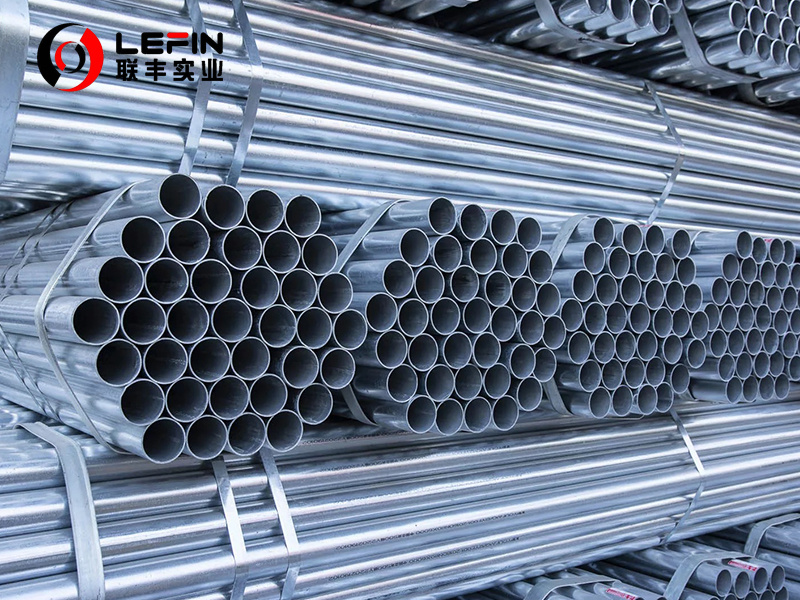
Our main products include 1/2inch to 16 inch ERW PIPE/GI PIPE which has been produced according to BS1387/ASTM A53/EN10219/EN10255/EN10217 Standard -
-
Service Capability
Guarantee Quality
Our steel pipes are suitable for oil, natural gas, shipbuilding, chemical industry, water conservancy, electrical, steel structure, construction and other related fields.

Our main products include 1/2inch to 16 inch ERW PIPE/GI PIPE which has been produced according to BS1387/ASTM A53/EN10219/EN10255/EN10217 Standard
Our main products include 1/2inch to 16 inch ERW PIPE/GI PIPE which has been produced according to BS1387/ASTM A53/EN10219/EN10255/EN10217 Standard
Has rich experience in steel pipe processing, can be customized according to customer requirements according to the drawing and sample processing, assist in the development of new products.
Product Description
1. Standard Overview and Historical Evolution
- Core positioning: EN 10255 is a European technical standard for Non-alloy steel welded threaded tubes, with the full name "Non-alloy steel tubes suitable for welding and threading" (applicable to non-alloy steel tubes for welding and threading processing). Its latest version is EN 10255:2015, replacing the earlier version EN 10255:2004+A1:2007.
- Scope of application:
- Cover circular steel pipes with an outer diameter ranging from 10.2mm to 165.1mm (corresponding to thread dimensions of 1/8 to 1/6).
It is classified by thickness into Medium series and Heavy series, as well as three specified thickness types.
- Historical evolution: This standard evolved from the British standard BS 1387:1985 and has now become a common specification in Europe, especially applicable to low-pressure fluid systems such as gas and water transportation.
2. Technical Requirements and Performance parameters
(1) Dimensions and Tolerances
- Series Classification:
| Series Type | Wall thickness Range | Typical Application Scenarios |
| Medium-sized series | Thinner | General low-pressure fluid transportation |
| Heavy-duty series | Thicker | High-pressure or mechanical structural components |
- Tolerance requirements: The standard strictly stipulates the allowable deviations of outer diameter, wall thickness and straightness. For example, the tolerance of outer diameter must be controlled within ±0.75%.
(2) Materials and Properties
- Steel grade classification:
- Non-alloy steel: Conforms to EN 10020 classification. Common grades include S195T (steel grade 1.0026), etc.
- Mechanical properties:
| Performance indicators | Required Values | Test standards |
| Yield strength | ≥195 MPa (typical value of S195T) | EN ISO 6892-1 |
| Sealing performance | Passed gas/liquid pressure test | Water pressure or eddy current test |
| Reaction to fire | Flame retardant performance evaluation | CPR certification requirements |
- Chemical composition: Low-carbon design (C≤0.25%), ensuring welding and thread processing performance.
3. Production process and quality control
(1) Manufacturing process
Typical production processes of seamless steel pipes include:
1.Raw material selection: High-quality non-alloy steel billets;
2. Heating and piercing: The billet is heated to a plastic state and then pierced to form the shape.
3. Hot rolling sizing: Control the outer diameter and wall thickness through hot rolling;
4. Heat treatment: Eliminate residual stress (such as annealing);
5. Surface treatment: pickling, phosphating or hot-dip galvanizing (a key step for anti-corrosion).
(2) Key points of galvanizing process
- Prevention of immersion cracks: High-hardness steel pipes (HRC>50) need to undergo stress annealing at 450~650℃ before pickling to prevent hydrogen embrittlement cracks.
- Coating requirements: The galvanized layer needs to be evenly covered and comply with the durability standards (such as the regulations for gas pipes in T/CGAS 018-2021).
(3) Certification and Testing
- CE certification mode:
- System 3: Tested and certified by a notified body (NB) of the European Union;
- System 4: Manufacturer self-inspection + Signing of DOP (Declaration of Conformity) + Internal Factory control.
Key test items: dimensional tolerance, yield strength, sealing performance, and hazardous substances (such as RoHS).

4. Application fields
- Core application scenarios:
- Oil and gas: Low-pressure transmission pipelines (requiring corrosion-resistant galvanized coating);
- Architecture and ships: Structural supports, fire protection pipes;
- Chemical equipment: Reactor pipelines, flexible food packaging machinery structures.
5. Comparative analysis with relevant standards
| Standard System | Typical Representatives | Differences from EN 10255 |
| European Standard | EN 10204 3.2 | Require a material certificate issued by a third-party institution |
| International Standard | API 5L | Focuses on high-pressure oil and gas transportation, with higher requirements for wall thickness |
| Industry-specific standard | T/CGAS 018-2021 | Additional Special Inspection for Galvanized Coating of Gas Pipes |
Summary
EN 10255, as the core standard for non-alloy welded threaded pipes in Europe, its technical advantages lie in:
1. Lightweight design: Significantly reduces transportation and installation costs;
2. Process adaptability: The optimized chemical composition supports welding and galvanizing processing;
3. Environmental friendliness throughout the entire life cycle: In 68% of applications, carbon emissions are lower than those of alternative materials such as glass and aluminum.
Address: Hengtai Road,Daqiuzhuang Town,Jinghai County,Tianjin,China
Mob: +8615122229899(whatspp)
Phone: +86 22 58171905
Fax: +86 22 58171902
E-mail:info@lefinsteel.com
Get company updates
Tianjin Lefin Industrial Co.,Ltd. All rights reserved City sub-station SEO www.300.cn