

-
About us
 Tianjin lefin Industrial
TIANJIN LEFIN STEEL GROUP containing Tianjin lefin Industrial Co.,Ltd. 、Tianjin lefin steel import & export Co.,Ltd and Tianjin Shengqifeng International Trading Co., Ltd. -
Products
Steel Pipe Processing
Our main products include 1/2inch to 16 inch ERW PIPE/GI PIPE which has been produced according to BS1387/ASTM A53/EN10219/EN10255/EN10217 Standard -
-
Service Capability
Guarantee Quality
Our steel pipes are suitable for oil, natural gas, shipbuilding, chemical industry, water conservancy, electrical, steel structure, construction and other related fields.

Our main products include 1/2inch to 16 inch ERW PIPE/GI PIPE which has been produced according to BS1387/ASTM A53/EN10219/EN10255/EN10217 Standard
Our main products include 1/2inch to 16 inch ERW PIPE/GI PIPE which has been produced according to BS1387/ASTM A53/EN10219/EN10255/EN10217 Standard
Has rich experience in steel pipe processing, can be customized according to customer requirements according to the drawing and sample processing, assist in the development of new products.
PRODUCTS CENTER
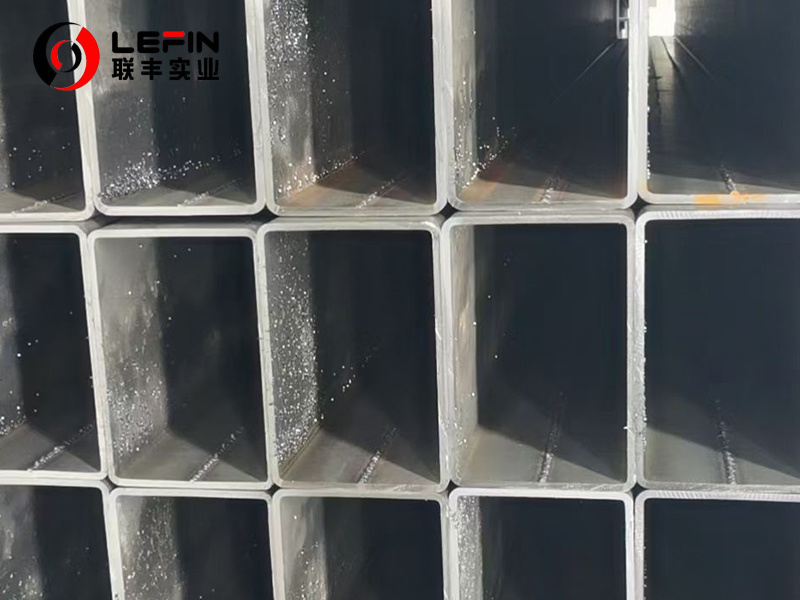
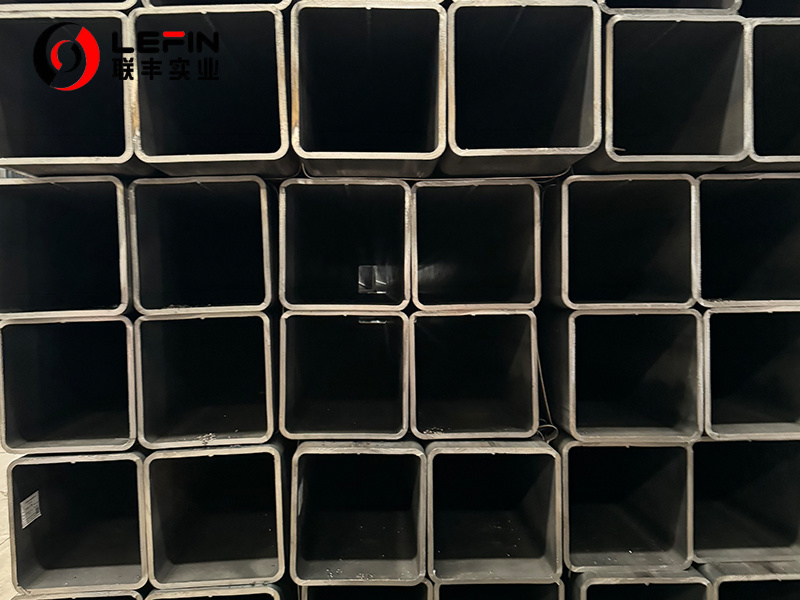
Papua New Guinea JIS G3101 SS400 HOLLOW SECTION
Category:
Product Description
Overview
JIS G3101 SS400 is a Japanese Industrial Standard (JIS) specification for rolled steels used in general structural applications. The "SS" in SS400 stands for Steel Structure, and the number "400" indicates the minimum tensile strength of 400 MPa. SS400 is one of the most commonly used steel grades in Japan and other countries for construction, machinery, and general structural purposes due to its balanced properties, cost-effectiveness, and versatility.
Key Features Of SS400
Chemical Composition:
SS400 has a relatively simple chemical composition, with the following typical ranges:
Carbon (C), Manganese (Mn): Contains a balanced amount of carbon and manganese, providing good strength and ductility.
Phosphorus (P): ≤ 0.050%
Sulfur (S): ≤ 0.050%
The low carbon content ensures good weldability and formability.
Mechanical Properties:
Tensile Strength: ≥ 400 MPa.
Yield Strength: ≥ 245 MPa.
Elongation: ≥ 17% (depending on thickness).
These properties make SS400 suitable for a wide range of structural applications.
Weldability:
SS400 exhibits good weldability, allowing it to be easily welded using common welding techniques such as arc welding, gas welding, and resistance welding.
Formability And Machinability:
Due to its low carbon content, SS400 is easy to cut, bend, and shape, making it ideal for fabrication processes.
Durability:
SS400 provides adequate strength and durability for general structural purposes, though it is not designed for high-stress or specialized applications.
Applications
SS400 is widely used in various industries due to its versatility and cost-effectiveness. Common applications include:
Construction: Beams, columns, frames, and other structural components in buildings.
Bridges: Support structures and auxiliary components.
Machinery: Frames, bases, and components for industrial machinery.
General Structural Use: Storage tanks, pipelines, vehicle parts, and more.
Comparison With Other JIS G3101 Grades
| Grade | Tensile Strength (MPa) | Yield Strength (MPa) | Primary Applications |
|---|---|---|---|
| SS400 | ≥ 400 | ≥ 245 | General structural purposes |
| SS490 | ≥ 490 | ≥ 325 | Structures requiring higher strength |
| SS540 | ≥ 540 | ≥ 415 | High-strength structural applications |
Advantages
Cost-Effective: SS400 is economical and widely available.
Versatility: Suitable for a broad range of structural applications.
Ease of Fabrication: Easy to weld, cut, and shape.
Adequate Strength: Provides sufficient strength for most general-purpose structural needs.
Limitations Of SS400
Not for High-Stress Applications: SS400 is not suitable for applications requiring high strength or toughness, such as heavy machinery or critical infrastructure.
Corrosion Resistance: SS400 is not inherently corrosion-resistant and may require protective coatings in corrosive environments.
Conclusion
JIS G3101 SS400 is a versatile and widely used structural steel grade known for its balanced mechanical properties, ease of fabrication, and cost-effectiveness. It is ideal for general structural applications in construction, machinery, and industrial projects. However, for specialized or high-stress applications, higher-grade steels such as SS490 or SS540 may be more appropriate.

Address: Hengtai Road,Daqiuzhuang Town,Jinghai County,Tianjin,China
Mob: +8615122229899(whatspp)
Phone: +86 22 58171905
Fax: +86 22 58171902
E-mail:info@lefinsteel.com
Get company updates
Tianjin Lefin Industrial Co.,Ltd. All rights reserved City sub-station SEO www.300.cn