

-
About us
 Tianjin lefin Industrial
TIANJIN LEFIN STEEL GROUP containing Tianjin lefin Industrial Co.,Ltd. 、Tianjin lefin steel import & export Co.,Ltd and Tianjin Shengqifeng International Trading Co., Ltd. -
Products
Steel Pipe Processing
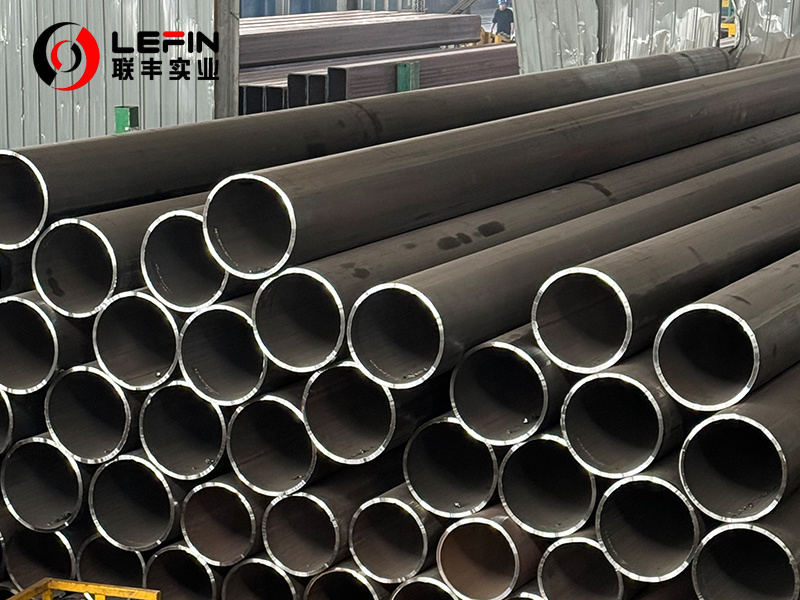
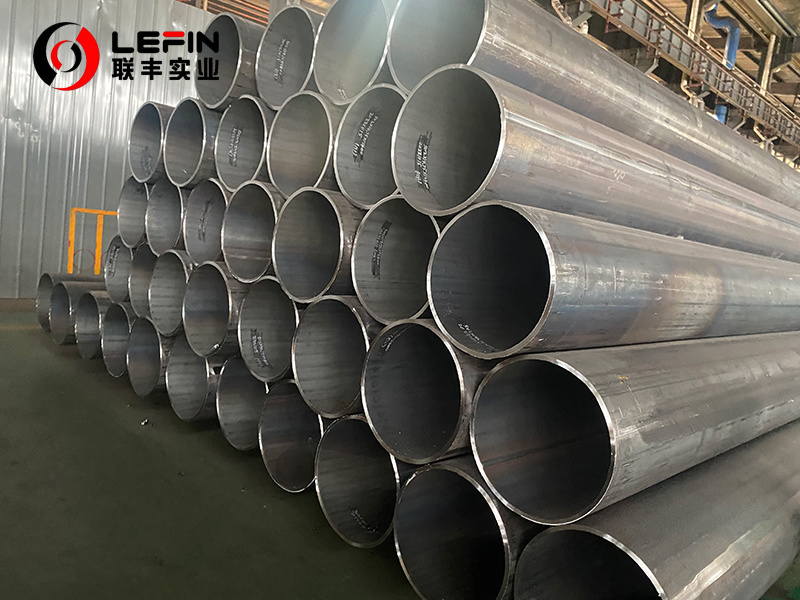
Our main products include 1/2inch to 16 inch ERW PIPE/GI PIPE which has been produced according to BS1387/ASTM A53/EN10219/EN10255/EN10217 Standard -
-
Service Capability
Guarantee Quality
Our steel pipes are suitable for oil, natural gas, shipbuilding, chemical industry, water conservancy, electrical, steel structure, construction and other related fields.

Our main products include 1/2inch to 16 inch ERW PIPE/GI PIPE which has been produced according to BS1387/ASTM A53/EN10219/EN10255/EN10217 Standard
Our main products include 1/2inch to 16 inch ERW PIPE/GI PIPE which has been produced according to BS1387/ASTM A53/EN10219/EN10255/EN10217 Standard
Has rich experience in steel pipe processing, can be customized according to customer requirements according to the drawing and sample processing, assist in the development of new products.
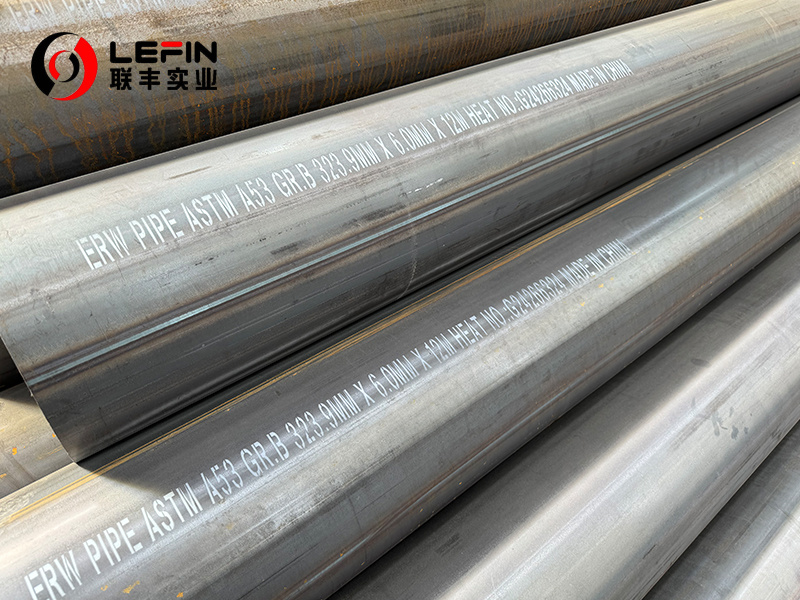
Norway ASTM A53 GR.B HOLLOW SECTION
Category:
Product Description
ASTM A53 GR.B refers to a standard specification for seamless and welded black and hot-dipped galvanized steel pipe. These pipes are used in a variety of applications, including construction, oil and gas, water, and more.
Chemical Requirements
| Chemical Requirements | |||||||||
Composition,max,% | |||||||||
| Carbon | Manganese | Phosphorus Sulfur | Sulfur | CopperA | NickelA | ChromiumA | MolybdenumA | VanadiumA | |
Type S (seamless pipe) | |||||||||
Grade B | 0.3B | 1.2 | 0.05 | 0.045 | 0.4 | 0.4 | 0.4 | 0.15 | 0.08 |
Type E (electric-resistance-welded) | |||||||||
Grade B | 0.3B | 1.2 | 0.05 | 0.045 | 0.4 | 0.4 | 0.4 | 0.15 | 0.08 |
| A The total composition for these five elements shall not exceed 1.00%. | |||||||||
| B For each reduction of 0.01% below the specified carbon maximum,an increase of 0.06% manganese above the specied maximum wil be pemitted up to amaximum of 1.65%. | |||||||||
● Differences between ASTM A53 GR.B and GR.A
Carbon: GR.B has a higher limit (0.30%) compared to GR.A (0.25%).
Manganese: GR.B also has a higher limit (1.20%) than GR.A (0.95%).
These differences in chemical composition directly affect the mechanical properties of the steel pipes, particularly their strength and toughness. ASTM A53 GR.B, with its higher carbon and manganese content, generally has greater strength and hardness compared to GR.A, making it suitable for applications that require higher pressure resistance.
Tensile Requirements
| Tensile Requirements | |
| Grade B | |
| Tensile strength,min,psi [MPa] | 60000 [415] |
| Yield strength,min,psi [MPa] | 35000 [240] |
| Elongation in 2 in.or 50 mm | A,B |
| A The minimum elongation in 2 in.[50 mm]shall be that determined by the following equation: | |
| e=625000[1940]A0.2/U0.9 | |
| where: | |
| e=minimum elongation in 2 in.or 50 mm in percent,rounded to the nearest percent, | |
| A=the lesser of 0.75 in.2 [500 mm²]and the cross-sectional area of the tension test specimen,calculated using the specified outside diameter of the pipe,or the nominal width of the tension test specimen and the specified wall thickness of the pipe,with the calculated value rounded to the nearest 0.01 in.²[1 mm²],and | |
| U=specified minimum tensile strength,psi [MPa]. | |
| B See Table X4.1 or Table X4.2(ASTM A53 2020),whichever is applicable,for the minimum elongation values that are required for various combinations of tension test specimen size and specified minimum tensile strength. | |
● Differences between ASTM A53 GR.B and GR.A
Tensile Strength:
GR.A: 48,000 psi minimum.
GR.B: 60,000 psi minimum.
Yield Strength:
GR.A: 30,000 psi minimum.
GR.B: 35,000 psi minimum.
These differences in mechanical properties mean that ASTM A53 GR.B is generally stronger and more suitable for applications requiring higher strength and pressure resistance compared to GR.A.
CLICK HERE➡What Is ASTM A53 Standard,(Click this link to view more differences between ASTM A53 GR.A and GR.B.)
Manufacturing Process
The production of seamless pipes includes billet preparation, piercing, rolling and sizing, heat treatment, and finishing. The pipes undergo heat treatment processes such as annealing, normalizing, or quenching and tempering to enhance their mechanical properties.
Applications
ASTM A53 GR.B hollow sections are used in a range of applications due to their excellent mechanical and chemical properties. They are ideal for water and gas lines, structural applications such as columns and braces, and steam and pressure conveyance. They are also used in the construction industry for building frameworks and columns, in water distribution systems, and in chemical and petrochemical plants for process piping and pressure vessels.
Advantages
ASTM A53 GR.B pipes offer a balance between strength, flexibility, and cost-effectiveness. They are durable and reliable, capable of withstanding significant internal and external pressures, making them a preferred material in both industrial and structural projects.
In summary, ASTM A53 GR.B hollow sections are a versatile and reliable choice for a variety of applications due to their material properties and adherence to strict industry standards.

Address: Hengtai Road,Daqiuzhuang Town,Jinghai County,Tianjin,China
Mob: +8615122229899(whatspp)
Phone: +86 22 58171905
Fax: +86 22 58171902
E-mail:info@lefinsteel.com
Get company updates
Tianjin Lefin Industrial Co.,Ltd. All rights reserved City sub-station SEO www.300.cn