

-
About us
 Tianjin lefin Industrial
TIANJIN LEFIN STEEL GROUP containing Tianjin lefin Industrial Co.,Ltd. 、Tianjin lefin steel import & export Co.,Ltd and Tianjin Shengqifeng International Trading Co., Ltd. -
Products
Steel Pipe Processing
Our main products include 1/2inch to 16 inch ERW PIPE/GI PIPE which has been produced according to BS1387/ASTM A53/EN10219/EN10255/EN10217 Standard -
-
Service Capability
Guarantee Quality
Our steel pipes are suitable for oil, natural gas, shipbuilding, chemical industry, water conservancy, electrical, steel structure, construction and other related fields.

Our main products include 1/2inch to 16 inch ERW PIPE/GI PIPE which has been produced according to BS1387/ASTM A53/EN10219/EN10255/EN10217 Standard
Our main products include 1/2inch to 16 inch ERW PIPE/GI PIPE which has been produced according to BS1387/ASTM A53/EN10219/EN10255/EN10217 Standard
Has rich experience in steel pipe processing, can be customized according to customer requirements according to the drawing and sample processing, assist in the development of new products.
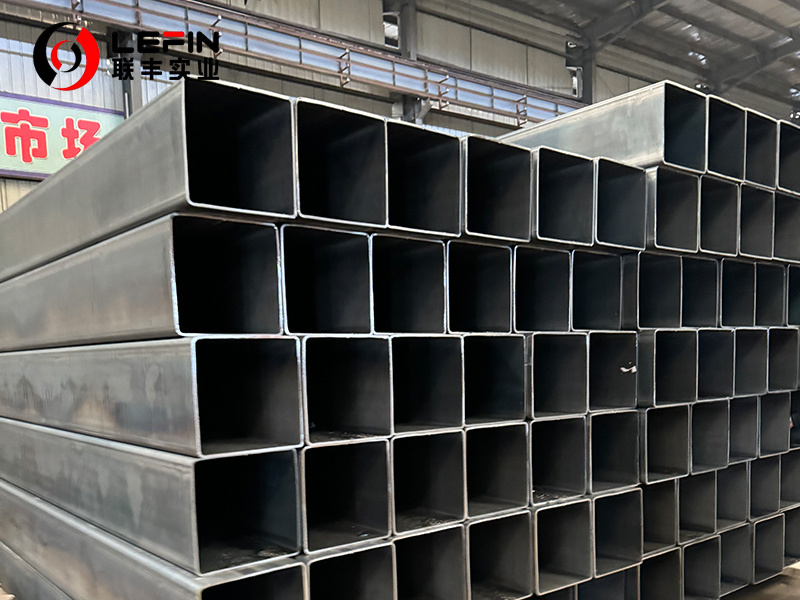
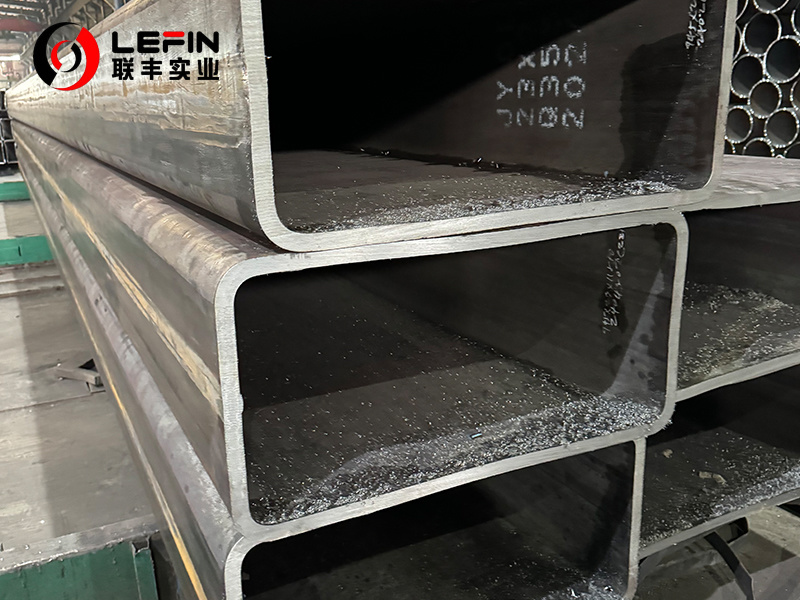
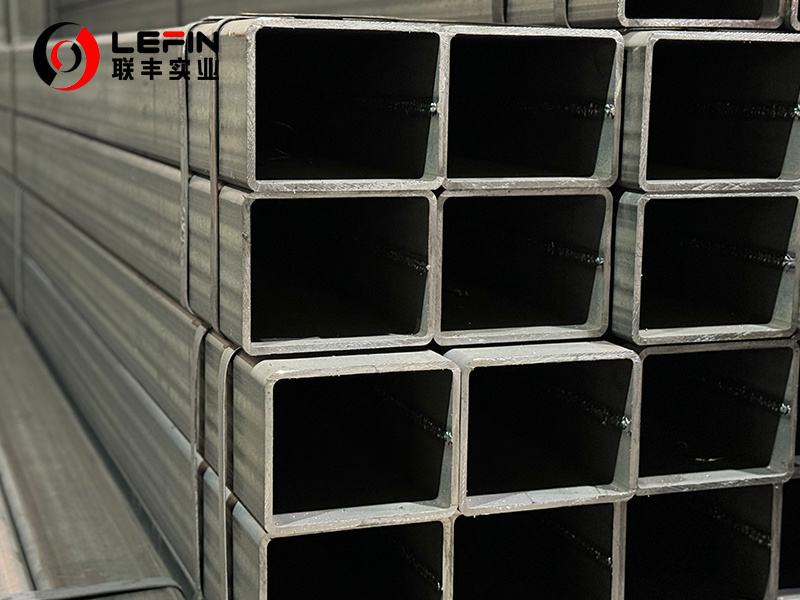
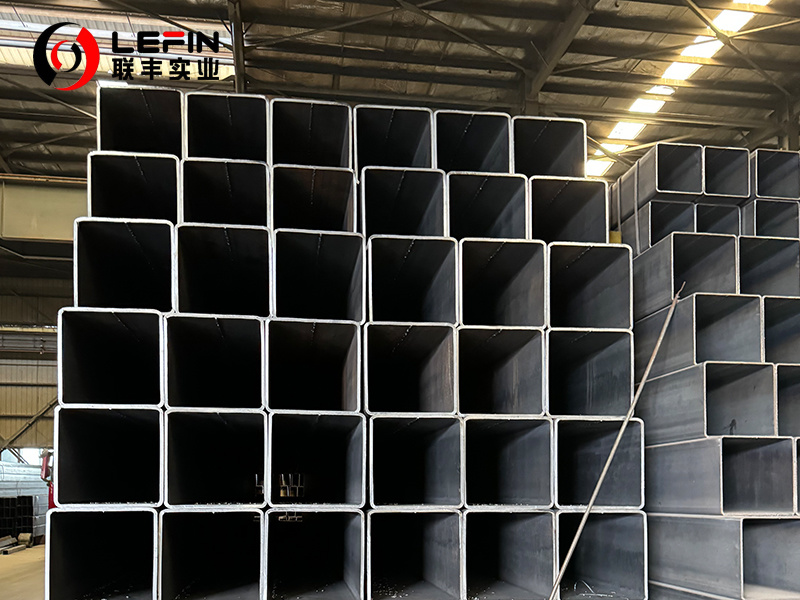
Norway JIS G3444 STK400 HOLLOW SECTION
Category:
Product Description
JIS G3444 STK400 is a type of carbon steel pipe used for general structural applications. It is manufactured in accordance with the Japanese Industrial Standard (JIS) G3444, which specifies the requirements for carbon steel tubes for general structure use.
Chemical Composition
Chemical Composition1,max(%) | |||||
| Carbon (C) | Silicon (Si) | Manganese (Mn) | Phosphorus (P) | Sulfur (S) | |
| STK 400 | 0.25 | - | - | 0.04 | 0.04 |
| 1,If necessary,alloying elements other than specified in this table may be added | |||||
● Carbon (C): Up to 0.25%. Carbon is the primary hardening element in steel, providing strength and hardness but reducing ductility as the percentage increases.
● Silicon (Si): Not specified, but generally low levels can contribute to improved strength without significantly affecting ductility.
● Manganese (Mn): Not specified, but manganese is known to increase strength and hardness while also improving the steel's resistance to wear and deformation.
● Phosphorus (P): Maximum of 0.040%. Phosphorus can increase the strength of steel but is generally controlled as higher levels can reduce ductility and toughness.
● Sulfur (S): Maximum of 0.040%. Sulfur can improve machinability but is usually limited in structural steels as it can lead to reduced toughness and increased brittleness.
Mechanical Properties
Mechanical properties | ||||||
| Symbol of grade | Tensile strength N/mm² | Yield point of proof stress N/mm² | Tensile strength in weld zone N/mm² | Flattening | Bendability | |
| Distance between plates (H) | Bend angle a | Inside radius | ||||
| Applied outside diameter | ||||||
| All outside diameters | All outside diameters | All outside diameters | All outside diameters | 50 mm max. | ||
| STK400 | 400 min. | 235 min. | 400 min. | 2/3 D | 90° | 6D |
| NOTE 1 Dof this table is the outside diameter of the tubes. NOTE 2 1 N/mm²=1 MPa Note a) Standard of bend angle shall be the start pointof bending. | ||||||
● Tensile Strength (R_m):STK400 has a minimum tensile strength of 400 N/mm². Tensile strength is the maximum stress that a material can withstand while being stretched or pulled before breaking. This property is crucial for applications where the steel pipe may be subjected to tensile forces, ensuring the pipe's structural integrity under load.
● Yield Point (R_p0.2):The yield point, or proof stress, for STK400 is a minimum of 235 N/mm². This is the stress at which the material begins to deform plastically. Knowing the yield point is essential for designing structures where the pipe may experience significant stress without permanent deformation.
● Elongation (A):The elongation percentage for STK400 is a minimum of 34%. Elongation is the percentage increase in length of the material under tensile stress before fracture. A higher elongation indicates better ductility, which is important for withstanding deformation without breaking.
Differences Between JIS G3444 STK400 And STK490
Chemical Composition
● STK400 has a maximum carbon content of 0.25%, with no specified maximum for silicon (Si) and manganese (Mn), and maximum phosphorus (P) and sulfur (S) contents of 0.040% each.
● STK490 has a maximum carbon content of 0.18%, a maximum silicon content of 0.55%, a maximum manganese content of 1.65%, and maximum phosphorus and sulfur contents of 0.035% each.
The higher manganese content in STK490 contributes to its enhanced strength and toughness compared to STK400.
Mechanical Properties
● STK400 has a minimum tensile strength of 400 N/mm² and a minimum yield point or proof stress of 235 N/mm².
● STK490 has a minimum tensile strength of 490 N/mm² and a minimum yield point or proof stress of 315 N/mm².
STK490's higher tensile and yield strengths indicate its ability to withstand greater stresses, making it suitable for more demanding structural applications.
In conclusion, while both STK400 and STK490 are carbon steel grades under the JIS G3444 standard, they are distinguished by their chemical compositions and mechanical properties, which determine their applicability in different structural and engineering scenarios. STK400 is more suited for general use, whereas STK490 is chosen for applications requiring higher strength and durability.
Applications
● Civil Engineering and Architecture: STK400 is utilized in the construction of steel towers, scaffoldings, footing piles, foundation piles, and piles for landslide suppression. Its strength and ductility make it suitable for these applications where reliability and durability are crucial .
● Bridge Engineering: STK400's good strength and rigidity make it appropriate for bridge components such as beams, piers, and abutments .
● Construction: It is applicable to framework systems, roof structures, and exterior walls, providing the necessary support and stability .
● Industrial Applications: STK400 is used in the construction of support structures, conveyance systems, and equipment frames where general strength and functionality are required.

Address: Hengtai Road,Daqiuzhuang Town,Jinghai County,Tianjin,China
Mob: +8615122229899(whatspp)
Phone: +86 22 58171905
Fax: +86 22 58171902
E-mail:info@lefinsteel.com
Get company updates
Tianjin Lefin Industrial Co.,Ltd. All rights reserved City sub-station SEO www.300.cn