

-
About us
 Tianjin lefin Industrial
TIANJIN LEFIN STEEL GROUP containing Tianjin lefin Industrial Co.,Ltd. 、Tianjin lefin steel import & export Co.,Ltd and Tianjin Shengqifeng International Trading Co., Ltd. -
Products
Steel Pipe Processing
Our main products include 1/2inch to 16 inch ERW PIPE/GI PIPE which has been produced according to BS1387/ASTM A53/EN10219/EN10255/EN10217 Standard -
-
Service Capability
Guarantee Quality
Our steel pipes are suitable for oil, natural gas, shipbuilding, chemical industry, water conservancy, electrical, steel structure, construction and other related fields.

Our main products include 1/2inch to 16 inch ERW PIPE/GI PIPE which has been produced according to BS1387/ASTM A53/EN10219/EN10255/EN10217 Standard
Our main products include 1/2inch to 16 inch ERW PIPE/GI PIPE which has been produced according to BS1387/ASTM A53/EN10219/EN10255/EN10217 Standard
Has rich experience in steel pipe processing, can be customized according to customer requirements according to the drawing and sample processing, assist in the development of new products.
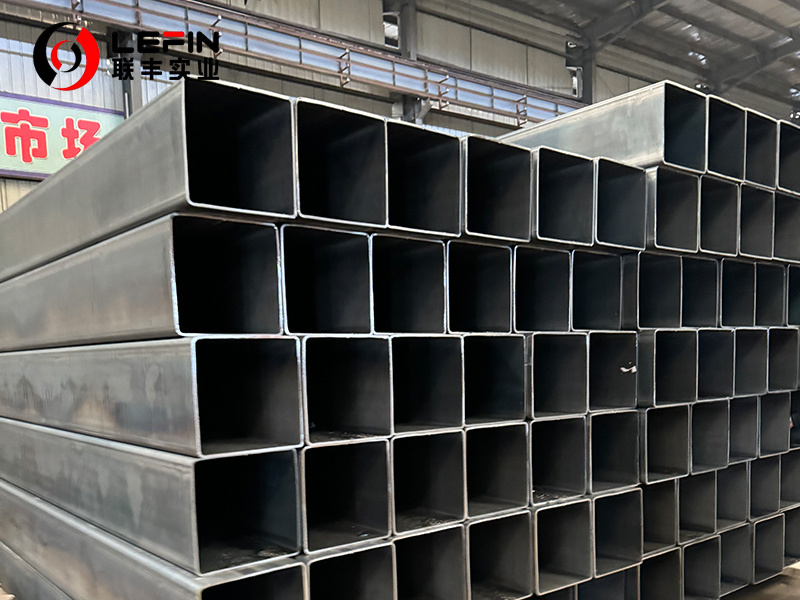
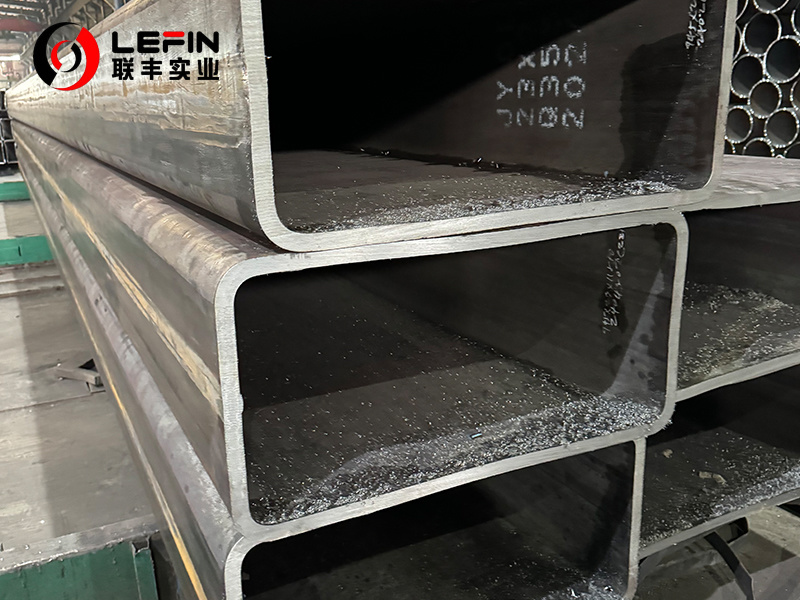
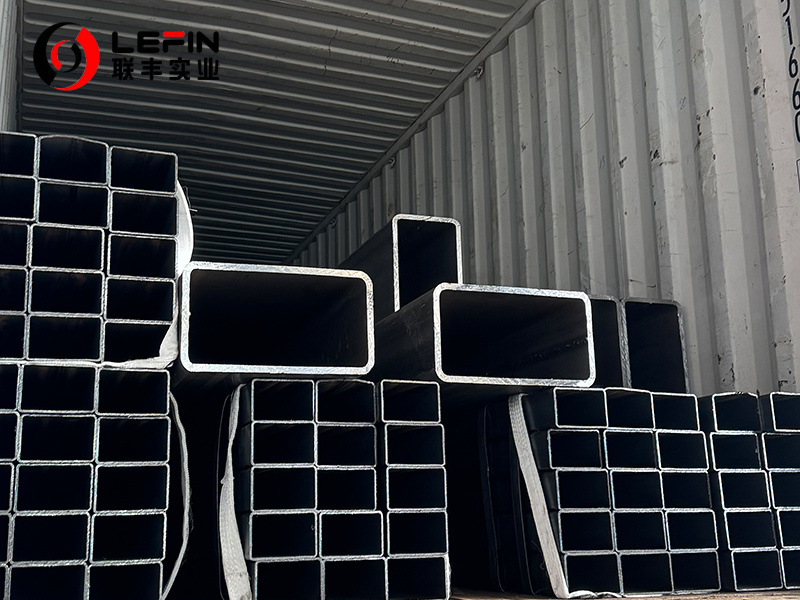
Norway AS1163 C350,C350L0 HOLLOW SECTION
Category:
Product Description
AS1163 C350 and C350L0 steel grades are specified by the Australian/New Zealand Standard for Cold-formed structural steel hollow sections. These materials are chosen for their ability to provide high load-bearing capacity and structural integrity in various construction applications.
Chemical Composition
Chemical Composition1,max(%) | ||||||||||
| Carbon (C) | Silicon (Si) | Manganese (Mn) | Phosphorus (P) | Sulfur (S) | Chromium(Cr) | Molybdenum(Mo) | Aluminium2(Al) | Titanium (Ti) | Micro-alloying elements | |
| C350, C350L0 | 0.2 | 0.45 | 1.6 | 0.03 | 0.03 | 0.3 | 0.1 | 0.1 | 0.04 | 0.15 (3) |
In summary, ASTM A252 piling pipe is an important component of construction projects that require a strong foundation. ASTM A252 GR.3 is the most commonly used standard for pile pipes. These pipes are designed to withstand heavy loads and stresses and can be coated with a protective coating to extend their service life.
1 The following elements may be present to the limits stated: copper 0.25%,nickel 0.25%.
2 Limlts specified are for soluble or total aluminium.
3 Applies to niobium,vanadium and titanium only.However,vanadium greater than 0.10% is not permitted.
● Carbon (C), which contributes to the steel's strength and hardness.
● Silicon (Si), that improves the steel's strength and resistance to atmospheric corrosion.
● Manganese (Mn), which enhances the steel's strength, toughness, and hardenability.
● Phosphorus (P), a trace element that can affect the steel's ductility and toughness if present in higher amounts.
● Sulfur (S), another trace element that can negatively impact weldability if present in excess.
● Chromium (Cr), which can improve the steel's corrosion resistance.
● Molybdenum (Mo), an alloying element that enhances the steel's strength at high temperatures and its resistance to creep.
● Aluminum (Al), used to improve the steel's resistance to scaling at high temperatures.
● Titanium (Ti), used to control the grain size and improve the steel's strength.
● Micro-alloying elements, which can include elements like niobium or vanadium that further refine the steel's properties.
CLICK HERE➡What Is AS1163 STANDARD
Mechanical Properties
Grade | Minimum | Minimum | Minimum Elongation ,% | |||||
Circular hollow | Rectangular hollow | |||||||
| ≤15 | >15≤30 | >30 | ≤15 | >15≤30 | >30 | |||
| C350,C350L0 | 350 | 430 | 16 | 18 | 20 | 12 | 14 | 16 |
d0 nominal outside diameter of a circular hollow section.
b nominal length of side of a square hollow section;nominallength ofthe shorter side of a rectangular hollow section.
d nominal length of the longer side of a rectangular hollow section.
t nominal thickness
● Yield Strength: The minimum yield strength for AS1163 C350L0 is 350 MPa, which is indicated by the "350" in its grade name . This measure of strength is crucial as it indicates the point at which the steel begins to deform plastically under load.
● Tensile Strength: The tensile strength, or ultimate tensile strength, for AS1163 C350L0 is 430 MPa, indicating the maximum stress the material can withstand before breaking .
● Elongation (A): The elongation percentage, which measures the percentage of deformation before fracture . This indicates the material's ductility and ability to absorb energy before failure.
Applications
● Structural Engineering: They are used for constructing columns, beams, and support structures in buildings and bridges, offering superior load-bearing capabilities.
● Piping Systems: Ideal for industrial and infrastructure projects due to their hollow cylindrical shape, used for transporting fluids and gases.
● Infrastructure Development: Employed in bridge construction and retaining walls, providing strength and resistance to environmental factors.
● Architectural Applications: Incorporated into façade systems and canopies for structural support and aesthetic appeal.
● Industrial and Manufacturing: Used in machinery frames and material handling systems for their robustness and adaptability.

Address: Hengtai Road,Daqiuzhuang Town,Jinghai County,Tianjin,China
Mob: +8615122229899(whatspp)
Phone: +86 22 58171905
Fax: +86 22 58171902
E-mail:info@lefinsteel.com
Get company updates
Tianjin Lefin Industrial Co.,Ltd. All rights reserved City sub-station SEO www.300.cn