

-
About us
 Tianjin lefin Industrial
TIANJIN LEFIN STEEL GROUP containing Tianjin lefin Industrial Co.,Ltd. 、Tianjin lefin steel import & export Co.,Ltd and Tianjin Shengqifeng International Trading Co., Ltd. -
Products
Steel Pipe Processing
Our main products include 1/2inch to 16 inch ERW PIPE/GI PIPE which has been produced according to BS1387/ASTM A53/EN10219/EN10255/EN10217 Standard -
-
Service Capability
Guarantee Quality
Our steel pipes are suitable for oil, natural gas, shipbuilding, chemical industry, water conservancy, electrical, steel structure, construction and other related fields.

Our main products include 1/2inch to 16 inch ERW PIPE/GI PIPE which has been produced according to BS1387/ASTM A53/EN10219/EN10255/EN10217 Standard
Our main products include 1/2inch to 16 inch ERW PIPE/GI PIPE which has been produced according to BS1387/ASTM A53/EN10219/EN10255/EN10217 Standard
Has rich experience in steel pipe processing, can be customized according to customer requirements according to the drawing and sample processing, assist in the development of new products.
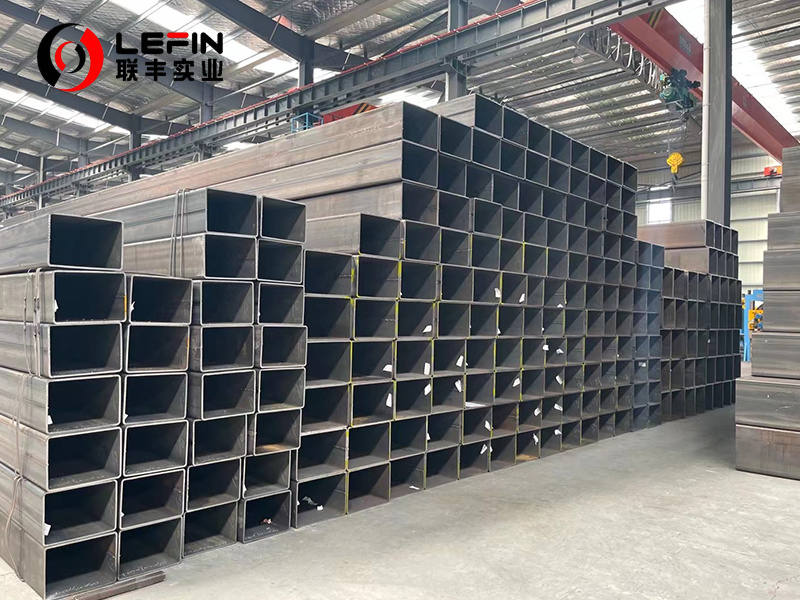
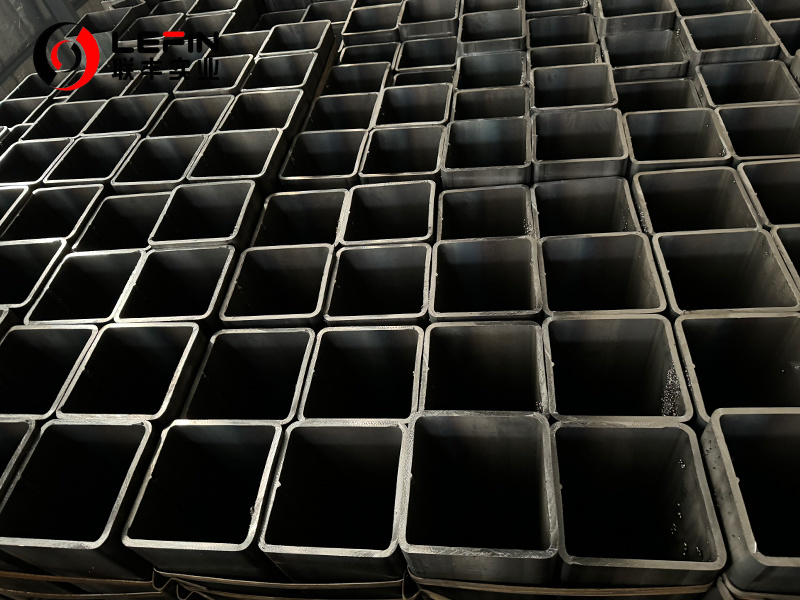
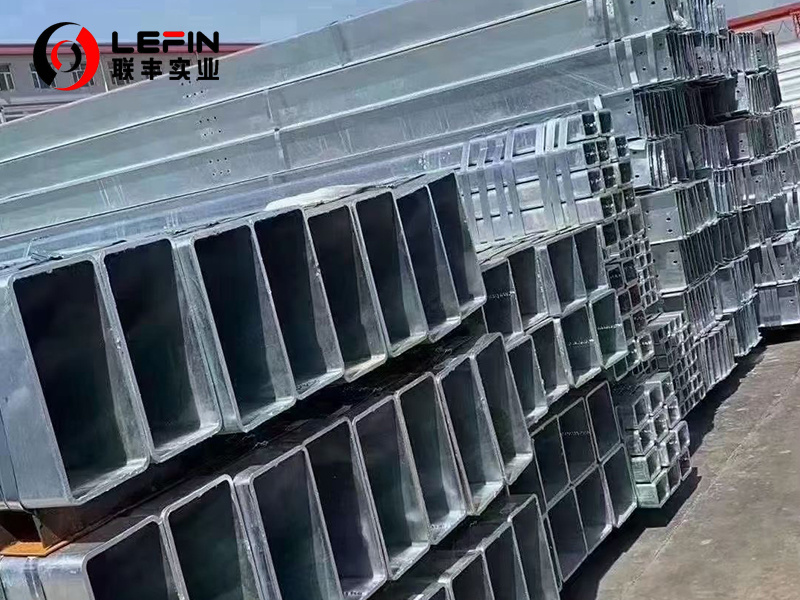
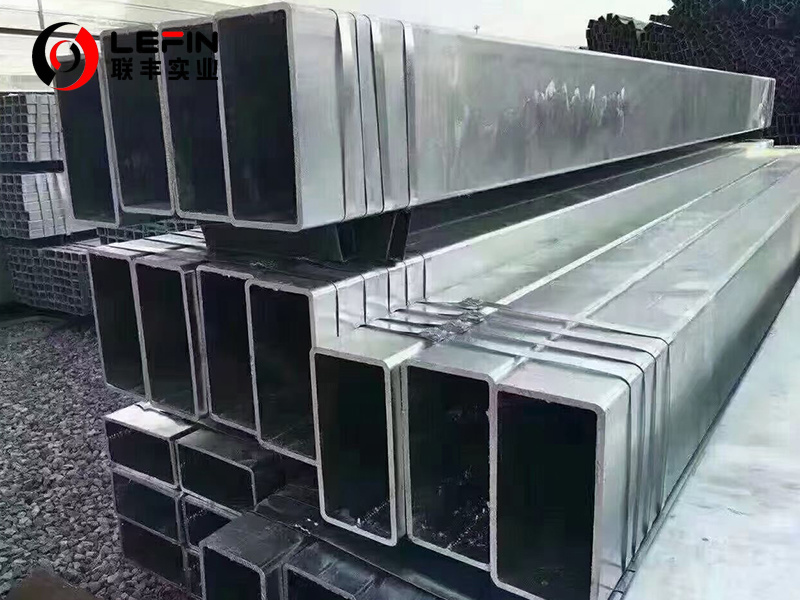
Moldova ASTM A500 GR.C RECTANGULAR TUBE
Category:
Product Description
ASTM A500 Grade C is a carbon steel used for cold-formed welded and seamless structural tubing, suitable for welded, riveted, or bolted construction of bridges and buildings, as well as for general structural purposes. It is known for its high strength and good ductility, making it ideal for load-bearing applications.
Tensile Requirements
Mechanical Properties(Round And Shaped) | ||
| Round | Shaped | |
| Tensile Strength | 62,000 psi (425 MPa) | 62,000 psi (425 MPa) |
| Yield Strength | 46,000 psi (315 MPa) | 50,000 psi (345 MPa) |
| Elongation (2") | 21% | 21% |
- This high tensile strength indicates the material's ability to withstand high tensile loads before breaking, which is critical for structural integrity in applications such as bridges and buildings.
- Yield strength is the point at which the material begins to deform plastically, and it signifies the maximum stress that can be applied without permanent deformation. This is important for ensuring that the structural components can handle heavy loads without collapsing.
- Elongation measures the ductility of the material, which is its ability to stretch under stress before fracturing. Good ductility is essential for absorbing energy and distributing stress in structural components, thereby enhancing safety and reliability.
Chemical requirements
| Chemical Composition(%) | |
| Element | GR.C |
| Carbon (C) | for heat analysis≤0.23% |
| for product analysis ≤0.27% | |
| Manganese (Mn) | for heat analysis≤1.35% |
| for product analysis ≤1.40% | |
| Phosphorus (P) | for heat analysis≤0.035% |
| for product analysis ≤0.045% | |
| Sulfur (S) | for heat analysis≤0.035% |
| for product analysis ≤0.045% | |
| Copper (Cu) | for heat analysis≥0.20% |
| for product analysis ≥0.18% | |
- Carbon (C): The carbon content affects the hardness and strength of the steel. A maximum of 0.23% ensures a good balance between strength and ductility.
- Manganese (Mn): Manganese improves the hardenability and tensile strength of the steel. The maximum of 1.35% helps achieve the required mechanical properties.
- Phosphorus (P) and Sulfur (S): These elements are kept at low levels to avoid brittleness and improve the steel's toughness.
- Copper (Cu): When specified, copper enhances the steel's resistance to atmospheric corrosion.
ASTM A500 Grade C is widely used across various industries due to its strength and durability:
- Industrial Equipment: Used in conveyor systems, heavy machinery frames, and storage racks, where its wear resistance and strength are crucial .
- Structural Applications: Commonly used in support structures, building frames, and bridges, leveraging its high strength-to-weight ratio and load-bearing ability .
- Energy Sector: Employed in wind turbine towers and oil and gas pipelines, where its strength and corrosion resistance are beneficial .
Advantages
- Structural Strength: ASTM A500 Grade C is specifically designed for structural applications, providing high strength and load-bearing capacity. Compared to other grades like A and B, Grade C offers a minimum tensile strength of 62,000 psi and a minimum yield strength of 46,000 psi, making it ideal for heavy-duty construction projects that require greater load-bearing capacity.
ASTM A500 GRADE A,B,C,D difference
- Dimensional Accuracy: Grades B and C of A500 steel pipes have tighter dimensional tolerances compared to general-purpose pipes like A36 and A53.This precision in outside diameters and wall thicknesses ensures better consistency and accuracy in structural applications, leading to better fit and alignment during construction.
- Weldability: A500 Grade C exhibits excellent weldability, making it well-suited for fabrication and construction purposes. It can be easily welded using common welding techniques, simplifying the assembly process and allowing for efficient construction.
- High Strength-to-Weight Ratio: ASTM A500 Grade C offers a high strength-to-weight ratio, with tensile strengths up to 62,000 psi, allowing for better structural designs. This ratio is beneficial for creating lighter yet stronger structures, which can lead to cost savings in material usage and transportation.
- Ductility and Formability: Grade C maintains good ductility with a minimum elongation of 21% in 2 inches for both round and shaped profiles, ensuring good formability. This characteristic is important for absorbing energy and distributing stress in structural components, thereby enhancing safety and reliability.
The features, applications, and advantages of ASTM A500 Grade C are significant as they contribute to the reliability, efficiency, and longevity of structural projects. Grade C's higher strength compared to other grades makes it ideal for applications requiring greater load-bearing capacity, ensuring the safety and stability of structures. Its versatility allows it to be used in a wide range of industries, from construction to energy, providing economic and practical solutions for various engineering challenges.


ASTM A500 Grade C is a carbon steel used for cold-formed welded and seamless structural tubing, suitable for welded, riveted, or bolted construction of bridges and buildings, as well as for general structural purposes. It is known for its high strength and good ductility, making it ideal for load-bearing applications.
Tensile Requirements
Mechanical Properties(Round And Shaped)
Round
Shaped
Tensile Strength
62,000 psi (425 MPa)
62,000 psi (425 MPa)
Yield Strength
46,000 psi (315 MPa)
50,000 psi (345 MPa)
Elongation (2")
21%
21%
This high tensile strength indicates the material's ability to withstand high tensile loads before breaking, which is critical for structural integrity in applications such as bridges and buildings.
Yield strength is the point at which the material begins to deform plastically, and it signifies the maximum stress that can be applied without permanent deformation. This is important for ensuring that the structural components can handle heavy loads without collapsing.
Elongation measures the ductility of the material, which is its ability to stretch under stress before fracturing. Good ductility is essential for absorbing energy and distributing stress in structural components, thereby enhancing safety and reliability.
Chemical requirements
Chemical Composition(%)
Element
GR.C
Carbon (C)
for heat analysis≤0.23%
for product analysis ≤0.27%
Manganese (Mn)
for heat analysis≤1.35%
for product analysis ≤1.40%
Phosphorus (P)
for heat analysis≤0.035%
for product analysis ≤0.045%
Sulfur (S)
for heat analysis≤0.035%
for product analysis ≤0.045%
Copper (Cu)
for heat analysis≥0.20%
for product analysis ≥0.18%
Carbon (C): The carbon content affects the hardness and strength of the steel. A maximum of 0.23% ensures a good balance between strength and ductility.
Manganese (Mn): Manganese improves the hardenability and tensile strength of the steel. The maximum of 1.35% helps achieve the required mechanical properties.
Phosphorus (P) and Sulfur (S): These elements are kept at low levels to avoid brittleness and improve the steel's toughness.
Copper (Cu): When specified, copper enhances the steel's resistance to atmospheric corrosion.
ASTM A500 Grade C is widely used across various industries due to its strength and durability:
Industrial Equipment: Used in conveyor systems, heavy machinery frames, and storage racks, where its wear resistance and strength are crucial .
Structural Applications: Commonly used in support structures, building frames, and bridges, leveraging its high strength-to-weight ratio and load-bearing ability .
Energy Sector: Employed in wind turbine towers and oil and gas pipelines, where its strength and corrosion resistance are beneficial .
Advantages
Structural Strength: ASTM A500 Grade C is specifically designed for structural applications, providing high strength and load-bearing capacity. Compared to other grades like A and B, Grade C offers a minimum tensile strength of 62,000 psi and a minimum yield strength of 46,000 psi, making it ideal for heavy-duty construction projects that require greater load-bearing capacity.
ASTM A500 GRADE A,B,C,D difference
Dimensional Accuracy: Grades B and C of A500 steel pipes have tighter dimensional tolerances compared to general-purpose pipes like A36 and A53.This precision in outside diameters and wall thicknesses ensures better consistency and accuracy in structural applications, leading to better fit and alignment during construction.
Weldability: A500 Grade C exhibits excellent weldability, making it well-suited for fabrication and construction purposes. It can be easily welded using common welding techniques, simplifying the assembly process and allowing for efficient construction.
High Strength-to-Weight Ratio: ASTM A500 Grade C offers a high strength-to-weight ratio, with tensile strengths up to 62,000 psi, allowing for better structural designs. This ratio is beneficial for creating lighter yet stronger structures, which can lead to cost savings in material usage and transportation.
Ductility and Formability: Grade C maintains good ductility with a minimum elongation of 21% in 2 inches for both round and shaped profiles, ensuring good formability. This characteristic is important for absorbing energy and distributing stress in structural components, thereby enhancing safety and reliability.
The features, applications, and advantages of ASTM A500 Grade C are significant as they contribute to the reliability, efficiency, and longevity of structural projects. Grade C's higher strength compared to other grades makes it ideal for applications requiring greater load-bearing capacity, ensuring the safety and stability of structures. Its versatility allows it to be used in a wide range of industries, from construction to energy, providing economic and practical solutions for various engineering challenges.
Address: Hengtai Road,Daqiuzhuang Town,Jinghai County,Tianjin,China
Mob: +8615122229899(whatspp)
Phone: +86 22 58171905
Fax: +86 22 58171902
E-mail:info@lefinsteel.com
Get company updates
Tianjin Lefin Industrial Co.,Ltd. All rights reserved City sub-station SEO www.300.cn