

-
About us
 Tianjin lefin Industrial
TIANJIN LEFIN STEEL GROUP containing Tianjin lefin Industrial Co.,Ltd. 、Tianjin lefin steel import & export Co.,Ltd and Tianjin Shengqifeng International Trading Co., Ltd. -
Products
Steel Pipe Processing
Our main products include 1/2inch to 16 inch ERW PIPE/GI PIPE which has been produced according to BS1387/ASTM A53/EN10219/EN10255/EN10217 Standard -
-
Service Capability
Guarantee Quality
Our steel pipes are suitable for oil, natural gas, shipbuilding, chemical industry, water conservancy, electrical, steel structure, construction and other related fields.

Our main products include 1/2inch to 16 inch ERW PIPE/GI PIPE which has been produced according to BS1387/ASTM A53/EN10219/EN10255/EN10217 Standard
Our main products include 1/2inch to 16 inch ERW PIPE/GI PIPE which has been produced according to BS1387/ASTM A53/EN10219/EN10255/EN10217 Standard
Has rich experience in steel pipe processing, can be customized according to customer requirements according to the drawing and sample processing, assist in the development of new products.
Mauritius ASTM A501 Hot-formed Carbon Steel Hollow Sections
Category:
Product Description
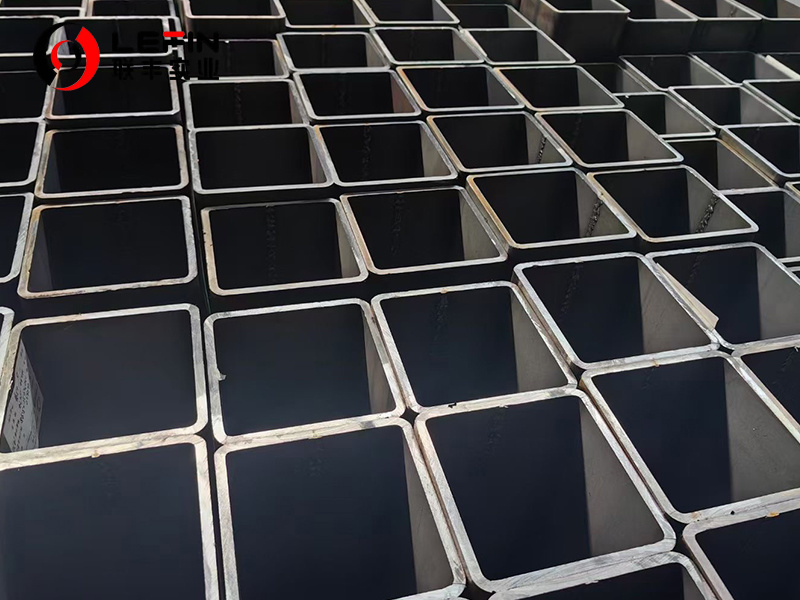
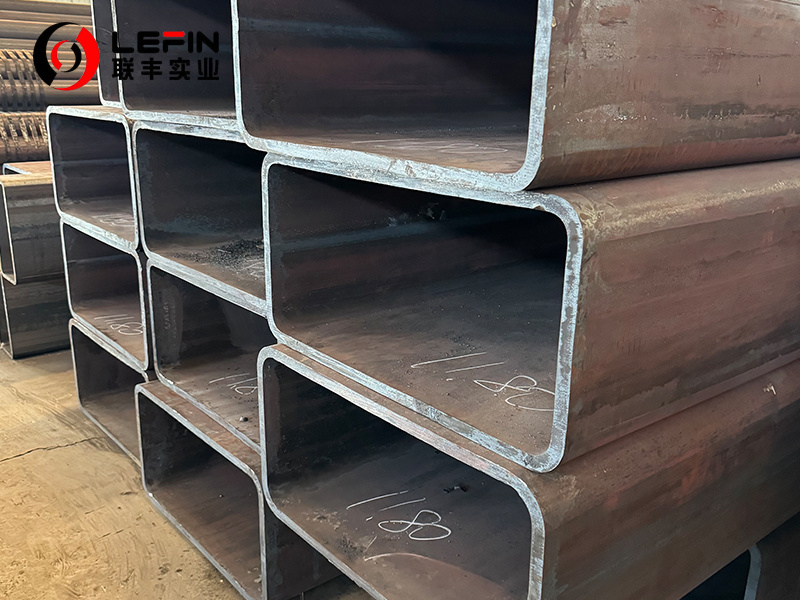
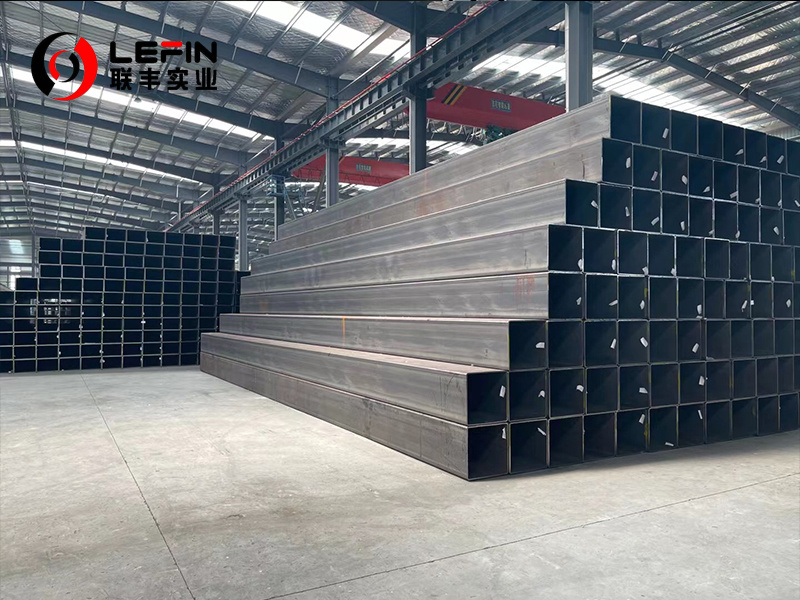
ASTM A501 is a standard specification for hot-formed welded and seamless carbon steel structural tubing (hollow sections) in square, rectangular, round, or special shapes. It covers three steel grades (A, B, and C) with varying mechanical and chemical properties to suit different structural applications.
| Shape | Round, square, rectangular, or special shapes |
| Round tubing Dimensions | Diameters 1 – 48 in. [25 – 1220 mm] and wall thickness of 0.095 – 4.00 in. [2.5 – 100 mm] |
| Square and rectangular tubing | Diameters 1.0 – 16 in [25 – 405 mm] and wall thickness of 0.095 – 1.0 in [2.5 – 25 mm] |
| Standard | ASTM A501/A501M – 2021.pdf |
Chemical Composition
The chemical requirements for ASTM A501 hollow sections vary by grade:
| Composition, % | Grade A | Grade B and Grade C | ||
| Heat Analysis | Product Analysis | Heat Analysis | Product Analysis | |
| Carbon, max B | 0.26 | 0.30 | 0.22 | 0.26 |
| Manganese, max B | - | - | 1.40 | 1.45 |
| Phosphorus, max | 0.035 | 0.045 | 0.030 | 0.040 |
| Sulfur, max | 0.035 | 0.045 | 0.020 | 0.030 |
| Copper, min (when copper steel is specified) | 0.20 | 0.18 | 0.20 | 0.18 |
B For each reduction of 0.01 percentage point below the specified maximum for carbon, an increase of 0.06 percentage point above the specified maximum for manganese is permitted, up to a maximum of 1.60 % by heat analysis and 1.65 % by-product analysis.
Grade A: Basic carbon steel with no specified Mn or Si requirements.
Grades B & C: Enhanced strength and toughness due to controlled Mn and Si content.
Grade C: Lower P and S for improved weldability and ductility.
Mechanical Properties
| List | Wall Thickness in [mm] | Grade A | Grade B | Grade C | |
| Tensile strength, min, psi [MPa] | All | 58,000 [400] | 65000 [448] | 70,000 [483] | |
| Yield strength, min, psi [MPa] | ≤ 1 [25] | 39,000 [270] | 46,000 [315] | 50,000 [345] | |
| >1 [25] and ≤ 2 [50] | 38,000 [260] | 45,000 [310] | 49,000 [340] | ||
| >2 [50] and ≤ 3 [76] | 36,500 [250] | 42,500 [290] | 47,500 [330] | ||
| >3 [76] and ≤ 4 [100] | 35,000 [240] | 40,000 [280] | 46,000 [315] | ||
| Elongation, min, % | - | 25 | 24 | 23 | |
| Impact Energy | min, average, ft/Ibf [J] | - | 20 [27] | 20 [27] | 20 [27] |
| min, single, ft/Ibf [J] | - | 14 [19] | 14 [19] | 14 [19] | |
Grades B & C offer higher strength, making them suitable for load-bearing structures.
Grade C is preferred for applications requiring superior weldability and impact resistance.
Dimension Tolerance
| List | Tolerance | Shape | |
| Outer Diameter | >2 in [50 mm] | ±1 % | all |
| ≤ 2 in [50 mm] | ±1/48 in [0.50 mm] | ||
| Wall Thickness | -10 % | all | |
| Weight | -3.5 % – +10% | all | |
| Length (L) | ≤ 7m [22 ft] | -1/4 in – +1/2 in [-6 mm – +13 mm] | all |
| 7-14m [22-44 ft] | -1/4 in – +3/4 in [-6 mm – +19 mm] | ||
Manufacturing Process
Hot-forming: Hollow sections are produced by hot-rolling or hot-finishing (for seamless) at high temperatures (≥1700°F/925°C), enhancing ductility and grain structure.
Welded tubes: Formed from coiled steel, shaped into hollow sections, and electric-resistance welded (ERW).
Seamless tubes: Produced via mandrel rolling or extrusion for uniform strength.
Post-treatment: May include normalizing (optional for Grades B/C) to refine microstructure.
Key Applications
ASTM A501 hollow sections are widely used in structural and construction applications, including:
Building frames (beams, columns, trusses).
Bridges and highway structures.
Industrial equipment supports.
Scaffolding and temporary structures.
Machinery and transportation components.
Grade Selection Guidance:
Grade A: General-purpose applications with moderate strength requirements.
Grade B: Higher-load structures (e.g., bridges, heavy-duty frames).
Grade C: Critical applications needing enhanced weldability and toughness (e.g., seismic-resistant structures).
Advantages Of ASTM A501 Hollow Sections
Cost-effective compared to cold-formed sections (A500).
High strength-to-weight ratio for efficient structural design.
Versatility in shapes (round, square, rectangular).
Fabrication & Welding
Weldability: Excellent (Grades B & C are preferable for welding due to lower P/S).
Machinability: Good (responds well to cutting, drilling, and bending).
Surface Treatment: Often galvanized or painted for corrosion resistance.
ASTM A501 Vs. ASTM A500
Parameter | ASTM A501 (Hot-Formed) | ASTM A500 (Cold-Formed) |
|---|---|---|
Production Method | Hot-rolled or hot-finished (welded/seamless) at high temperatures. | Cold-formed (welded) at room temperature, then stress-relieved. |
Grades Available | A, B, C (increasing strength) | A, B, C, D (D is high-strength, unique to A500) |
Chemical Composition | Higher carbon in Grades A/B (≤0.30%); Grade C optimized for weldability (≤0.23% C). | Tighter control on residuals (e.g., phosphorus, sulfur) for cold-forming. |
Dimensional Tolerance | Slightly looser due to hot-forming process. | Tighter tolerances (cold-forming allows precise control). |
Residual Stresses | Lower (hot-forming reduces internal stresses). | Higher (cold-forming induces stresses; may require annealing). |
Weldability | Good (Grade C best due to lower carbon). | Excellent (lower carbon in Grades B/C/D). |
Corrosion Resistance | Similar (both require coatings for outdoor use). | Similar (but cold-formed may have better surface finish). |
Cost | Generally lower (hot-forming is less energy-intensive). | Slightly higher (due to cold-working and finishing). |
Primary Applications | Heavy construction (bridges, cranes), infrastructure. | Architectural (exposed structures), precision frameworks. |
Advantages | - Better for heavy loads due to ductility. | - Sharper corners (better for aesthetics). |
Conclusion
ASTM A501 hollow sections (Grades A, B, C) provide a robust solution for structural applications, balancing strength, weldability, and economy. Grade selection depends on mechanical demands and environmental conditions, with Grade C being optimal for high-performance scenarios.


Address: Hengtai Road,Daqiuzhuang Town,Jinghai County,Tianjin,China
Mob: +8615122229899(whatspp)
Phone: +86 22 58171905
Fax: +86 22 58171902
E-mail:info@lefinsteel.com
Get company updates
Tianjin Lefin Industrial Co.,Ltd. All rights reserved City sub-station SEO www.300.cn