

-
About us
 Tianjin lefin Industrial
TIANJIN LEFIN STEEL GROUP containing Tianjin lefin Industrial Co.,Ltd. 、Tianjin lefin steel import & export Co.,Ltd and Tianjin Shengqifeng International Trading Co., Ltd. -
Products
Steel Pipe Processing
Our main products include 1/2inch to 16 inch ERW PIPE/GI PIPE which has been produced according to BS1387/ASTM A53/EN10219/EN10255/EN10217 Standard -
-
Service Capability
Guarantee Quality
Our steel pipes are suitable for oil, natural gas, shipbuilding, chemical industry, water conservancy, electrical, steel structure, construction and other related fields.

Our main products include 1/2inch to 16 inch ERW PIPE/GI PIPE which has been produced according to BS1387/ASTM A53/EN10219/EN10255/EN10217 Standard
Our main products include 1/2inch to 16 inch ERW PIPE/GI PIPE which has been produced according to BS1387/ASTM A53/EN10219/EN10255/EN10217 Standard
Has rich experience in steel pipe processing, can be customized according to customer requirements according to the drawing and sample processing, assist in the development of new products.
Israel AS/NZS 1163 C250 TUBE
Category:
Product Description
Basic Information
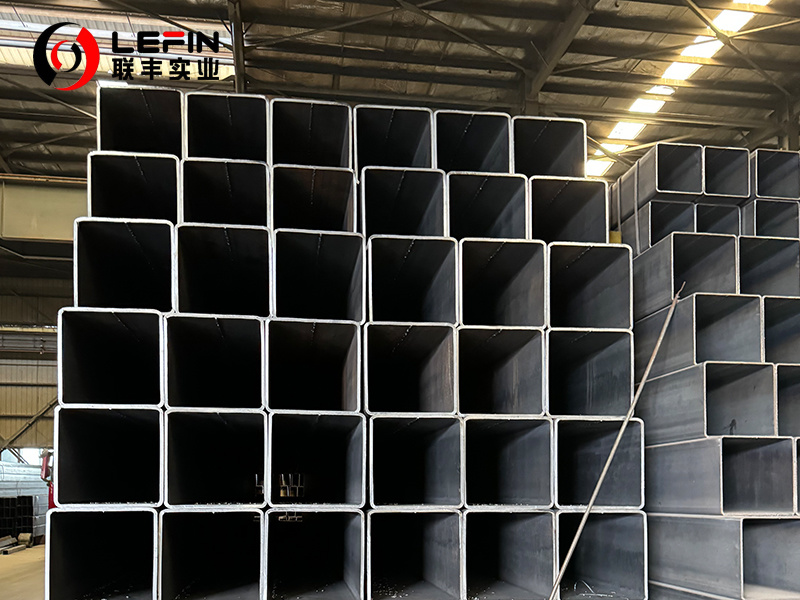
AS 1163 C250 and C250L0 are cold-formed structural steel hollow sections specified in the Australian/New Zealand Standard AS/NZS 1163. These steel grades are designed for structural and engineering applications, such as construction, bridges, and infrastructure projects.
C250: This grade indicates that the steel has a minimum yield strength of 250 MPa and does not require an impact test.
C250L0: This grade also has a minimum yield strength of 250 MPa but includes an impact test requirement at 0°C, ensuring better low-temperature toughness.
AS/NZS 1163 C250 TUBE
Grades: C250, C250L0, C350, C350L0, C450, C450L0.
Outside Diameter:
20MM × 20MM - 1200MM × 1200MM(SHS)
20MM × 30MM - 1000MM × 1500MM(RHS)
Wall Thickness: 1.2MM - 50MM
Wall thickness tolerance: ±10%
Length: 1M - 12M, commonly used 5.8M,6M,12M, but we can also produces depends on client's requirement.
Advantages: High strength and durability, Versatility, Aesthetics, Cost-effective, Environmentally friendly.
Application: Construction, Transportation, Industrial.
Chemical Composition
| Chemical Composition1,max(%) | ||||||||||
| Carbon (C) | Silicon (Si) | Manganese (Mn) | Phosphorus (P) | Sulfur (S) | Chromium (Cr) | Molybdenum (Mo) | Aluminium2 (Al) | Titanium (Ti) | Micro-alloying elements | |
| C250,C250L0 | 0.12 | 0.05 | 0.5 | 0.03 | 0.03 | 0.15 | 0.1 | 0.1 | 0.04 | 0.03 (3) |
1 The following elements may be present to the limits stated: copper 0.25%,nickel 0.25%.
2 Limits specified are for soluble or total aluminum.
3 Applies to niobium and vanadium only. However, niobium greater than 0.010% is not permitted.
Carbon (C): Higher carbon content enhances strength but can reduce ductility and weldability if not controlled properly.
Silicon (Si): Contributing to better deformation resistance and tensile strength.
Manganese (Mn):Which improves the hardenability and strength of the steel.
Chromium (Cr) and Molybdenum (Mo): These elements can enhance hardness and strength, particularly at higher temperatures.
Micro-alloying elements: The presence of micro-alloying elements like niobium (Nb), vanadium (V), and titanium (Ti) in controlled amounts helps to refine the grain structure and improve the mechanical properties of the steel.
Difference between other grades(C350,C450):
Higher carbon and manganese content(C350,C350L0,C450,C450L0) increase strength but may reduce ductility and weldability. The presence of molybdenum in C450,C450L0 enhances high-temperature performance and corrosion resistance.
Mechanical Properties
| Grade | Minimum Yield Strength MPa | Minimum Tensile Strength MPa | Minimum Elongation ,% | |||||
| Circular hollow sections d0/t | Rectangular hollow sections b/t,d/t | |||||||
| ≤15 | >15≤30 | >30 | ≤15 | >15≤30 | >30 | |||
| C250,C250L0 | 250 | 320 | 18 | 20 | 22 | 14 | 16 | 18 |
d0 nominal outside diameter of a circular hollow section.
b nominal length of side of a square hollow section ,nominal length of the shorter side of a rectangular hollow section.
d nominal length of the longer side of a rectangular hollow section.
t nominal thickness.
These properties ensure that the steel can withstand significant loads and resist deformation. The elongation value indicates the steel's ductility, which is important for forming and welding processes.
Difference between other grades(C350,C450):
Yield Strength: The minimum yield strength increases progressively from C250 to C450, with C250 having a minimum yield strength of 250 MPa, C350 at 350 MPa, and C450 at 450 MPa. The "L0" grades (C250L0, C350L0, C450L0) share the same yield strength as their non-L0 counterparts (C250, C350, C450).
Tensile Strength: Similar to yield strength, tensile strength increases with the grade number. C250 has a tensile strength of 320 MPa, C350 has 430 MPa, and C450 has 500 MPa. Again, the L0 grades have identical tensile strength values.
Elongation: Elongation decreases as the yield strength increases. C250 has a minimum elongation of 22%, C350 has 20%, and C450 has 16%. This trend indicates that higher strength grades have lower ductility.
The progression from C250 to C450 represents a trade-off between strength and ductility. Higher strength grades (C350, C450) are suitable for applications requiring greater load-bearing capacity, while lower strength grades (C250) offer better ductility for applications where deformation is more likely.
Applications And Advantages
Applications
C250: Suitable for general construction applications where moderate strength is required but low-temperature impact resistance is not critical.
C250L0: Ideal for applications in colder climates or where structures may be exposed to low temperatures, ensuring the material remains ductile and resistant to brittle fracture.
Advantages
Economic Efficiency: C250 is cost-effective for applications that do not require high strength or impact resistance.
Versatility: Both grades are suitable for various structural applications, including building frameworks, bridges, and industrial structures.
Weldability: These grades are designed to be easily welded, which is beneficial for construction and fabrication.
Precautions
Impact Resistance: C250L0 is recommended for applications where low-temperature impact resistance is necessary. Using C250 in such conditions may lead to material failure.
Corrosion Protection: While AS 1163 steel grades are durable, they may require additional corrosion protection (e.g., coatings) for applications in highly corrosive environments.
In summary, AS 1163 C250 and C250L0 are versatile steel grades suitable for a wide range of structural applications. The choice between them depends on the specific requirements of the project, particularly regarding low-temperature performance.


Address: Hengtai Road,Daqiuzhuang Town,Jinghai County,Tianjin,China
Mob: +8615122229899(whatspp)
Phone: +86 22 58171905
Fax: +86 22 58171902
E-mail:info@lefinsteel.com
Get company updates
Tianjin Lefin Industrial Co.,Ltd. All rights reserved City sub-station SEO www.300.cn