

-
About us
 Tianjin lefin Industrial
TIANJIN LEFIN STEEL GROUP containing Tianjin lefin Industrial Co.,Ltd. 、Tianjin lefin steel import & export Co.,Ltd and Tianjin Shengqifeng International Trading Co., Ltd. -
Products
Steel Pipe Processing
Our main products include 1/2inch to 16 inch ERW PIPE/GI PIPE which has been produced according to BS1387/ASTM A53/EN10219/EN10255/EN10217 Standard -
-
Service Capability
Guarantee Quality
Our steel pipes are suitable for oil, natural gas, shipbuilding, chemical industry, water conservancy, electrical, steel structure, construction and other related fields.

Our main products include 1/2inch to 16 inch ERW PIPE/GI PIPE which has been produced according to BS1387/ASTM A53/EN10219/EN10255/EN10217 Standard
Our main products include 1/2inch to 16 inch ERW PIPE/GI PIPE which has been produced according to BS1387/ASTM A53/EN10219/EN10255/EN10217 Standard
Has rich experience in steel pipe processing, can be customized according to customer requirements according to the drawing and sample processing, assist in the development of new products.
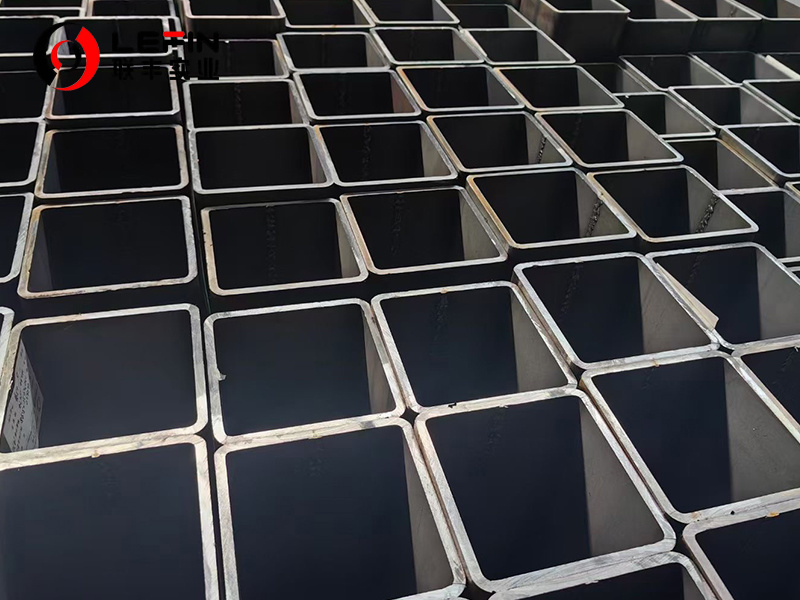
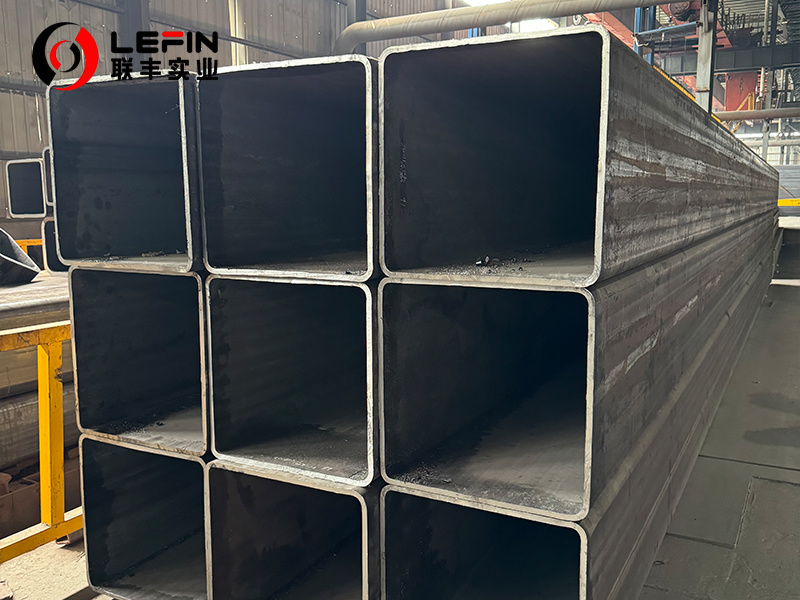
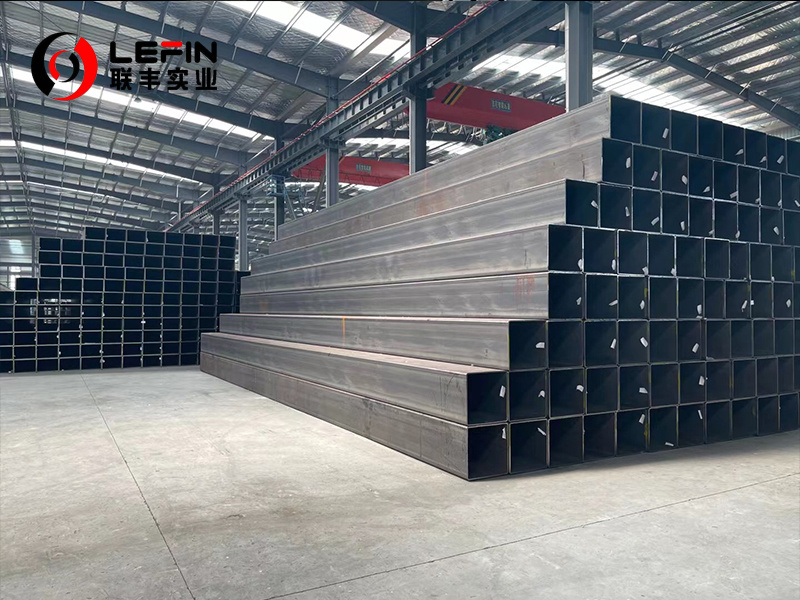
Guyana ASTM A501 GR.B TUBE
Category:
Product Description
Basic Information
ASTM A501 specifies hot-formed welded and seamless carbon steel structural tubing, which is categorized into three grades: Grade A, Grade B, and Grade C. Among the three grades, Grade B is one of the most commonly used grades due to its excellent balance of strength and versatility.
ASTM A501 GR.B TUBE
Size:
SQUARE: 20MM * 20MM - 1200MM * 1200MM
RECTANGULAR: 20MM * 30MM - 1500MM * 1200MM
Wall Thickness: 1.3MM - 50MM
Length: 1M - 12M, normally 5.8M, 6M, 12M, also depends on the requirements.
Surface Treatment: Galvanizing, Black vanish, Carving, Slightly oil painting, PVC clothes cover each bundle etc.
Application: Bolted construction of bridges and buildings, as well as for General structural purposes.
Chemical Composition
| Composition,% | ||
| Grade B | ||
| Element | Heat analysis | Product analysis |
| Carbon,maxA | 0.22 | 0.26 |
| Manganese,maxA | 1.4 | 1.45 |
| Phosphorus,max | 0.03 | 0.04 |
| Suffur,max | 0.02 | 0.03 |
| Copper,when copper steel is specified,min | 0.2 | 0.18 |
A For each reduction of 0.01 percentage point below the specified maximum for carbon, an increase of 0.06 percentage point above the specified maximum for manganese is permitted, up to a maximum of 1.60% by heat analysis and 1.65%by product analysis.
Carbon (C): Lower carbon content compared to Grade C enhances weldability and reduces the risk of cracking during welding.
Manganese (Mn): Manganese improves strength and toughness, making the material more durable.
Phosphorus (P): Lower phosphorus content reduces the risk of brittleness and improves overall material quality.
Sulfur (S): Lower sulfur content enhances the material's ductility and reduces the risk of cracking.
Copper (Cu): Copper can improve corrosion resistance in certain environments.
Mechanical Properties
Tensile | ||
| Wall Thickness,in.[mm] | Grade B |
Tensle strength, | AIl | 65000 [448] |
≤1 [25] | 46000[315] | |
>1[25]and≤2[50] | 45000[310] | |
Yield strength, | >2[50]and≤3[76] | 42500[290] |
>3[76]and≤4[100] | 40000[280] | |
Elongation,min,% |
| 24 |
Tensile Strength: Minimum 65,000 psi (448 MPa). This high tensile strength ensures that the material can withstand significant loads without breaking.
Yield Strength: Minimum 46,000 psi (315 MPa) for wall thicknesses ≤ 1 inch (25 mm). The yield strength indicates the material's ability to deform elastically before plastic deformation occurs.
Elongation: Minimum 24%. This elongation value ensures that the material has good ductility, allowing it to be formed and bent without cracking.
Advantages And Applications
High Strength and Durability: Grade B provides excellent strength and durability, making it suitable for demanding structural applications.
Good Weldability: The lower carbon content enhances weldability, which is crucial for applications where joining of materials is required.
Versatility: ASTM A501 Grade B is available in various shapes (square, round, rectangular) and sizes, making it versatile for different structural needs.
Applications: Grade B is widely used in bridge construction, bolted and riveted structures, and heavy machinery frames. It is ideal for applications that require high strength and good mechanical properties but do not need the highest load-bearing capacity of Grade C.
Production Process
Raw Material Preparation: Steel is produced using basic-oxygen or electric-arc-furnace methods, ensuring it meets the chemical composition requirements for Grade B.
Tubing Formation: The steel is formed into tubes using methods such as seamless rolling, electric resistance welding (ERW), or submerged arc welding (SAW). The tubes are then hot-formed to achieve the desired shape and size.
Heat Treatment: For thicker-walled tubes (over 13 mm), normalizing heat treatment may be applied to ensure uniform mechanical properties.
Testing and Inspection: The tubes undergo chemical and mechanical testing to verify compliance with ASTM A501 Grade B standards. Surface quality checks and repairs are also performed.
Finishing: The final product may be coated for corrosion protection and marked with essential identification details.
Why Is Grade B The Most Commonly Used Steel Grade In ASTM A501?
ASTM A501 Grade B is the most commonly used steel grade within the ASTM A501 specification for several key reasons.
Firstly, Grade B provides an excellent balance of strength and ductility, which is essential for structural applications. It has a minimum yield strength of 46,000 psi and a minimum tensile strength of 58,000 psi, making it strong enough for various structural uses while maintaining good flexibility and formability.
Secondly, Grade B steel has a relatively low carbon content, which enhances its weldability and reduces the likelihood of welding-related issues such as cracking. This makes it a preferred choice in construction and fabrication industries where welding is frequently required.
Additionally, the mechanical properties of Grade B make it suitable for a wide range of applications, including the construction of bridges, buildings, and other structures. Its versatility is further enhanced by its availability in different shapes, such as round, square, and rectangular tubing, allowing for diverse design and construction options.
Lastly, Grade B is cost-effective compared to higher grades, providing a good balance between performance and cost. This makes it an attractive option for engineers and designers who need reliable material without incurring excessive costs. These factors collectively make ASTM A501 Grade B the most commonly used steel grade in the specification.

Address: Hengtai Road,Daqiuzhuang Town,Jinghai County,Tianjin,China
Mob: +8615122229899(whatspp)
Phone: +86 22 58171905
Fax: +86 22 58171902
E-mail:info@lefinsteel.com
Get company updates
Tianjin Lefin Industrial Co.,Ltd. All rights reserved City sub-station SEO www.300.cn