

-
About us
 Tianjin lefin Industrial
TIANJIN LEFIN STEEL GROUP containing Tianjin lefin Industrial Co.,Ltd. 、Tianjin lefin steel import & export Co.,Ltd and Tianjin Shengqifeng International Trading Co., Ltd. -
Products
Steel Pipe Processing
Our main products include 1/2inch to 16 inch ERW PIPE/GI PIPE which has been produced according to BS1387/ASTM A53/EN10219/EN10255/EN10217 Standard -
-
Service Capability
Guarantee Quality
Our steel pipes are suitable for oil, natural gas, shipbuilding, chemical industry, water conservancy, electrical, steel structure, construction and other related fields.

Our main products include 1/2inch to 16 inch ERW PIPE/GI PIPE which has been produced according to BS1387/ASTM A53/EN10219/EN10255/EN10217 Standard
Our main products include 1/2inch to 16 inch ERW PIPE/GI PIPE which has been produced according to BS1387/ASTM A53/EN10219/EN10255/EN10217 Standard
Has rich experience in steel pipe processing, can be customized according to customer requirements according to the drawing and sample processing, assist in the development of new products.
Product Description
I. Description
Channel steel is a very common type of construction and industrial steel. Its distinctive groove-shaped cross-section makes it play a significant role in numerous fields. The following table can help you quickly grasp the core information of channel steel.
| Project | Details |
| Basic Definition: | A long strip of steel with a concave-shaped cross-section, belonging to carbon structural steel used for construction and machinery. |
| Cross-sectional shape: | Concave groove shape (U-shaped). |
| Main applications | Construction structures, curtain wall projects, mechanical equipment, vehicle manufacturing, etc. |
| Common steel grades (China) | include Q235, Q295, Q345, etc. |
| Common grades (international standards) | Japan's SS400, SS490; Germany's St44-3, St52-3. |
| Common export types | It is usually determined based on the market demands of the destination. There are exports for standards such as SS400/SS490, European standards, and American standards, etc. |
II. In-depth Understanding of Channel Steel
• How to represent the specifications:
The specifications of channel steel are indicated by the millimeter values of its cross-sectional height (h) × leg width (b) × leg thickness (d).
For example, 100485.3 represents a channel steel with a height of 100 mm, a leg width of 48 mm, and a leg thickness of 5.3 mm. It is also commonly referred to as 10# channel steel.
For channel steels with the same height, different leg widths and leg thicknesses are distinguished using letters a, b, and c, such as 25#a, 25#b, 25#c. Among them, the c type is usually the heaviest.

III. What are the main categories?
◦ By weight and size:
they can be classified as ordinary channel steel and lightweight channel steel. At the same height, the legs of lightweight channel steel are narrower, the waist is thinner, and the weight is lighter than that of ordinary channel steel.
◦ According to the production process:
it is mainly divided into hot-rolled channel steel and cold-formed channel steel. Hot rolling is the mainstream process, while the cold-formed channel steel can be further classified according to its shape into cold-formed equilateral channel steel, cold-formed non-equilateral channel steel, etc.
IV. Key points during operation:
◦ Correct force application direction:
According to the theory of steel structures, channel steel should be used with the flanges facing upwards (for force application), rather than lying flat. This way, its maximum structural strength can be achieved.
◦ Often used in combination with I-beams:
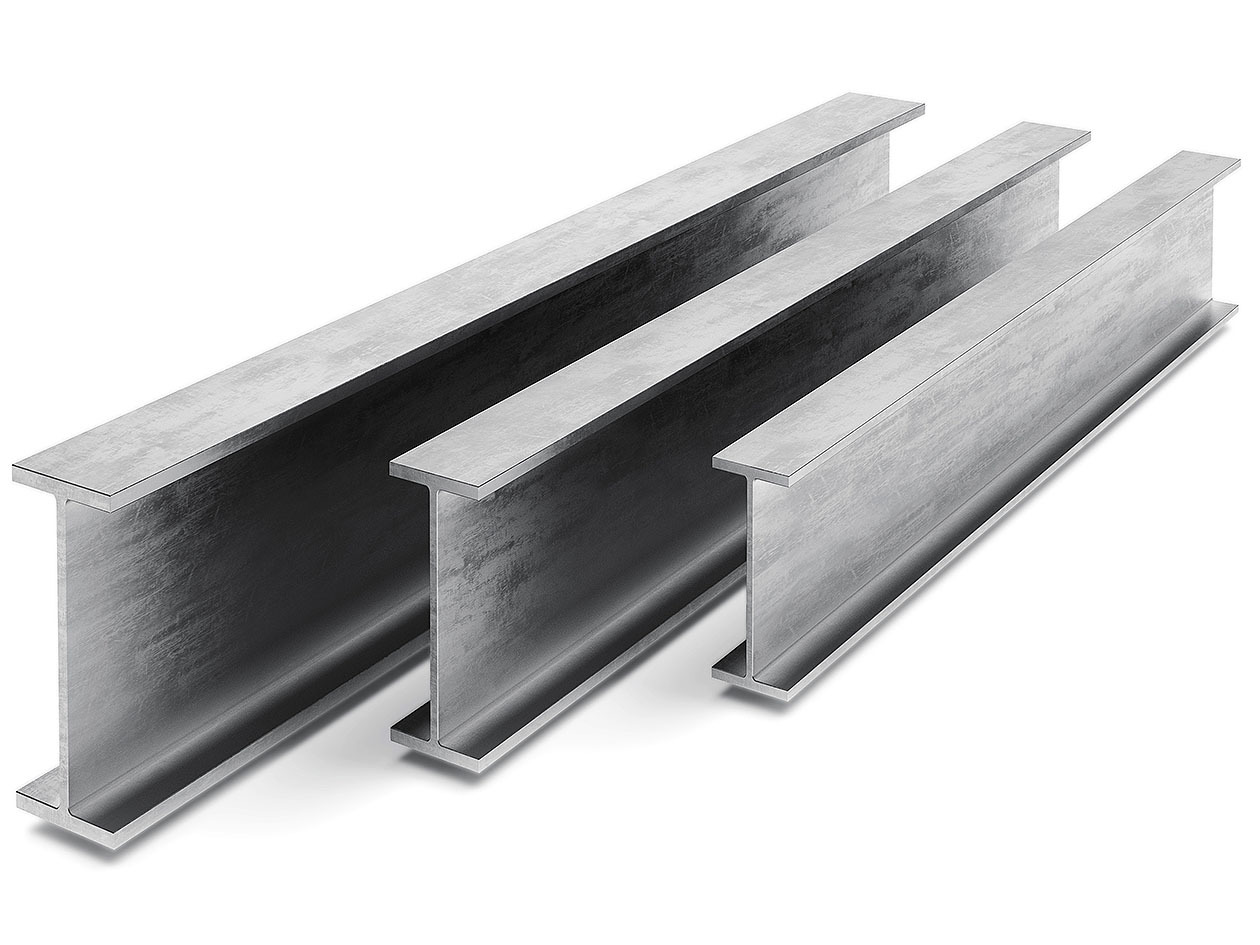
In building structures, channel steel is frequently used in conjunction with I-beams. Due to the factor of moment of inertia, when the force conditions are more complex or better stability is required, I-beams or H-beams are preferred. However, when the structural force conditions are not complex or the stress on the members is not high, channel steel is a more economical choice.


Address: Hengtai Road,Daqiuzhuang Town,Jinghai County,Tianjin,China
Mob: +8615122229899(whatspp)
Phone: +86 22 58171905
Fax: +86 22 58171902
E-mail:info@lefinsteel.com
Get company updates
Tianjin Lefin Industrial Co.,Ltd. All rights reserved City sub-station SEO www.300.cn