

-
About us
 Tianjin lefin Industrial
TIANJIN LEFIN STEEL GROUP containing Tianjin lefin Industrial Co.,Ltd. 、Tianjin lefin steel import & export Co.,Ltd and Tianjin Shengqifeng International Trading Co., Ltd. -
Products
Steel Pipe Processing
Our main products include 1/2inch to 16 inch ERW PIPE/GI PIPE which has been produced according to BS1387/ASTM A53/EN10219/EN10255/EN10217 Standard -
-
Service Capability
Guarantee Quality
Our steel pipes are suitable for oil, natural gas, shipbuilding, chemical industry, water conservancy, electrical, steel structure, construction and other related fields.

Our main products include 1/2inch to 16 inch ERW PIPE/GI PIPE which has been produced according to BS1387/ASTM A53/EN10219/EN10255/EN10217 Standard
Our main products include 1/2inch to 16 inch ERW PIPE/GI PIPE which has been produced according to BS1387/ASTM A53/EN10219/EN10255/EN10217 Standard
Has rich experience in steel pipe processing, can be customized according to customer requirements according to the drawing and sample processing, assist in the development of new products.
Product Description
Basic Information
S460NH is a high-strength, low-alloy structural steel grade that is widely used in various applications like construction, mechanical engineering, and other industries,due to its excellent mechanical properties and structural stability. It is defined by the European standards EN10210 and EN10219, which specify its chemical composition and mechanical properties.
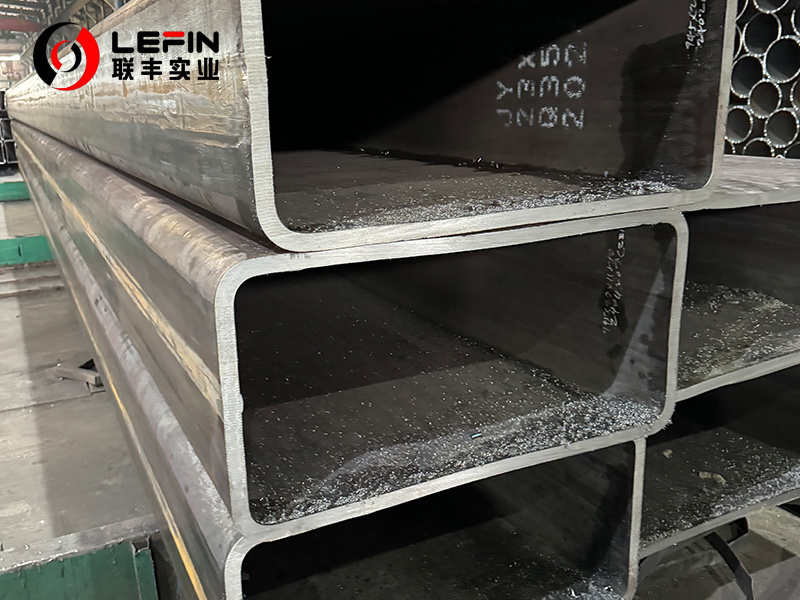
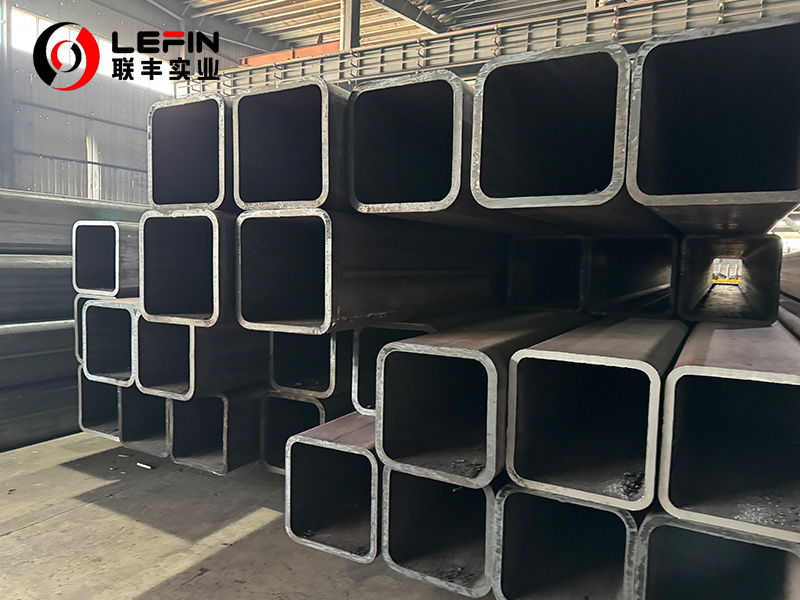
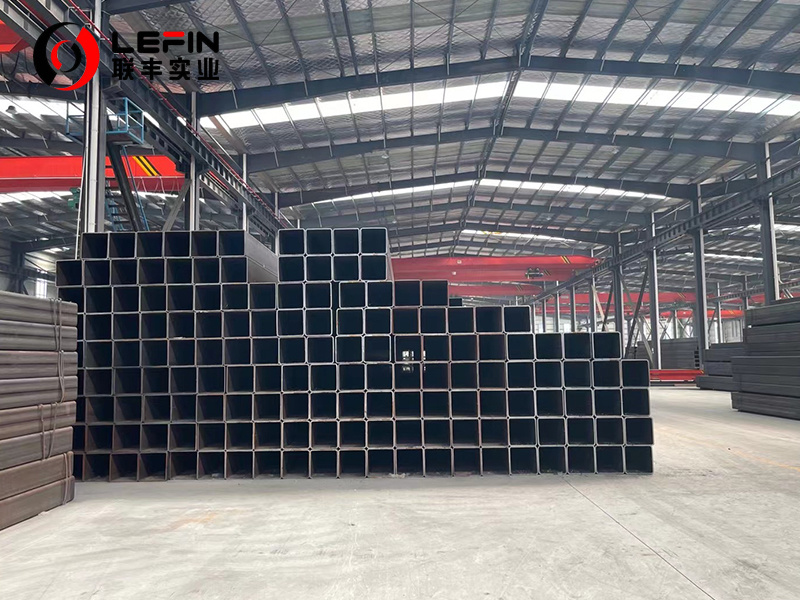
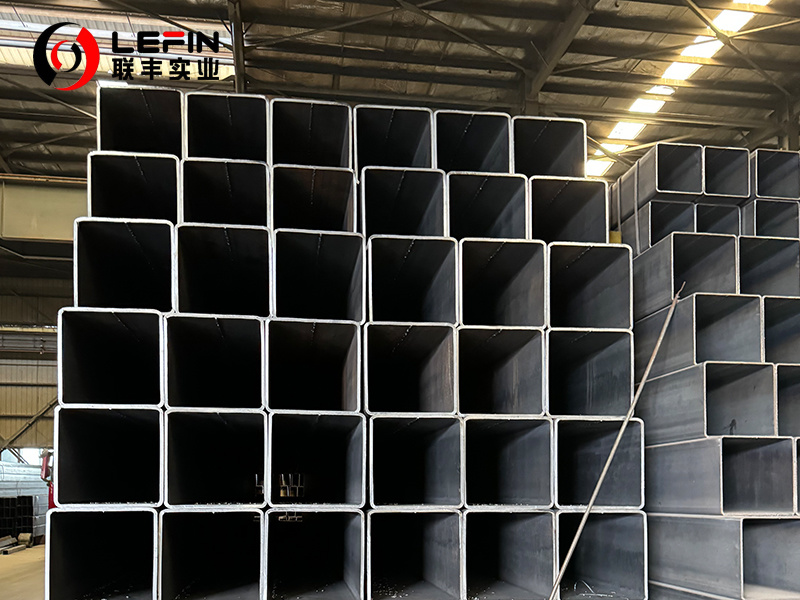
S460NH HOLLOW SECTION
Standard: EN10210, EN10219
Outside Diameter:
20MM × 20MM - 1200MM × 1200MM(SHS)
20MM × 30MM - 1000MM × 1500MM(RHS)
Wall Thickness:
1.3MM - 50MM(SHS,RHS)
LENGTH: Commonly used 5.8M, 6M, 12M,but we can also produces depends on client's requirement.
Pipe End: Flat end, Chamfer end, Groove, Thread
Coating: Black paint, Varnish, Anti-rust oil
Applications: Agricultural equipment, Architectural structures, Construction frameworks for bridges and buildings, Mechanical equipment and Transportation construction.
Chemical Element Content
| Chemical Composition,max,% | ||
| EN10210 | EN10219 | |
| Carbon (C) | 0.2 | 0.2 |
| Silicon(Si) | 0.6 | 0.6 |
| Manganese (Mn) | 1-1.7 | 1-1.7 |
| Phosphorus (P) | 0.035 | 0.035 |
| Sulfur (S) | 0.035 | 0.035 |
| Niobium (Nb) | 0.06-0.1 | 0.05 |
| Vanadium (V) | 0.2 | 0.2 |
| Titanium (Ti) | 0.03 | 0.03 |
| Molybdenum(Mo) | 0.1 | 0.1 |
| Nickel (Ni) | 0.8 | 0.8 |
| Chromium(Cr) | 0.3 | 0.3 |
| Copper (Cu) | 0.7 | 0.7 |
| Aluminium(Al) | ≥0.02 | ≥0.02 |
Carbon (C): Low carbon content ensures good weldability.
Silicon (Si): Silicon is used as a deoxidizer and can improve the steel's strength.
Manganese (Mn): Increases the strength and hardness of the steel.
Phosphorus (P): Low phosphorus content reduces the risk of brittleness.
Sulfur (S): Low sulfur content improves the steel's ductility and toughness.
Niobium (Nb): Helps refine the grain structure, improving strength and toughness.
Vanadium (V): Can enhance the strength and wear resistance of the steel.
Titanium (Ti): Is used to stabilize the steel and improve its corrosion resistance.
Molybdenum (Mo): Increases the steel's strength and toughness, especially at high temperatures.
Nickel (Ni): Improves the steel's toughness and corrosion resistance.
Chromium (Cr): Enhances the steel's hardness and corrosion resistance.
Copper (Cu): Improve the steel's atmospheric corrosion resistance.
Aluminum (Al): Is used as a deoxidizer and helps refine the grain structure.
The chemical composition requirements for S460NH under EN10210 and EN10219 are very similar, with only minor differences in the limits for sulfur, titanium, and molybdenum. EN10210 has a stricter limit on sulfur content, while EN10219 allows slightly higher limits for titanium and molybdenum. These differences reflect the specific requirements for hot-formed (EN10210) and cold-formed (EN10219) steel hollow sections, ensuring that each standard meets the necessary mechanical properties and performance criteria for their respective applications.
Mechanical Properties
Yield Strength (ReH): Minimum 460 MPa.
Both standards specify the same minimum yield strength, ensuring that the material can withstand significant loads before plastic deformation. This consistency is crucial for structural applications where load-bearing capacity is a critical factor.
Tensile Strength (Rm): 540-720 MPa.
The tensile strength range is the same for both standards, indicating the maximum stress the material can withstand before breaking. This ensures that the material is durable and can handle high-stress environments.
Elongation (A): Minimum 17% (for thickness ≤ 16 mm)
High elongation ensures good ductility, allowing the material to deform without breaking. This is particularly important for applications that require forming or bending processes.
Impact Resistance (KV/Ku): Minimum 27 J at -20°C.
Both standards require the material to have a minimum impact resistance of 27 J at -20°C. This ensures that the material remains tough and ductile even at low temperatures, making it suitable for cold environments and applications where impact loads are common.
Carbon Equivalent (CEV): Maximum 0.45%.
A low carbon equivalent value (CEV) of ≤ 0.45% ensures excellent weldability and reduces the risk of cracking during welding. This is particularly important for structural applications where welding is a common fabrication method.
The mechanical properties of S460NH under both EN10210 and EN10219 standards are very similar, with the same minimum yield strength, tensile strength, elongation, impact resistance, and carbon equivalent value. These consistent properties ensure that S460NH is a versatile and reliable material for a wide range of structural and mechanical applications, particularly those requiring high strength, good ductility, and low-temperature toughness. The low CEV value also makes it highly weldable, which is a significant advantage in fabrication processes.
Production Process
EN10210 S460NH
● Hot Rolling: The steel is heated to a high temperature and then rolled to the desired shape and dimensions. This process results in a product with a smoother surface and tighter tolerances. The material is shaped at a high, normalizing temperature while fully austenitic, resulting in a uniform grain structure and hardness over the whole section.
● Heat Treatment: The material is often subjected to heat treatment processes such as quenching and tempering to further enhance its strength and toughness. This ensures that the mechanical properties are stable and uniform over the whole section.
● Surface Treatment: Hot-dip galvanizing is commonly used to provide a protective zinc coating, enhancing corrosion resistance.
● Inspection and Testing: Subject to specific inspection and testing, and supplied with an inspection certificate type 3.1 to EN 10204. All sections undergo 100% weld line NDT inspection to either E4 or U5 standard.
EN10219 S460NH
● Cold Forming: The steel is formed into the desired shape at ambient temperature without additional heating. This process is known as cold forming and results in a product with a slightly rougher surface and looser tolerances compared to hot-rolled products.
● Electric Resistance Welding (ERW): The steel is formed into a tube and welded using electric resistance welding. This process ensures a strong and consistent weld.
● Submerged Arc Welding (SAW): For larger diameter pipes, submerged arc welding is commonly used. This process involves welding under a layer of flux to protect the weld from atmospheric contamination.
● Surface Treatment: Surface treatments like hot-dip galvanizing are used to enhance corrosion resistance and improve the appearance of the material.
● Inspection and Testing: Strict testing according to customer requirements, including appearance inspection, caliber, wall thickness, straightness, chemical composition testing, yield strength testing, tensile strength testing, impact testing, hardness testing, X-ray testing, ultrasonic testing, and salt spray testing.
EN10210 pipes are hot-worked, resulting in a smoother surface and tighter tolerances, while EN10219 pipes are cold-formed, which is a more cost-effective process but results in slightly looser tolerances. Both standards ensure that the material meets high mechanical property standards, with EN10210 often providing a more uniform and consistent product due to the high-temperature forming process.
Advantages
EN10210 S460NH
● High Strength and Durability: Ideal for high-load applications like bridges and buildings.
● Refined Grain Structure: Enhances toughness and strength, especially in large diameters.
● Uniform Properties: Reduces segregation, ensuring consistent performance.
● Weldability: Low carbon equivalent (CEV ≤ 0.45) ensures excellent weldability.
● Cost and Sustainability: Reduces weight and CO₂ footprint, enhancing sustainability.
EN10219 S460NH
● Economic and Versatile: Suitable for general engineering and structural applications.
● High Strength: Offers durability and resistance to environmental factors.
● Weldability: Low carbon equivalent (CEV ≤ 0.45) ensures excellent weldability.
● Dimensional Accuracy: Tight tolerances make it ideal for precision applications.
Both EN10210 and EN10219 S460NH offer high strength and good weldability. EN10210 is ideal for critical structures, while EN10219 is more economical and precise for general applications.
Applications
EN10210 S460NH
● Construction: Ideal for heavy structures like bridges and high-rise buildings.
● Industrial Use: Suitable for frameworks and equipment supports.
● Low-Temperature Use: Appropriate for cold environments.
EN10219 S460NH
● General Construction: Used for building structures and frames.
● Mechanical Parts: Common in manufacturing for machine components.
● Cost-Effective Solutions: Versatile for a range of engineering applications.
In summary, S460NH under both EN10210 and EN10219 standards offers high strength, good ductility, and excellent weldability, making it suitable for a wide range of structural and mechanical applications. EN10210 S460NH is ideal for heavy and cold-weather construction, while EN10219 S460NH provides a cost-effective and versatile solution for general engineering and structural uses.
Address: Hengtai Road,Daqiuzhuang Town,Jinghai County,Tianjin,China
Mob: +8615122229899(whatspp)
Phone: +86 22 58171905
Fax: +86 22 58171902
E-mail:info@lefinsteel.com
Get company updates
Tianjin Lefin Industrial Co.,Ltd. All rights reserved City sub-station SEO www.300.cn