

-
About us
 Tianjin lefin Industrial
TIANJIN LEFIN STEEL GROUP containing Tianjin lefin Industrial Co.,Ltd. 、Tianjin lefin steel import & export Co.,Ltd and Tianjin Shengqifeng International Trading Co., Ltd. -
Products
Steel Pipe Processing
Our main products include 1/2inch to 16 inch ERW PIPE/GI PIPE which has been produced according to BS1387/ASTM A53/EN10219/EN10255/EN10217 Standard -
-
Service Capability
Guarantee Quality
Our steel pipes are suitable for oil, natural gas, shipbuilding, chemical industry, water conservancy, electrical, steel structure, construction and other related fields.

Our main products include 1/2inch to 16 inch ERW PIPE/GI PIPE which has been produced according to BS1387/ASTM A53/EN10219/EN10255/EN10217 Standard
Our main products include 1/2inch to 16 inch ERW PIPE/GI PIPE which has been produced according to BS1387/ASTM A53/EN10219/EN10255/EN10217 Standard
Has rich experience in steel pipe processing, can be customized according to customer requirements according to the drawing and sample processing, assist in the development of new products.
Costa-Rica H-beams
Category:
Product Description
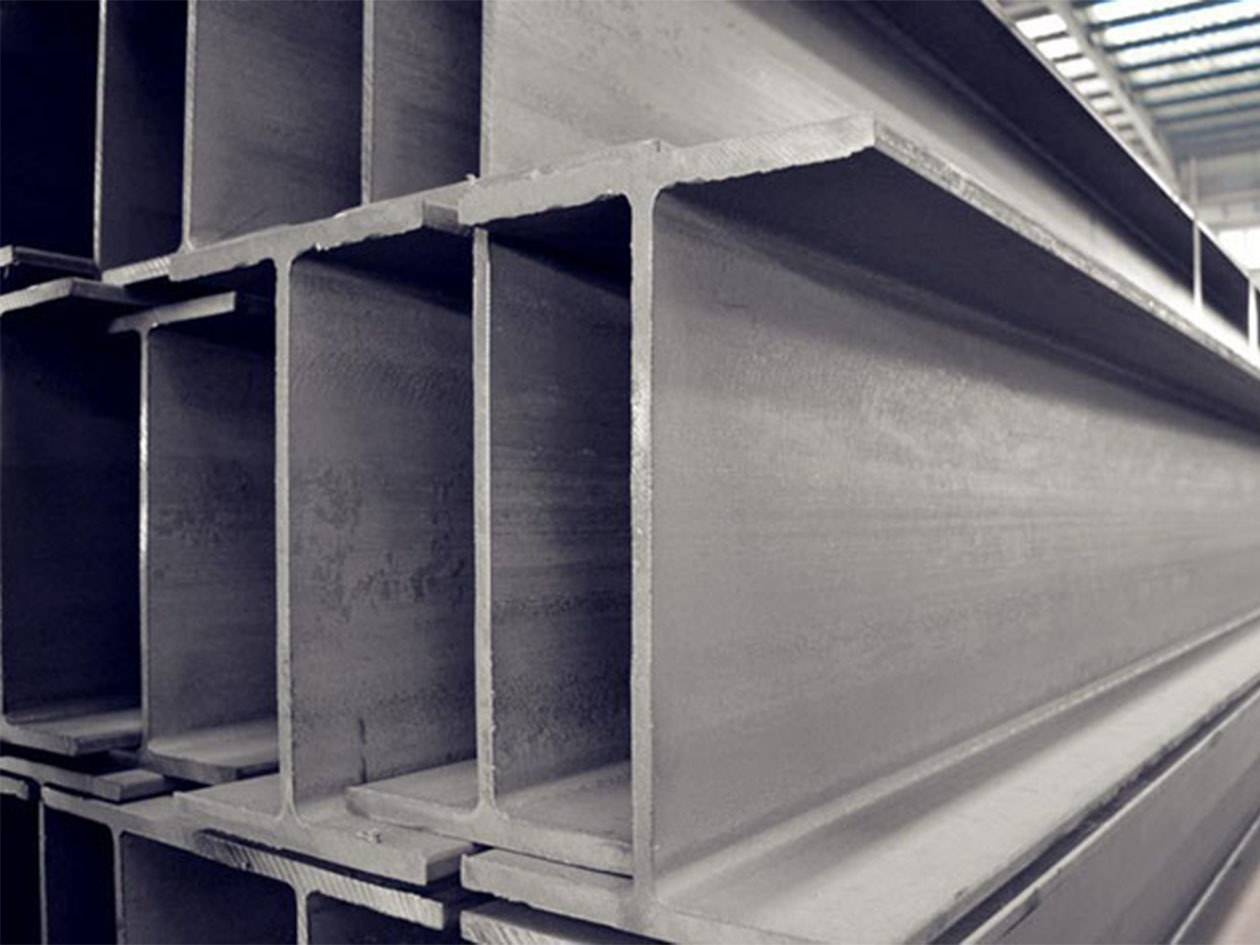
H Beams(H Sections) , known for its H-shaped cross-section, is a critical component in various construction and engineering applications. Here is a brief description of H-beam steel.
Description:
The web width (H) ranges from 100mm - 900mm.
The flange width (B) from 100mm - 300mm.
The web thickness (t1) from 5mm - 30mm.
The flange thickness (t2) also from 5mm - 30mm.More to see EN 10365-2017.
Common Grades:.
S235JR, S275JR, and S355JR according to EN10025.
A36, A529, and A572 according to ASTM.
Key Features Of H-Beam
Shape And Structure:
The H-beam consists of three main parts:
Flanges: The top and bottom horizontal sections, which resist bending moments.
Web: The vertical section connecting the flanges, which resists shear forces.
The flanges are wider than the web, providing a larger surface area for load distribution.
Material:
H-beams are typically made from carbon steel or high-strength low-alloy (HSLA) steel, ensuring durability and strength.
Advantages:
High Strength-to-Weight Ratio: The H-shape provides excellent strength while minimizing weight, making it cost-effective and efficient.
Versatility: Suitable for a wide range of applications, from buildings to bridges and industrial structures.
Ease of Fabrication: Can be easily cut, welded, and assembled on-site.
Uniform Load Distribution: The design ensures even distribution of loads, reducing stress concentrations.
Types Of H-Beam
H-beams are typically categorized into hot-rolled and welded types. Hot-rolled H-beams are further divided into three main categories:
Wide Flange H-Beam (HW):
These have flange widths approximately equal to their height, making them suitable for columns in steel structures.
Medium Flange H-Beam (HM):
With a height-to-width ratio of about 1.33 to 1.75, these are versatile for various structural applications.
Narrow Flange H-Beam (HN):
These have narrower flanges and are often used for beams.
Manufacturing Process
H-beams are produced through hot rolling or welding:
Hot Rolling:
Steel billets are heated and passed through rollers to form the H-shape.
This method is cost-effective and produces beams with consistent properties.
Welding:
Steel plates are cut and welded together to form the H-shape.
This method allows for customization of dimensions and thickness.
Applications Of H-Beams
Construction:
Used in the framework of buildings, bridges, and towers.
Provides structural support for floors, roofs, and walls.
Industrial Structures:
Used in factories, warehouses, and power plants for framing and support.
Infrastructure:
Essential in the construction of bridges, overpasses, and tunnels.
Marine And Offshore:
Used in shipbuilding and offshore platforms due to their strength and resistance to harsh environments.
Machinery And Equipment:
Used as frames for heavy machinery, cranes, and vehicles.
Comparison With I-Beams
H-Beam:
Wider flanges and thicker web.
Better load distribution and higher strength.
Suitable for heavy-duty applications.
I-Beam:
Narrower flanges and thinner web.
Lighter and more economical for lighter loads.
Flange Width: H-beams have wider flanges than I-beams, providing greater stability and strength.
Web Thickness: H-beams typically have thicker webs, making them more resistant to shear forces.
Applications: H-beams are preferred for heavy-duty structural applications, while I-beams are often used in lighter constructions.
H-beams are a fundamental component in modern construction and engineering, offering a perfect balance of strength, efficiency, and versatility. Their unique design and material properties make them indispensable for a wide range of structural applications, from skyscrapers to industrial machinery. Whether hot-rolled or welded, H-beams provide reliable performance and durability, ensuring the safety and stability of structures worldwide.


Address: Hengtai Road,Daqiuzhuang Town,Jinghai County,Tianjin,China
Mob: +8615122229899(whatspp)
Phone: +86 22 58171905
Fax: +86 22 58171902
E-mail:info@lefinsteel.com
Get company updates
Tianjin Lefin Industrial Co.,Ltd. All rights reserved City sub-station SEO www.300.cn