

-
About us
 Tianjin lefin Industrial
TIANJIN LEFIN STEEL GROUP containing Tianjin lefin Industrial Co.,Ltd. 、Tianjin lefin steel import & export Co.,Ltd and Tianjin Shengqifeng International Trading Co., Ltd. -
Products
Steel Pipe Processing
Our main products include 1/2inch to 16 inch ERW PIPE/GI PIPE which has been produced according to BS1387/ASTM A53/EN10219/EN10255/EN10217 Standard -
-
Service Capability
Guarantee Quality
Our steel pipes are suitable for oil, natural gas, shipbuilding, chemical industry, water conservancy, electrical, steel structure, construction and other related fields.

Our main products include 1/2inch to 16 inch ERW PIPE/GI PIPE which has been produced according to BS1387/ASTM A53/EN10219/EN10255/EN10217 Standard
Our main products include 1/2inch to 16 inch ERW PIPE/GI PIPE which has been produced according to BS1387/ASTM A53/EN10219/EN10255/EN10217 Standard
Has rich experience in steel pipe processing, can be customized according to customer requirements according to the drawing and sample processing, assist in the development of new products.
Product Description
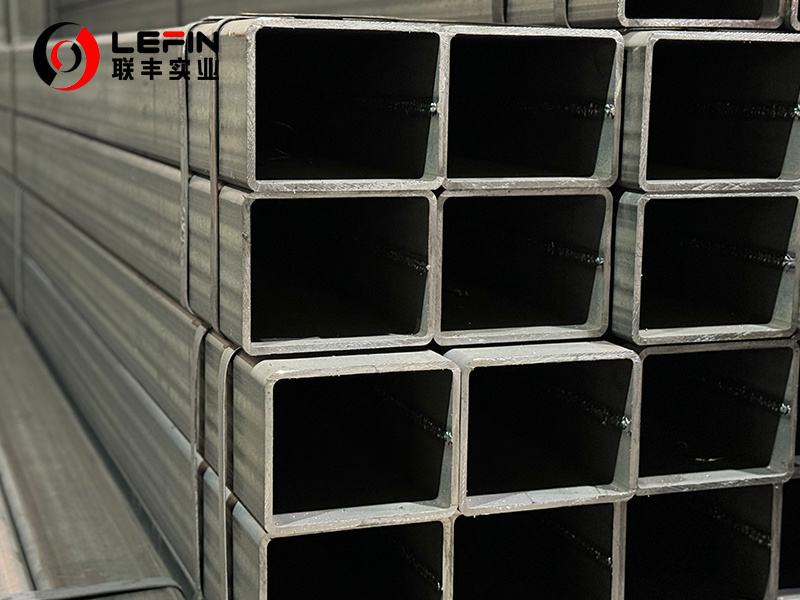
ASTM A500 is a standard formulated by the American Society for Testing and Materials (ASTM), specifically for cold-formed welded and seamless carbon steel Structural Sections (Hollow Structural Sections, HSS), and is widely used in load-bearing structures such as buildings, Bridges, and mechanical supports. The following is an analysis from the perspectives of standard definition, unique features, differences in steel grades, and comparisons with other standards:
I. Definition and Core Characteristics of ASTM A500 Steel Pipes
1. Basic Definition
ASTM A500 covered cold-formed welded and seamless carbon steel tubes, including round, square, rectangular and special-shaped tubes, are mainly used for structural support (such as building frames, Bridges, mechanical supports) rather than fluid transportation.
- Manufacturing process:
Cold forming technology enhances the yield strength of the material (with a strength increase of over 30% compared to hot-formed pipes).
- Size range:
Outer diameter: For round tubes, Ø6.35-660 mm; for square tubes, side length 10-400 mm; for rectangular tubes, maximum cross-section 300×500 mm.
Wall thickness: 1.0-25.4 mm (upper limit 16 mm for seamless pipes).
2. Unique advantages
- High strength-to-weight ratio: The cold forming process results in a yield strength significantly higher than similar standards (such as A53). For instance, the yield strength of A500 Grade C (317 MPa) is 28% higher than that of A53 Grade B (248 MPa), which can reduce material usage and costs.
- Strict tolerance control: Outer diameter tolerance ±1%, wall thickness tolerance ±10%, ensuring the assembly accuracy of the structure.
- Excellent weldability: Optimized chemical composition (low carbon, low sulfur and phosphorus) reduces the risk of welding cracks.
- Surface quality: No oxide scale or paint film on the surface of hot-rolled pipes, eliminating the need for pre-welding cleaning processes.
II. Classification and Differences of Steel Grades
ASTM A500 is classified into four grades: A, B, C, and D. The differences mainly lie in mechanical properties rather than chemical composition (carbon content is all ≤0.26%).
Class | yield strength (MPa), | tensile strength (MPa) | elongation (%), | Applicable Scenarios |
GRADE.A | ≥230 | ≥310 | ≥25 | Light-load structures (guardrails, small brackets) |
GRADE B | ≥290 | ≥400 | ≥23 | General Structures (building frames, mechanical supports) |
GRADE.C | ≥317 | ≥427 | ≥21 | Heavy-duty structures (Bridges, high-rise buildings) |
GRADE.D | ≥250 | ≥400 | ≥23 | Requires heat treatment and has high requirements for low-temperature toughness (structure in cold regions) |
Note: Grade D requires heat treatment (normalizing or tempering) to enhance low-temperature impact toughness, while other grades are optional.
III. Comparison with Other Standards
1. Compare with the standard for fluid conveying pipes (ASTM A53/A106)
Standard | Core Application | Strength Requirements | Manufacturing Processes | Key Differences |
A500 | Structure support | High yield strength (230-317 MPa) | Cold formed welding/seamless | Emphasizing dimensional accuracy and compressive resistance |
A53 | Fluid transportation at normal temperature | Low yield strength of ≥248 MPa | Thermoforming welding/seamless | Requires a hydrostatic test for welding and has a high demand for corrosion resistance |
A106 | High-temperature and high-pressure fluid conveying | Medium high (yield strength ≥240 MPa) | Seamless | High-temperature resistance performance (≤425℃) requires non-destructive testing |
2. Compare with other structural pipe standards (such as GB/T 3094)
Chinese GB/T 3094-2000:
The yield strength of the corresponding material Q345 (≥345 MPa) is close to that of A500 Grade C, but it cannot be directly replaced - A500 has stricter requirements for impact toughness and tolerance.
The GB standard does not clearly specify the classification, so additional verification of low-temperature performance is required during the design process.
3. Compare with the European standard (EN 10219)
EN 10219 requires a Charpy impact test (-20℃), while A500 only conducts a D-class forced low-temperature toughness test, focusing more on general structural scenarios.


IV. Typical Application Scenarios
- Building structure: High-rise steel frame (B/C grade square tubes), bridge truss (C grade round tubes).
- Municipal engineering: Street lamp poles, traffic sign brackets (Grade A/B).
- Heavy machinery: excavator booms, conveyor supports (C-grade thick-walled pipes).
- Special environments: Infrastructure in cold regions (D-grade heat-treated pipes).
Summary
The core advantage of ASTM A500 lies in the high strength, precise tolerance and excellent weldability brought by the cold forming process, making it the preferred choice for structural applications. The differences in steel grades mainly lie in mechanical properties (Grade B is the most universal, while grade C/D is specifically designed for heavy loads), and compared with other standards:
• Superior to A53/A106: Stronger structural load-bearing capacity, but not suitable for fluid transportation;
• Stricter than GB/T 3094: More comprehensive performance, replacement requires customer confirmation.
When selecting the type, the steel grade should be matched based on the load and environment (such as low temperature), and cold-formed pipes should be given priority to optimize cost-effectiveness.
Address: Hengtai Road,Daqiuzhuang Town,Jinghai County,Tianjin,China
Mob: +8615122229899(whatspp)
Phone: +86 22 58171905
Fax: +86 22 58171902
E-mail:info@lefinsteel.com
Get company updates
Tianjin Lefin Industrial Co.,Ltd. All rights reserved City sub-station SEO www.300.cn