

-
About us
 Tianjin lefin Industrial
TIANJIN LEFIN STEEL GROUP containing Tianjin lefin Industrial Co.,Ltd. 、Tianjin lefin steel import & export Co.,Ltd and Tianjin Shengqifeng International Trading Co., Ltd. -
Products
Steel Pipe Processing
Our main products include 1/2inch to 16 inch ERW PIPE/GI PIPE which has been produced according to BS1387/ASTM A53/EN10219/EN10255/EN10217 Standard -
-
Service Capability
Guarantee Quality
Our steel pipes are suitable for oil, natural gas, shipbuilding, chemical industry, water conservancy, electrical, steel structure, construction and other related fields.

Our main products include 1/2inch to 16 inch ERW PIPE/GI PIPE which has been produced according to BS1387/ASTM A53/EN10219/EN10255/EN10217 Standard
Our main products include 1/2inch to 16 inch ERW PIPE/GI PIPE which has been produced according to BS1387/ASTM A53/EN10219/EN10255/EN10217 Standard
Has rich experience in steel pipe processing, can be customized according to customer requirements according to the drawing and sample processing, assist in the development of new products.
Bulgaria EN 10219 S355JR STEEL TUBE
Category:
Product Description
Basic Information
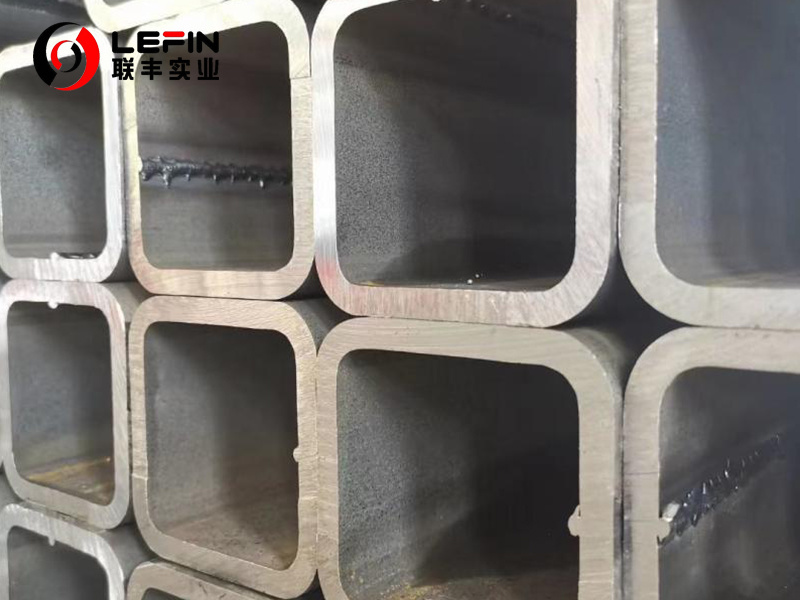
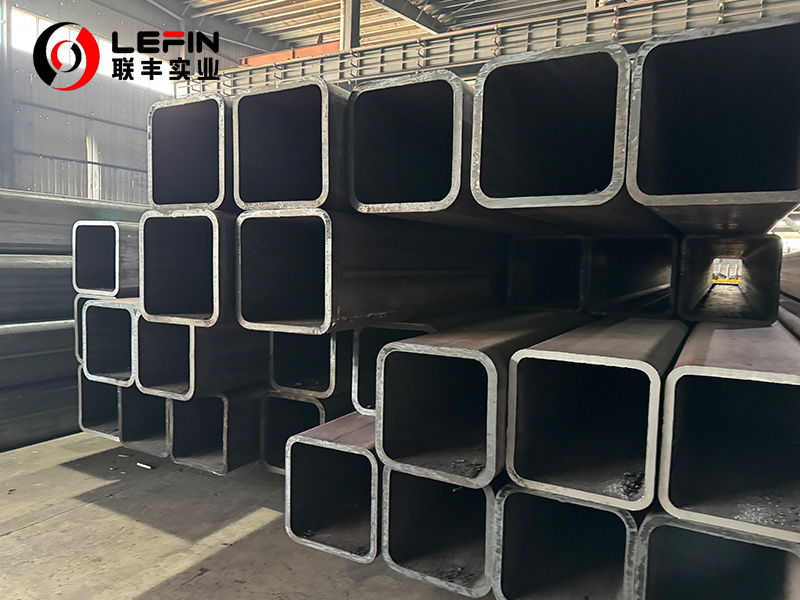
EN 10219 S355JR is a type of structural steel that is widely used in various engineering applications due to its excellent mechanical properties and versatility.
EN 10219 S355JR STEEL TUBE
Standard: EN 10219
Grade: S355JR,S235JRH, S275J0H, S275J2H, S355J0H, S355J2H, S275NH, S355NH
Outside Diameter:
1/2 INCH - 24 INCH(CHS)
20MM × 20MM - 1200MM × 1200MM(SHS)
20MM × 30MM - 1000MM × 1500MM(RHS)
Wall Thickness:
1.3MM - 22MM(CHS)
1.3MM - 50MM(SHS,RHS)
The Wall Thickness Tolerance: ±5%
Length: Commonly used 5.8M, 6M, 12M, but we can also produces depends on client's requirement.
Surface Treatment: Bare Finish, Painting, Oiling, Galvanization, 3PE, FBE coated, etc.
Delivery Time: About 2 months, including shipment time.
Payment Term: 100% L/C at sight, and TT.
Chemical Composition And Significance
The chemical composition of EN 10219 S355JR is strictly controlled to ensure its performance. The typical composition includes:
Carbon (C): ≤0.24%.
Carbon is a fundamental element in steel that affects hardness and strength. However, its content is limited to ensure good weldability and toughness.
Silicon (Si): ≤0.55%.
Silicon acts as a deoxidizer during steelmaking and can improve the steel's strength and hardness.
Manganese (Mn): ≤1.6%.
Manganese enhances the strength and toughness of the steel and can also improve its resistance to wear and corrosion.
Phosphorus (P): ≤0.035%.
Phosphorus is kept at a low level to prevent brittleness and reduce the risk of cracking during welding.
Sulfur (S): ≤0.035%.
Sulfur is also controlled to avoid the formation of inclusions that can weaken the steel's mechanical properties.
Copper (Cu): ≤0.55%.
Copper can be present in small amounts and may improve corrosion resistance under certain conditions.
Mechanical Properties
EN 10219 S355JR exhibits outstanding mechanical properties, making it suitable for a wide range of applications:
Yield Strength: Minimum 355 MPa.
This indicates the stress level at which the material begins to deform plastically.
Tensile Strength: Ranges from 470 to 630 MPa.
This represents the maximum stress the material can withstand before breaking.
Elongation: At least 22%.
This high elongation percentage demonstrates the steel's ability to deform significantly before fracturing, indicating good ductility.
Impact Toughness: The material has an impact energy of at least 27 Joules at room temperature, ensuring it can withstand sudden impacts.
Comparison With Other Steel Grades
S235JR: This grade has a lower yield strength of 235 MPa, making it suitable for lighter structural applications. S355JR is significantly stronger and more suitable for heavy-duty applications.
S275JR: With a yield strength of 275 MPa, S275JR is stronger than S235JR but still less robust than S355JR. S355JR is preferred when higher load-bearing capacity is required.
S355JR: Minimum yield strength of 355 MPa, with impact toughness tested at room temperature.
S355J0H: Same yield strength (355 MPa) but with guaranteed impact energy of 27 Joules at 0°C.
S355J2H: Offers higher impact toughness with a minimum of 27 Joules at -20°C, making it suitable for colder environments.
S420 and S460: These grades, offer higher yield strengths (420 MPa and 460 MPa, respectively) and are used in heavy-duty applications such as offshore structures and heavy bridges. S355JR is less strong but more cost-effective and easier to fabricate.
Production Process
Material Selection
The process begins with hot-rolled steel coils or plates that meet the required chemical composition and mechanical properties as specified by the EN 10219 standard.
Cold Forming
The steel coil is uncoiled, leveled, and fed into a forming machine. Through a series of rollers, the flat steel is gradually shaped into the desired hollow section profile (circular, square, or rectangular). This cold-forming process ensures a precise and smooth finish without applying heat.
Welding
The edges of the formed steel strip are heated and fused using Electric Resistance Welding (ERW) or Submerged Arc Welding (SAW) to create a continuous tube. The weld seam is then inspected for integrity.
Sizing and Straightening
The welded tube passes through sizing rollers to achieve exact dimensions and wall thickness. Further straightening removes any distortions from the forming process.
Cutting and End Finishing
The hollow section is cut to standard or custom lengths, with ends deburred, chamfered, or finished for better handling and assembly.
Inspection and Testing
Non-destructive testing (NDT) methods such as ultrasonic, eddy current, or radiographic testing ensure weld integrity. Mechanical tests (tensile, impact, hardness) and chemical composition analysis verify compliance with the standard.
Surface Protection
Protective coatings (galvanization, painting, or oiling) may be applied to prevent corrosion.
Applications
Construction and Infrastructure:
S355JR is extensively used in structural frameworks, beams, columns, and trusses for buildings, bridges, and other civil engineering projects. Its high strength and versatility make it ideal for both load-bearing and non-load-bearing applications.
Mechanical Engineering:
The steel is used in the manufacturing of heavy machinery, industrial equipment, and structural components due to its strength and weldability.
Transportation:
S355JR is commonly used in vehicle frames, chassis, and other structural components in the automotive and transportation sectors. Its high strength-to-weight ratio helps reduce overall vehicle weight while maintaining structural integrity.
Marine and Offshore Structures:
The steel is suitable for shipbuilding, marine platforms, and other offshore applications where high strength and corrosion resistance are required.
Power Plants and Industrial Pipelines:
S355JR hollow sections are used in the construction of pipelines for fluid transportation, power plants, and industrial applications. The steel’s ability to withstand high loads and its resistance to wear make it a reliable choice.
Renewable Energy:
S355JR is used in wind turbine towers and solar panel frames due to its high strength and durability.

Address: Hengtai Road,Daqiuzhuang Town,Jinghai County,Tianjin,China
Mob: +8615122229899(whatspp)
Phone: +86 22 58171905
Fax: +86 22 58171902
E-mail:info@lefinsteel.com
Get company updates
Tianjin Lefin Industrial Co.,Ltd. All rights reserved City sub-station SEO www.300.cn