

-
About us
 Tianjin lefin Industrial
TIANJIN LEFIN STEEL GROUP containing Tianjin lefin Industrial Co.,Ltd. 、Tianjin lefin steel import & export Co.,Ltd and Tianjin Shengqifeng International Trading Co., Ltd. -
Products
Steel Pipe Processing
Our main products include 1/2inch to 16 inch ERW PIPE/GI PIPE which has been produced according to BS1387/ASTM A53/EN10219/EN10255/EN10217 Standard -
-
Service Capability
Guarantee Quality
Our steel pipes are suitable for oil, natural gas, shipbuilding, chemical industry, water conservancy, electrical, steel structure, construction and other related fields.

Our main products include 1/2inch to 16 inch ERW PIPE/GI PIPE which has been produced according to BS1387/ASTM A53/EN10219/EN10255/EN10217 Standard
Our main products include 1/2inch to 16 inch ERW PIPE/GI PIPE which has been produced according to BS1387/ASTM A53/EN10219/EN10255/EN10217 Standard
Has rich experience in steel pipe processing, can be customized according to customer requirements according to the drawing and sample processing, assist in the development of new products.
Argentina EN 10210 S235 Steel Grades Pipes
Category:
Product Description
Introduction
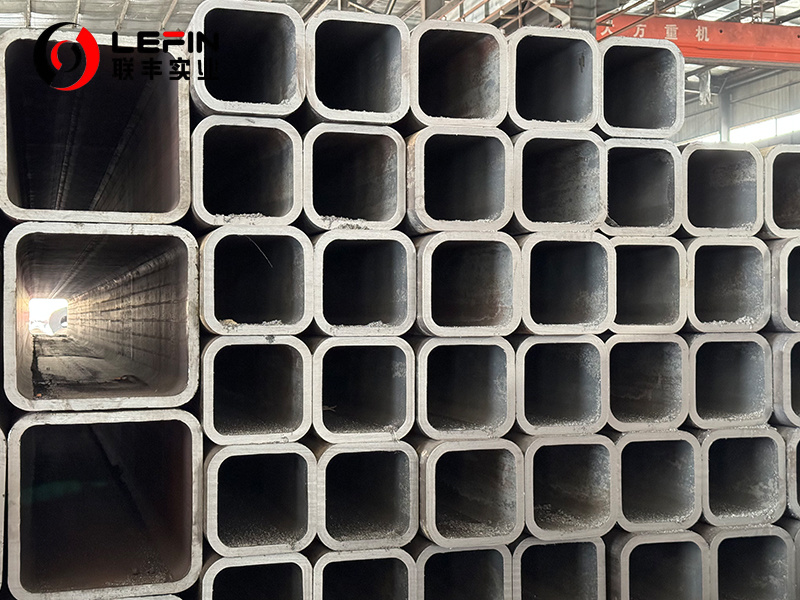
EN 10210 specifies the requirements for hot-finished structural hollow sections (circular, square, and rectangular) made from non-alloy and fine-grain steels. The S235 grade family includes several sub-grades with varying impact toughness properties, designed for different environmental conditions.
This guide focuses on three key variants:
S235JRH (standard impact resistance, room temperature)
S235J0H (improved toughness at 0°C)
S235J2H (enhanced toughness at -20°C)
The "H" suffix indicates that the steel is supplied in the hot-finished condition.
Basic Information
EN 10210 S235 Steel Grades Pipes
Standard: EN 10210
Grade: S235JRH, S235J0H, S235J2H
Outside Diameter:
1/2 INCH - 24 INCH(CHS)
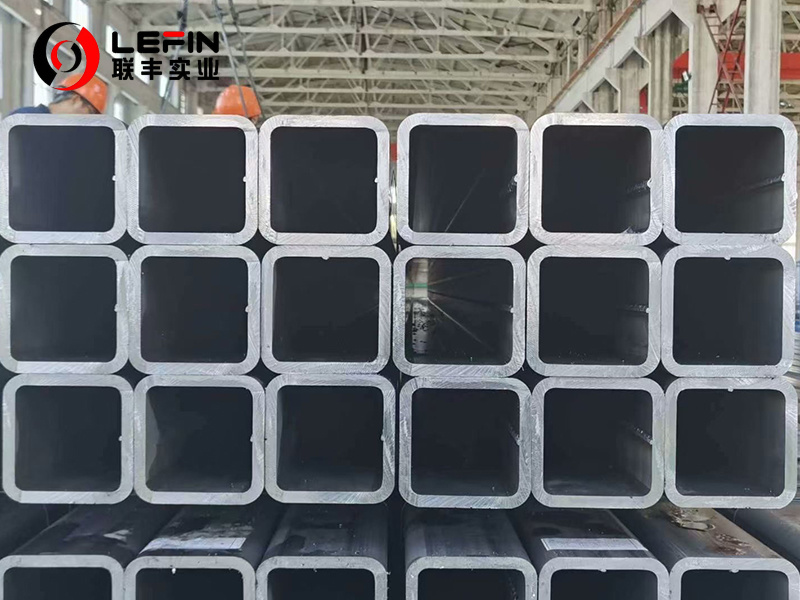
20MM × 20MM - 1200MM × 1200MM(SHS)
20MM × 30MM - 1000MM × 1500MM(RHS)
Wall Thickness:
1.3MM - 22MM(CHS)
1.3MM - 50MM(SHS,RHS)
The Wall Thickness Tolerance: control within the standard limits.
Length: Commonly used 5.8M, 6M, 12M, but we can also produces depends on client's requirement.
Common Process:
ERW: 20MM - 660MM (OD) Wall Thickness: 1.3MM - 50MM
LSAW:406MM - 1420MM (OD) Wall Thickness: 10MM - 50MM
SSAW: 219MM - 4084MM (OD) Wall Thickness: 7.75MM - 25.4MM
Coating: Black paint, Varnish, Anti-rust oil.
Applications: Agricultural equipment, Architectural structures, Construction frameworks for bridges and buildings, Mechanical equipment, Transportation construction.
Chemical Composition
● Carbon (C): The carbon content in S235 steel is typically limited to a certain range, usually around 0.17% - 0.22%. Carbon is a crucial element that affects the strength and hardness of the steel. A relatively low carbon content in S235 helps to maintain good weldability and ductility.
● Silicon (Si): The silicon content is no specific requirement. Silicon is added to improve the strength and deoxidation of the steel. It also helps to enhance the resistance to oxidation and improve the overall mechanical properties.
● Manganese (Mn): The manganese content in S235 steel is typically no more than 1.40%. Manganese improves the hardenability and strength of the steel. It also helps to reduce the harmful effects of sulfur, improving the quality and toughness of the steel.
● Phosphorus (P) and Sulfur (S): The phosphorus content is usually limited to no more than 0.04%, and the sulfur content is restricted to no more than 0.040%. These elements need to be controlled within a low range to avoid embrittlement and improve the quality and ductility of the steel.
Mechanical Properties
Property | S235JRH | S235J0H | S235J2H |
|---|---|---|---|
| Yield Strength (ReH, min.) | 235 MPa | 235 MPa | 235 MPa |
| Tensile Strength (Rm) | 360-510 MPa | 360-510 MPa | 360-510 MPa |
| Elongation (A₅, min. %) | 26% | 26% | 26% |
| Impact Test (Charpy V-notch) | 27 J at +20°C | 27 J at 0°C | 27 J at -20°C |
● Key Differences:
S235JRH: Basic toughness (room temperature applications).
S235J0H: Suitable for 0°C environments (e.g., cold regions).
S235J2H: For -20°C conditions (arctic climates, offshore structures).
Manufacturing & Processing
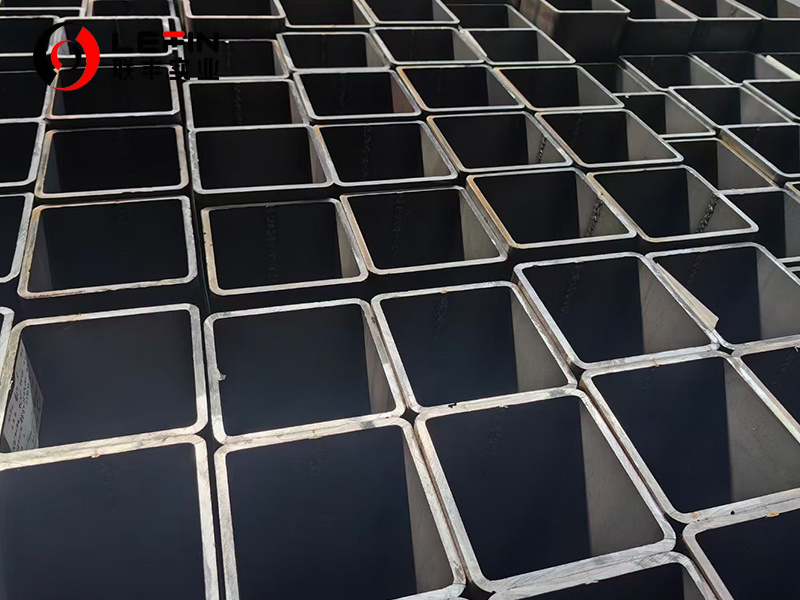
Hot-finished production: Seamless or welded hollow sections formed at high temperatures.
Heat treatment: May be used to enhance toughness (especially for J2H).
Weldability: Excellent (low CEV allows easy welding without preheating in most cases).
Applications
Grade | Typical Applications |
|---|---|
| S235JRH | General construction (buildings, bridges, non-critical structures). |
| S235J0H | Lightweight structures in cold climates (e.g., warehouses in Northern Europe). |
| S235J2H | Offshore platforms, cold storage facilities, Arctic infrastructure. |
Comparison With Cold-Formed EN 10219
Property | EN 10210 (Hot-finished) | EN 10219 (Cold-formed) |
|---|---|---|
| Production | Hot-rolled or extruded | Cold-formed from flat sheet |
| Corner Strength | Uniform properties | Work-hardened corners |
| Impact Toughness | Better (due to hot finishing) | Lower (risk of brittleness) |
| Cost | Higher | More economical |
Why choose hot-finished S235?
Better toughness (critical for dynamic loads).
More uniform mechanical properties.
Preferred for welded structures in cold environments.
Conclusion
S235JRH: Standard grade for general construction.
S235J0H: Better for 0°C environments.
S235J2H: Best for -20°C conditions.
In summary, the EN 10210 S235 steel grades(Hot-finished S235 hollow sections, provide a range of options for different applications based on their specific impact resistance and microstructure characteristics. These grades play an important role in the construction and mechanical engineering industries, offering reliable and cost - effective solutions for various structural and mechanical applications.

Address: Hengtai Road,Daqiuzhuang Town,Jinghai County,Tianjin,China
Mob: +8615122229899(whatspp)
Phone: +86 22 58171905
Fax: +86 22 58171902
E-mail:info@lefinsteel.com
Get company updates
Tianjin Lefin Industrial Co.,Ltd. All rights reserved City sub-station SEO www.300.cn