

-
About us
 Tianjin lefin Industrial
TIANJIN LEFIN STEEL GROUP containing Tianjin lefin Industrial Co.,Ltd. 、Tianjin lefin steel import & export Co.,Ltd and Tianjin Shengqifeng International Trading Co., Ltd. -
Products
Steel Pipe Processing
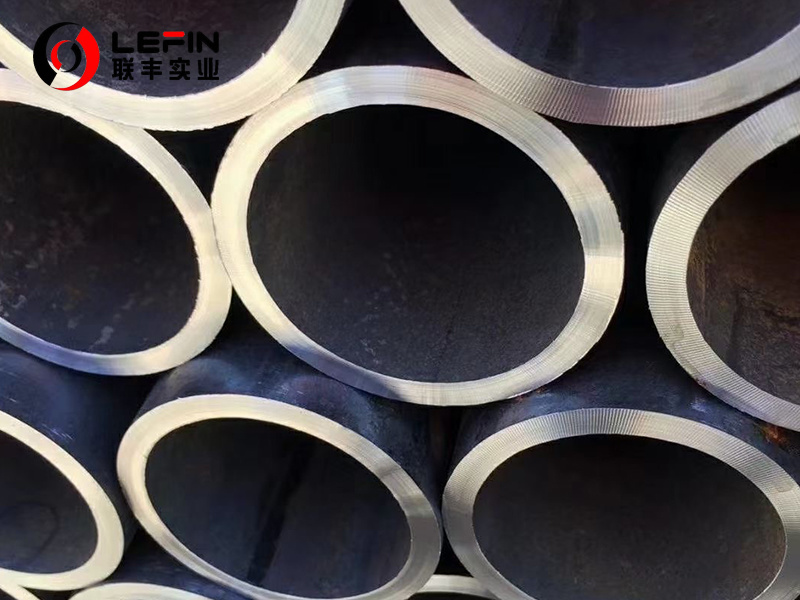
Our main products include 1/2inch to 16 inch ERW PIPE/GI PIPE which has been produced according to BS1387/ASTM A53/EN10219/EN10255/EN10217 Standard -
-
Service Capability
Guarantee Quality
Our steel pipes are suitable for oil, natural gas, shipbuilding, chemical industry, water conservancy, electrical, steel structure, construction and other related fields.
How To Store Seamless Steel Pipes
Proper storage of seamless steel pipes is crucial for maintaining their quality and extending their service life.
Below, I have summarized the key points to note in a table to help you quickly understand the core points:
| Storage dimension | Core requirements/suggestions |
| 📍Venue selection | Clean and dry, with smooth drainage and far from pollution sources; Select open-air, material shed or warehouse according to the type of steel pipe (large diameter/medium and small diameter/precision pipe). |
| 📦 Stacking method | Lower sleepers (at least 0.2m above the ground), ensure stable stack positions, control the number of stack heights, leave sufficient passageways, and guarantee "first in, first out". |
| 🛡️ special protection | Use opaque covering materials to prevent sun exposure and rain, ensure ventilation to prevent moisture accumulation, and protect the pipe ends and anti-corrosion layers. |
| 🔬 special tubing | Cold-rolled/cold-drawn/precision seamless steel pipes, anti-corrosion seamless steel pipes, etc. should be stored in warehouses and should not be kept outdoors. |
💡 Detailed guide and advice
The site is the foundation:
The site itself should be clean, well-drained, and far away from factories or mines that produce harmful gases or dust. Weeds and debris inside the venue must be cleared away thoroughly. In the warehouse, seamless steel pipes must not be stored together with corrosive materials such as acids, alkalis, salts and cement. Different types of steel should also be stored separately to prevent confusion and cross-corrosion.
There are many considerations when stacking:
The primary principle of stacking is stability and safety. Materials of different varieties and specifications should be stacked separately. The bottom of the stack must be raised with wooden pads or stone slabs. If the warehouse floor is made of cement, a raise of 0.1 meters is sufficient. If it is muddy ground, it needs to be raised by 0.2 to 0.5 meters. When stacked outdoors, the stack surface should be slightly inclined to facilitate drainage. In terms of stacking height, it is advisable that manual operations do not exceed 1.2 meters and mechanical operations do not exceed 1.5 meters. There should be passageways between stacks. Inspection passageways are generally 0.5 meters long, while entry and exit passageways vary depending on the size of the materials and the transportation machinery, usually ranging from 1.5 to 2.0 meters. For large section steel, when stacking, it should be noted that the groove surface should not face upwards to avoid water accumulation and rusting.

Protection is key:
If long-term storage is required, opaque covers should be used for protection from the very beginning of storage to prevent rusting of the steel pipes and aging of the anti-corrosion coating. The covering should be strong and durable to prevent rotting and leakage due to prolonged exposure to sun and rain. When covering, ensure that the surface of the steel pipe is well-ventilated to prevent water vapor from being difficult to evaporate. When storing, there should be supports and it should be kept at a certain distance from the ground to ensure ventilation of the steel pipes.
After stacking, it is advisable to consider removing the pipe end protectors to prevent moisture from accumulating at the contact surface. At the same time, attention should be paid to the number of stacking layers of steel pipes to avoid local force on the pipe ends due to too many layers, which may cause deformation or damage to the anti-corrosion coating.
Special treatment for special pipes:
For some seamless steel pipes with special requirements, such as cold-rolled, cold-drawn or bright annealed steel pipes, they are not allowed to be stored outdoors. If open-air storage is required due to inventory conditions, appropriate protective measures must be taken to prevent corrosion by media such as rain, snow and fog, as well as contamination by excessive dust. For metal products with high prices and prone to corrosion, such as small-diameter or thin-walled steel pipes, priority should be given to storage and warehousing.
💎 summary
The key to storing seamless steel pipes lies in creating and maintaining a dry, clean and orderly environment. The correct storage method can effectively prevent the loss of steel pipes caused by improper storage.

Address: Hengtai Road,Daqiuzhuang Town,Jinghai County,Tianjin,China
Mob: +8615122229899(whatspp)
Phone: +86 22 58171905
Fax: +86 22 58171902
E-mail:info@lefinsteel.com
Get company updates
Tianjin Lefin Industrial Co.,Ltd. All rights reserved City sub-station SEO www.300.cn