

-
About us
 Tianjin lefin Industrial
TIANJIN LEFIN STEEL GROUP containing Tianjin lefin Industrial Co.,Ltd. 、Tianjin lefin steel import & export Co.,Ltd and Tianjin Shengqifeng International Trading Co., Ltd. -
Products
Steel Pipe Processing
Our main products include 1/2inch to 16 inch ERW PIPE/GI PIPE which has been produced according to BS1387/ASTM A53/EN10219/EN10255/EN10217 Standard -
-
Service Capability
Guarantee Quality
Our steel pipes are suitable for oil, natural gas, shipbuilding, chemical industry, water conservancy, electrical, steel structure, construction and other related fields.
The Difference Between Seamless Steel Pipes And Welded Steel Pipes
Release time:
2025-12-29
Although seamless steel pipes and welded steel pipes are both common types of pipes, due to the fundamental differences in manufacturing processes, they exhibit significant variations in terms of performance, application, and price. The following table clearly presents their key distinctions:
| Characteristic dimensions | Seamless steel pipe | Welded steel pipe |
| Production process | It is made by piercing a solid tube blank and then rolling it. It has no welds. | It is made by curling the steel plate or steel strip and then welding it. It has welds. |
| Appearance features | The pipe body is uniform throughout, without any weld marks (but there may be slight bamboo-like patterns caused by cold drawing). | Usually, a longitudinal straight line or spiral-shaped weld seam can be found on the inner wall. |
| Core performance | High pressure-bearing capacity, excellent fatigue resistance, good overall uniformity, suitable for harsh working conditions such as high pressure and high temperature. | The pressure-bearing capacity is relatively low, but the size accuracy is high, the wall thickness is uniform, and the production cost is low. |
| Typical applications | It features high pressure-bearing capacity, excellent fatigue resistance and good overall uniformity, making it suitable for harsh working conditions such as high pressure and high temperature | It has a relatively low pressure-bearing capacity, but features high dimensional accuracy, uniform wall thickness and low production cost |
| Cost price | The production process is complex, resulting in a higher price. | The production efficiency is high, and the price is economical. |
💡 How to make a choice based on requirements
After understanding their differences, you can make a choice based on the specific requirements of the project:
• In cases where seamless steel pipes are preferred:
When your application involves high pressure, high temperature, high risk, or complex mechanical stress, safety and reliability are the primary considerations. For instance, high-pressure pipelines in the petrochemical industry, hot steam pipes in power stations, and cylinder tubes in hydraulic systems, all of which must use seamless steel pipes to ensure safety.
• Preferred application for welded steel pipes:
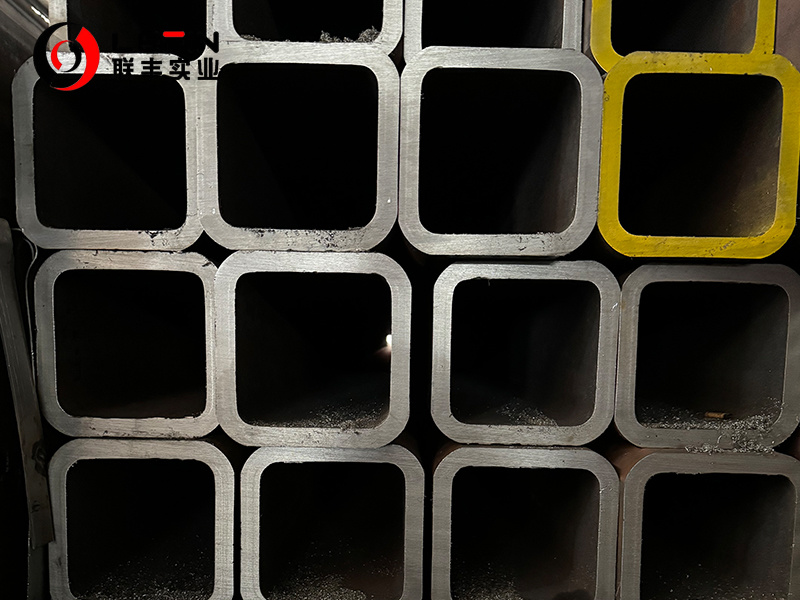
For scenarios such as building structure support, low-pressure fluid transportation (such as municipal water supply and gas), and decoration and renovation where the pressure-bearing requirements are not high, welded steel pipes, due to their excellent economic efficiency and sufficient strength, are an ideal and more cost-effective choice. Modern high-quality welding pipe technologies (such as submerged arc welding) also enable them to handle some medium-pressure situations.

🔍Add a practical knowledge point: Identification method
Sometimes, when inspecting the materials, it might be necessary to simply distinguish between the two.
• Macroscopic observation:
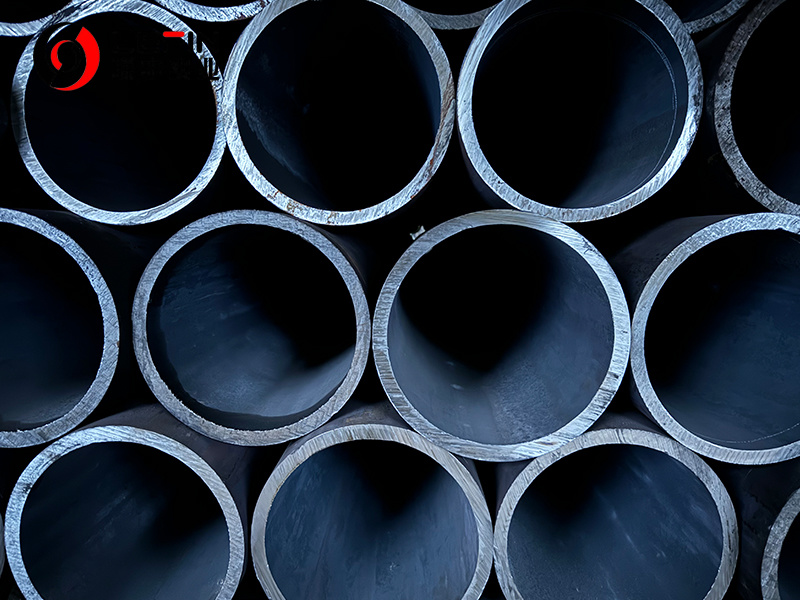
In a well-lit area, carefully examine the inner wall of the steel pipe. If you can find a continuous straight line or spiral line trace, it is basically a welded pipe. Seamless steel pipes have a uniform appearance throughout their entire length.
• Note:
Some unscrupulous vendors may perform "seamless treatment" (such as grinding and polishing) on welded pipes to deceive customers into believing they are seamless steel pipes. For important applications, the most reliable method is to entrust a third-party testing institution to conduct professional identification using metallographic methods or corrosion tests.
Tags:
Relevant Project
Address: Hengtai Road,Daqiuzhuang Town,Jinghai County,Tianjin,China
Mob: +8615122229899(whatspp)
Phone: +86 22 58171905
Fax: +86 22 58171902
E-mail:info@lefinsteel.com
Get company updates
Tianjin Lefin Industrial Co.,Ltd. All rights reserved City sub-station SEO www.300.cn