

-
About us
 Tianjin lefin Industrial
TIANJIN LEFIN STEEL GROUP containing Tianjin lefin Industrial Co.,Ltd. 、Tianjin lefin steel import & export Co.,Ltd and Tianjin Shengqifeng International Trading Co., Ltd. -
Products
Steel Pipe Processing
Our main products include 1/2inch to 16 inch ERW PIPE/GI PIPE which has been produced according to BS1387/ASTM A53/EN10219/EN10255/EN10217 Standard -
-
Service Capability
Guarantee Quality
Our steel pipes are suitable for oil, natural gas, shipbuilding, chemical industry, water conservancy, electrical, steel structure, construction and other related fields.
The Process Characteristics And Applications Of ERW, SSAW And LSAW
Release time:
2025-12-18
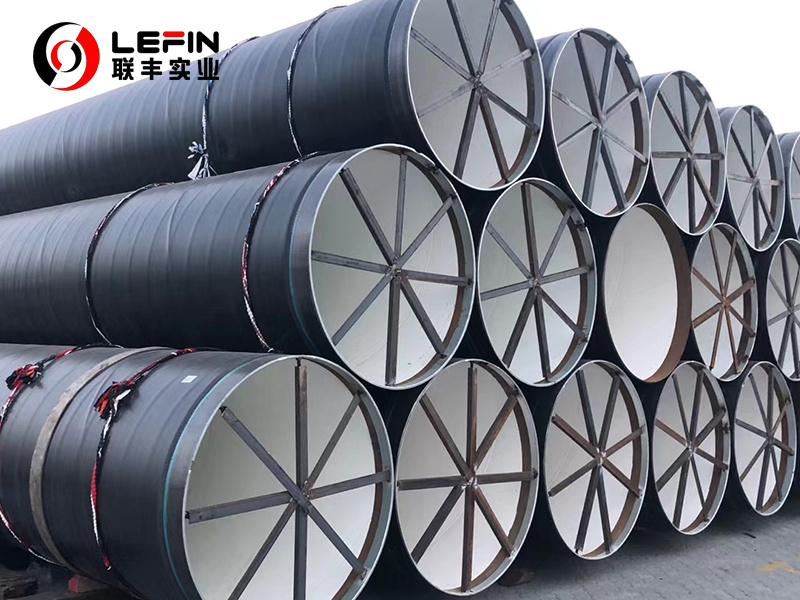
ERW, SSAW and LSAW are three mainstream manufacturing processes for welded steel pipes, each with its own strengths in fields such as oil and gas transportation and urban construction. The following table can help you quickly grasp the core differences between them.
| Characteristics | ERW (Straight Seam high-frequency Resistance Welded Pipe), | SSAW (Spiral Submerged Arc Welded Pipe) | LSAW (Straight Seam Submerged Arc Welded Pipe) |
| Core process | High-frequency current heats the edge of the tube blank and then extrudes and welds it | Steel strips are continuously rolled at a certain helix Angle and welded by submerged arc welding on both sides | Single steel plates are pressed into shape, and double-sided submerged arc welding is adopted and the diameter is expanded |
| Weld seam profile | A straight seam parallel to the steel pipe | A continuous spiral line | A straight seam parallel to the steel pipe |
| Major advantage | The weld seam is short, with high dimensional accuracy, uniform wall thickness and good surface quality | The same specification of steel strip is used to produce various pipe diameters with high material utilization rate.
| The weld quality is the best, with strong pressure-bearing capacity and precise geometric dimensions |
| Main limitations | We can only produce thin-walled pipes of medium and small diameters, and there may be specific defects in the weld area | The weld seam is long and prone to welding defects, with relatively poor geometric dimensional accuracy | High production costs and large equipment investment |
| Typical application | Small and medium-sized diameter pipelines for urban gas, crude oil and refined oil product transportation, etc | Urban water supply, heating networks, low-pressure fluid transportation, etc. | Key areas such as long-distance high-pressure oil and gas pipelines, cold regions, and submarine pipelines |
💡 Select the steel pipe according to the demand
After understanding their differences, in actual projects, you can weigh and choose from the following aspects:
• Pipe diameter and wall thickness:
When large-diameter and thick-walled pipes are required, the main choice is between SSAW and LSAW. If extremely high requirements are placed on pressure and safety, LSAW should be selected. If used in situations with low pressure such as drainage and ventilation, SSAW has a greater cost advantage. For medium and small diameter and thin-walled pipes, ERW is an efficient and economical choice.
• Conveyed medium and pressure:
When conveying high-pressure, flammable, explosive or toxic media (such as natural gas, crude oil), especially in areas that are difficult to maintain, LSAW with the highest weld quality should be given priority. For low-pressure fluids such as water and air, SSAW and ERW can meet the requirements.
• Cost and project budget:
Under the premise of meeting technical requirements, ERW usually has the most advantageous cost, followed by SSAW, and LSAW has the highest investment.
• Geographical location and environment:
For areas passing through Class 1 and Class 2 regions such as high-altitude cold zones, underwater areas or densely populated regions, relevant standards often specify the use of LSAW.

Tags:
Relevant Project
Address: Hengtai Road,Daqiuzhuang Town,Jinghai County,Tianjin,China
Mob: +8615122229899(whatspp)
Phone: +86 22 58171905
Fax: +86 22 58171902
E-mail:info@lefinsteel.com
Get company updates
Tianjin Lefin Industrial Co.,Ltd. All rights reserved City sub-station SEO www.300.cn